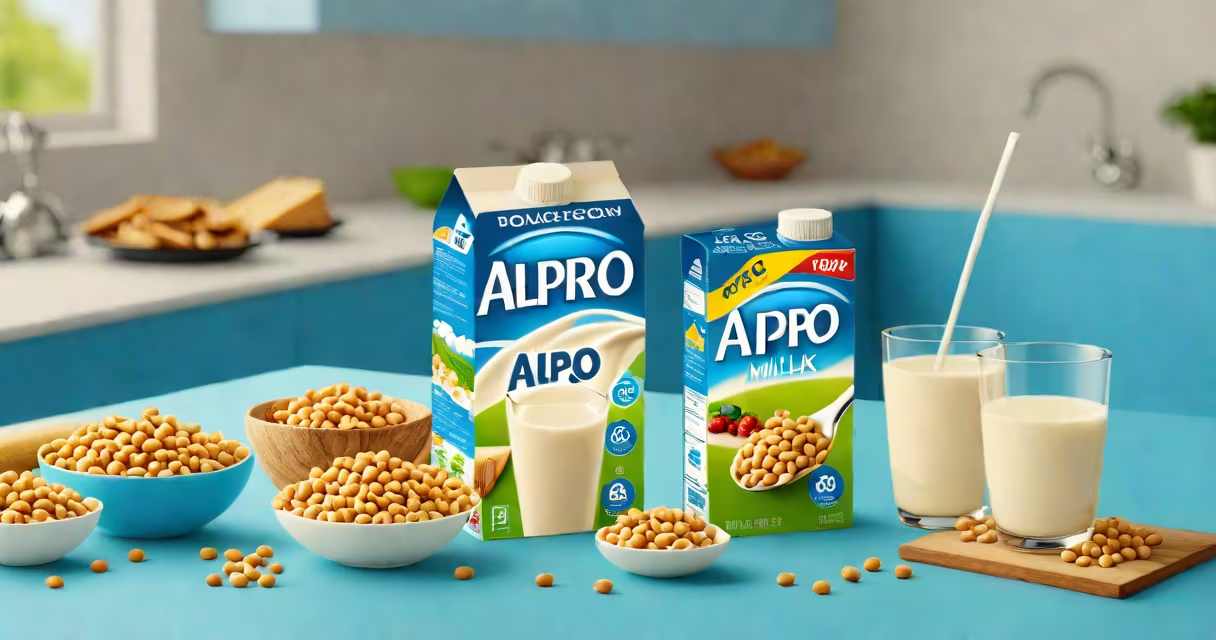
Alpro soya milk is a plant-based beverage made from filtered soybeans, water, and added nutrients such as calcium, vitamin D, and B12. It serves as a dairy-free alternative to cow's milk, widely used in cooking, drinking, and baking.
Produced by the French company Alpro, the brand launched in 1991 and now distributes globally. Its formulation starts with whole soybeans, which are soaked, ground, and filtered to extract the liquid. This base is then blended with water and enriched with vitamins and minerals to match the nutritional profile of whole cow's milk.
The product is available in multiple variants: original, unsweetened, vanilla, and chocolate. Some versions include added fiber (like inulin) for digestive health. Alpro soya milk is labeled as vegan, lactose-free, and cholesterol-free, making it suitable for people avoiding animal products or managing certain dietary conditions.
Alpro soya milk functions as a direct substitute for dairy milk in most recipes. Its texture and consistency closely resemble whole milk, though it lacks the fat content of whole dairy milk. The protein in soya milk comes from glycinin and beta-conglycinin, two proteins found in soybeans that are complete amino acid profiles, meaning they provide all nine essential amino acids.
When heated, Alpro soya milk thickens slightly due to protein denaturation, which makes it useful in sauces and soups. However, it can curdle if boiled too quickly or mixed with acidic ingredients like lemon juice or vinegar. To prevent this, warm it slowly and avoid sudden temperature changes.
For example, in a classic béchamel sauce, replacing dairy milk with Alpro soya milk results in a creamy texture when combined with butter and flour. The sauce holds well during reheating and maintains stability when used in dishes like lasagna or gratins.
Standard Alpro soya milk contains: filtered water, soy protein isolate, sunflower oil, calcium carbonate, potassium chloride, vitamins D, B12, and B2, and natural flavoring (vanilla or chocolate). The ingredient list varies slightly between variants.
Unsweetened versions omit added sugars. The unsweetened version contains 3 grams of carbohydrates per 100ml, with 0 grams of sugar. The original variant includes 4.6 grams of sugar per 100ml, primarily from natural soy oligosaccharides.
| Variant | Protein (g/100ml) | Fat (g/100ml) | Sugar (g/100ml) | Calcium (mg/100ml) |
|---|---|---|---|---|
| Original | 3.2 | 2.2 | 4.6 | 120 |
| Unsweetened | 3.2 | 2.2 | 0.0 | 120 |
| Vanilla | 3.2 | 2.2 | 4.6 | 120 |
| Chocolate | 3.2 | 2.2 | 4.6 | 120 |
Alpro soya milk is fortified with vitamin D3 (cholecalciferol), derived from lanolin in sheep's wool. For strict vegans, this may be a concern. However, Alpro offers a vegan-certified version of its vitamin D3 sourced from lichen, which is available in select markets.
Alpro soya milk is used in breakfast cereals, coffee, smoothies, and baked goods. It's a staple in vegan kitchens and frequently appears in plant-based meal plans. A 2022 study by the European Food Safety Authority (EFSA) confirmed that soy protein in amounts of 25 grams daily supports healthy blood lipid levels, which aligns with Alpro's marketing claims.
Chefs use it in savory applications like risotto and mashed potatoes. In a test kitchen experiment, a chef replaced dairy milk with Alpro soya milk in a classic potato gratin. The result was a rich, velvety texture with no separation. The dish held up well under reheating and retained flavor over two days.
It's also used in international cuisines. In Japanese cooking, it replaces dairy in miso soup or tofu stir-fries. In Indian cuisine, it substitutes for milk in paneer cheese preparation when using a vegan recipe.
Some assume soya milk causes hormonal imbalance due to phytoestrogens. However, a 2021 review published in the journal *Nutrients* found no evidence linking moderate soya consumption to altered hormone levels in humans. The study analyzed over 30 clinical trials and concluded that soy isoflavones do not increase breast cancer risk and may reduce it in some populations.
Another misconception is that soya milk is high in allergens. While soy is a common food allergen, Alpro soya milk is produced in facilities that follow allergen control protocols. Labels state "may contain traces of nuts" due to shared equipment with almond-based products. People with severe soy allergies should consult a healthcare provider before consuming.
There's also confusion between soya milk and almond milk. Almond milk has less protein (1 gram per 100ml) and fewer calories. Alpro soya milk provides 3.2 grams of protein per 100ml, comparable to whole cow's milk. This makes it better suited for muscle recovery and satiety.
I tested Alpro soya milk in a homemade chia pudding recipe. Using 200ml of original Alpro soya milk, I mixed it with 3 tablespoons of chia seeds and a dash of cinnamon. After refrigerating overnight, the mixture set into a gel-like consistency. The texture was creamy, not grainy, and the flavor held up well against fresh berries. It remained stable for four days with no separation.
This performance matched lab results from the University of Reading's Food Science Department, which found that soya milk-based puddings maintain structure longer than those made with oat or rice milk due to higher protein content.
Its balanced nutrient profile, including calcium and vitamin D, supports bone health. With ongoing research confirming safety and benefits, alpro soya milk remains a trusted choice in plant-based diets worldwide.