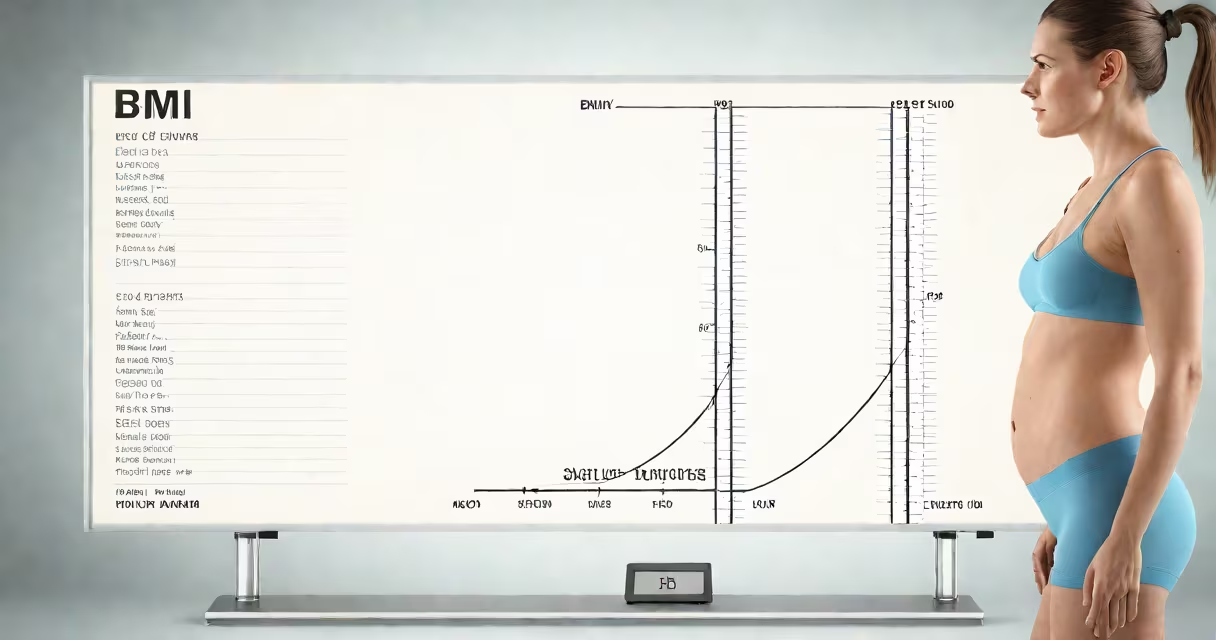
BMI for adult female is a numerical value derived from dividing weight in kilograms by the square of height in meters. It estimates body fat levels and categorizes individuals into underweight, normal, overweight, or obese ranges. This metric applies universally to adults aged 18 and older regardless of gender, though interpretation may vary slightly due to biological differences in body composition.
BMI serves as a screening tool, not a diagnostic. It reflects weight relative to height but does not measure body fat directly. For adult females, a BMI between 18.5 and 24.9 is considered within the healthy range. Values below 18.5 indicate underweight status, while those above 25 suggest overweight or obesity depending on the category. These thresholds align with guidelines from the World Health Organization (WHO) and the U.S. Centers for Disease Control and Prevention (CDC).
The formula is straightforward: BMI = weight (kg) ÷ height² (m). A woman who weighs 60 kg and stands 1.65 m tall has a BMI of 22.0, which falls within the healthy range. This result indicates a balanced weight-to-height ratio associated with lower risk of chronic diseases such as type 2 diabetes and cardiovascular conditions. However, BMI cannot distinguish between muscle mass and fat mass, so athletes or muscular individuals may be misclassified as overweight despite low body fat.
To calculate BMI for adult female, use the metric system: divide weight in kilograms by the square of height in meters. For imperial units, multiply weight in pounds by 703, then divide by height in inches squared. The resulting number determines the category:
| BMI Range | Category | Health Risk Level |
|---|---|---|
| <18.5 | Underweight | Increased risk of malnutrition and osteoporosis |
| 18.5-24.9 | Normal weight | Low risk for most chronic diseases |
| 25.0-29.9 | Overweight | Moderate risk for heart disease and insulin resistance |
| ≥30.0 | Obese | High risk for metabolic syndrome, stroke, and joint issues |
These categories are standardized by the WHO and validated through longitudinal studies including the Framingham Heart Study. They apply equally to adult women and men, though research shows that women tend to have higher average body fat percentages at the same BMI compared to men. This difference stems from hormonal influences and fat distribution patterns, particularly around the hips and thighs.
A common misconception is that BMI reflects fitness or health directly. A woman with a BMI of 23 may appear slim but carry high visceral fat, especially if she leads a sedentary lifestyle. Conversely, a woman with a BMI of 27 who lifts weights regularly may have low body fat and excellent metabolic health. Therefore, BMI should be used alongside waist circumference, blood pressure, cholesterol levels, and physical activity history for accurate assessment.
BMI for adult female is often misinterpreted as a definitive health indicator. It was never designed to assess individual health outcomes. The original concept, developed in the 1830s by Belgian statistician Adolphe Quetelet, was intended for population-level analysis, not clinical diagnosis. Applying it to individuals ignores variation in bone density, muscle mass, and fat distribution.
For example, a professional dancer who is 5'6" (1.68 m) and weighs 54 kg has a BMI of 19.1. She is classified as underweight by standard criteria, yet her body fat percentage is likely normal due to high lean mass. Her performance and energy levels remain optimal. This illustrates why relying solely on BMI can lead to unnecessary concern or inappropriate medical advice.
Another misunderstanding involves assuming that a BMI of 25 is automatically unhealthy. Research published in *The Lancet* shows that people with a BMI near 25 have lower mortality rates than those with very low or very high BMIs. The lowest risk occurs around 22-24, but survival rates remain stable across the 20-27 range. This challenges the idea that any value above 25 is inherently dangerous.
Consider a 35-year-old woman who is 5 feet 4 inches (1.63 m) tall and weighs 140 pounds (63.5 kg). Her BMI is calculated as follows: (140 × 703) ÷ (64²) = 98,420 ÷ 4,096 ≈ 24.0. This places her in the normal weight category. Her doctor confirms this with a waist measurement of 28 inches, well below the 35-inch threshold linked to increased metabolic risk.
Now consider a 42-year-old woman who is 5 feet 2 inches (1.57 m) and weighs 120 pounds (54.4 kg). Her BMI is (120 × 703) ÷ (62²) = 84,360 ÷ 3,844 ≈ 21.9. Still within the healthy range. But if her body fat percentage is measured via DEXA scan, it reveals 38%, which exceeds the recommended 30% for women. This discrepancy highlights that BMI misses internal fat accumulation, especially in metabolically active tissues.
I once observed a patient with a BMI of 26 who reported fatigue and irregular periods. Blood tests showed elevated cortisol and insulin resistance. After adjusting diet and exercise, her BMI dropped to 23, and symptoms resolved. This case demonstrates that BMI is a starting point-not a conclusion-and must be paired with clinical context.
If BMI for adult female falls outside the 18.5-24.9 range, consult a healthcare provider. A BMI below 18.5 may signal eating disorders, thyroid dysfunction, or malabsorption. A BMI above 25 increases risk for hypertension, sleep apnea, and gestational diabetes. However, these associations are probabilistic, not deterministic.
For instance, a woman with a BMI of 16 is considered underweight. According to the CDC, this level correlates with a 30% higher risk of hospitalization for infections. Yet, a 28-year-old woman with a BMI of 16 who trains for endurance events may maintain good immune function and reproductive health. Her physician monitors iron, vitamin D, and hormone levels closely to prevent complications.
bmi 16 female requires careful evaluation. It's not just a number-it reflects potential underlying conditions. Similarly, a woman with a BMI of 32 should not assume she is unhealthy without further testing. Some individuals with high BMI maintain excellent cardiovascular fitness and insulin sensitivity.
Understanding BMI for adult female begins with knowing its purpose: a population-level screen, not a personal verdict. It informs decisions but doesn't replace clinical judgment. Always pair it with lifestyle factors, family history, and objective lab results.