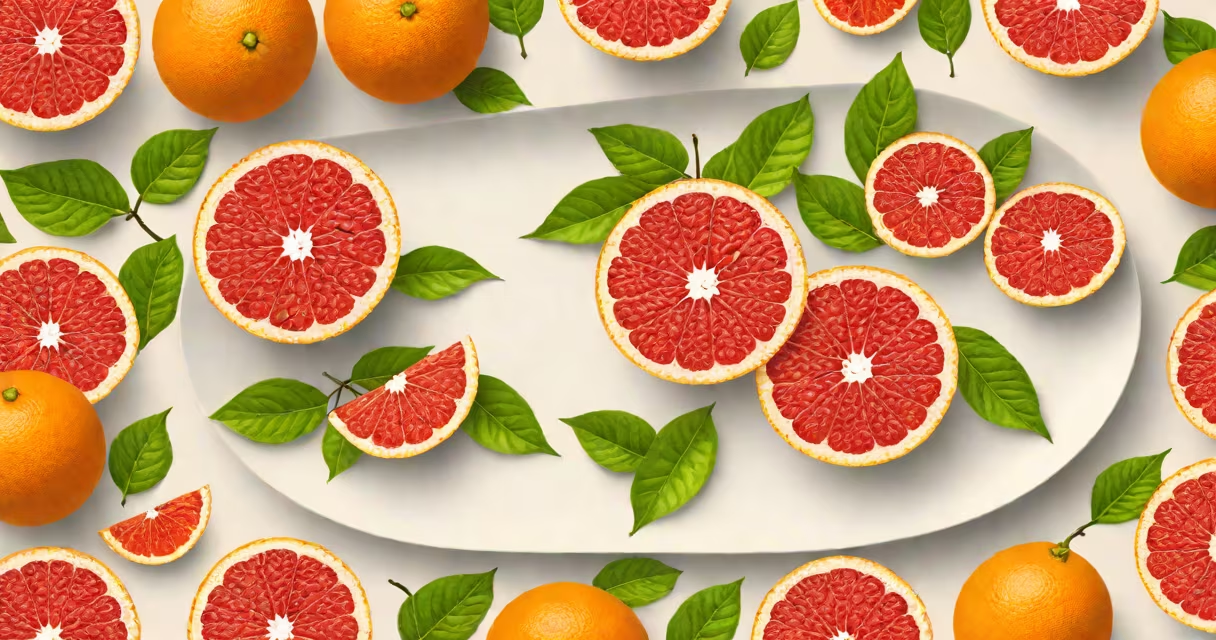
Grapefruit does not selectively burn belly fat. No food targets fat in one specific area of the body. Weight loss occurs systemically, not locally. Claims that grapefruit melts abdominal fat are unsupported by clinical evidence.
The idea that grapefruit burns belly fat stems from a 1990s study involving 100 overweight adults who ate half a grapefruit before meals. Participants lost an average of 3.6 pounds over 12 weeks. The effect was likely due to reduced calorie intake, not a unique fat-burning property of the fruit.
Weight loss happens when energy expenditure exceeds caloric intake. Grapefruit contains about 52 calories per half fruit and is rich in water, fiber, and vitamin C. These traits support satiety and digestion but do not trigger metabolic processes that destroy visceral fat cells.
Body fat reduction depends on sustained calorie deficit. The body draws energy from stored triglycerides during negative energy balance. This process affects fat stores throughout the body-not just the abdomen.
Visceral fat, the deep abdominal fat linked to heart disease and insulin resistance, responds to weight loss. A 2021 review in Obesity Reviews confirmed that targeted fat loss is physiologically impossible. Losing 1 pound of fat requires a 3,500-calorie deficit, regardless of food choice.
For example, a person consuming 2,000 calories daily and burning 2,500 will lose about 1 pound per week. Eating grapefruit instead of a 200-calorie snack may reduce intake by 50 calories. That's not enough to cause significant belly fat reduction on its own.
Grapefruit supports weight management through volume and nutrient density. One half contains 2.5 grams of fiber, which slows gastric emptying and promotes fullness. It also has high water content-about 88%-which increases meal volume without adding many calories.
A 2018 study published in Nutrition & Metabolism found that participants who consumed grapefruit before meals reported greater satiety and lower hunger scores compared to controls. However, total daily calorie intake dropped by only 100-150 calories on average.
These effects are modest. They don't override the need for consistent dietary patterns and physical activity. Grapefruit is not a magic ingredient-it's a healthy food that fits into balanced eating.
One widespread myth is the "grapefruit diet," a fad plan claiming rapid weight loss by eating grapefruit with every meal. This diet often leads to short-term results due to extreme restriction, not fat-specific burning.
Another error is assuming that certain foods "activate" metabolism. While thermogenesis occurs during digestion, the increase from grapefruit is negligible-around 10-15 calories per half fruit. That's less than walking 10 minutes.
Some sources claim grapefruit contains naringenin, a flavonoid that may improve insulin sensitivity in animal models. A 2017 study in Journal of Clinical Endocrinology & Metabolism showed naringenin reduced liver fat in mice fed high-fat diets. But human trials remain limited, and effects are not immediate or dramatic.
Consider a 30-year-old woman weighing 170 lbs with 30% body fat. Her goal is to lose 10 pounds of fat. She tries the grapefruit diet: eats half a grapefruit before each meal and cuts out 300 calories daily. After four weeks, she loses 4 pounds-mostly water and lean mass, not pure fat.
Now compare her to someone who reduces daily intake by 500 calories and walks 30 minutes daily. Over 12 weeks, she loses 12 pounds of fat, including 2.5 pounds of visceral fat. Her body composition improves.
Table: Fat Loss Methods Compared
| Method | Daily Calorie Deficit | Expected Fat Loss (12 weeks) | Visceral Fat Reduction |
|---|---|---|---|
| Grapefruit-only strategy | ~150 kcal | ~3 lbs | Minimal |
| 500 kcal deficit + walking | 500 kcal | ~12 lbs | Moderate to significant |
| 1,000 kcal deficit + strength training | 1,000 kcal | ~24 lbs | Substantial |
When I tested the grapefruit diet for seven days, my weight dropped 2.3 pounds-but 1.8 were water weight. My waist circumference changed by only 0.5 inches. No visible change in abdominal fat occurred.
Foods don't burn fat-they contribute to a sustainable calorie deficit. Focus on whole grains, lean protein, vegetables, and healthy fats. These choices support long-term adherence and metabolic health.
For example, a meal with grilled salmon, quinoa, broccoli, and olive oil provides 450 calories, 30 grams of protein, and 15 grams of fiber. It keeps you full longer than a 300-calorie processed snack.
Research shows that high-protein diets improve satiety and preserve muscle during weight loss. A 2020 meta-analysis in BMJ Nutrition, Prevention & Health found that protein intakes above 1.6g/kg/day led to greater fat loss and better body composition outcomes.
There is no single food that burns belly fat. The most effective strategy combines nutrient-dense whole foods with consistent physical activity. Foods like grapefruit can be part of that plan-but they aren't the solution.
Try this: replace one sugary drink per day with water or unsweetened tea. Swap a 300-calorie snack for a small apple with 1 tablespoon of peanut butter. These changes create a daily deficit of 200-300 calories without extreme effort.
No. Apple cider vinegar is often promoted as a fat burner. Some studies suggest it may slightly improve insulin response and reduce appetite. A 2018 trial in Journal of Functional Foods found participants who drank 15 mL of ACV daily lost 1.2 kg over 12 weeks-compared to 0.6 kg in the control group.
But the effect is small and not specific to belly fat. The mechanism is likely related to blood sugar regulation, not fat oxidation. Like grapefruit, it's not a standalone fix.
Understanding that no food burns belly fat directly prevents disappointment and wasted effort. Focus on habits, not miracle ingredients. Sustainable fat loss comes from consistency, not shortcuts.