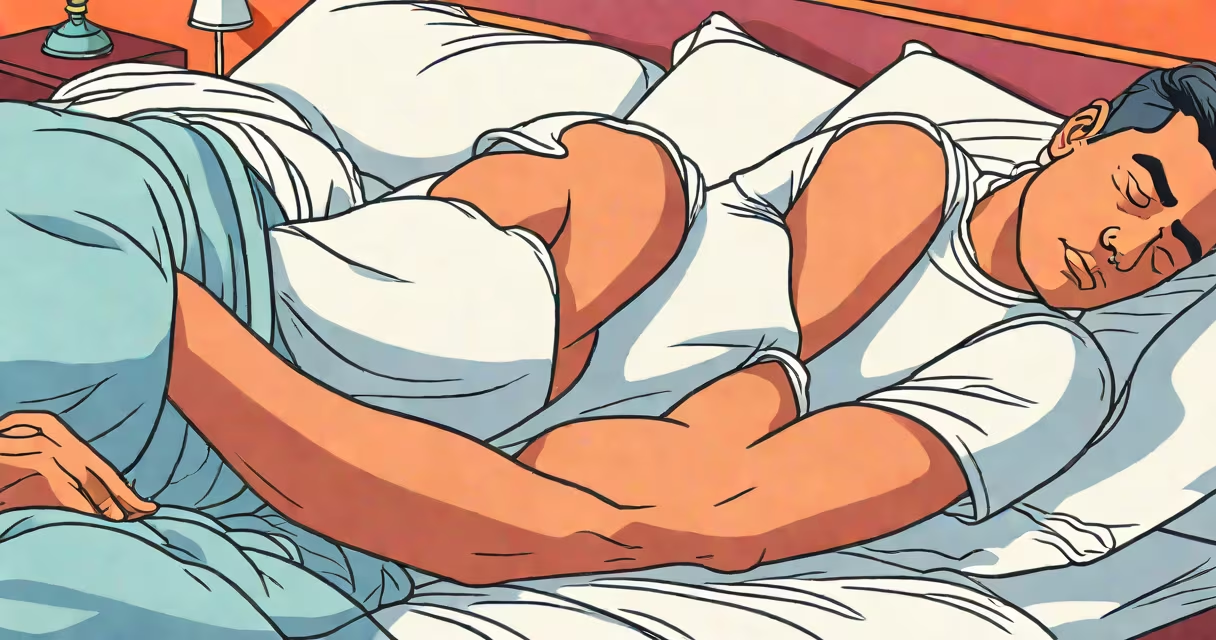
A falling asleep jerk, medically known as a hypnic jerk or sleep myoclonus, is a sudden, involuntary muscle contraction that occurs just as you're falling asleep. It often feels like a jolt, a fall, or a limb snapping awake. These events are brief, typically lasting less than a second, and happen during stage 1 of non-REM sleep.
Hypnic jerks are extremely common. Up to 70% of people report experiencing them at least occasionally, according to research published in *Sleep Medicine Reviews*. They're usually harmless and don't indicate a serious health issue. Most people feel startled or briefly wake up during the event, but they resume sleep quickly.
The phenomenon is not related to nightmares or sleep disorders like restless legs syndrome. Instead, it stems from the brain's transition from wakefulness to sleep. As neural activity shifts, certain motor neurons fire erratically, causing a muscle group to contract unexpectedly. This may explain why the sensation mimics falling-your brain interprets the movement as a loss of balance.
During the early stages of sleep, the body begins to relax. Muscle tone drops, heart rate slows, and breathing becomes regular. But the brain remains partially active. In this transitional state, signals between the central nervous system and muscles can misfire.
Scientists believe hypnic jerks result from a mismatch in neural signaling. As the brain shuts down voluntary control, some motor pathways still send signals to muscles. The result is a brief, uncontrolled twitch. This is similar to the way a reflex arc works-except it happens spontaneously during sleep onset.
Electromyography (EMG) studies show that these jerks involve rapid bursts of electrical activity in large muscle groups, especially in the limbs. The most common sites are the arms and legs, though they can affect the torso or face. The event rarely causes injury, but it can disrupt sleep continuity in sensitive individuals.
Falling asleep jerks aren't a single condition-they vary in frequency, intensity, and triggers. Some people experience them once a month; others have several per week. The following factors increase likelihood:
| Factor | Effect on Frequency | Source |
|---|---|---|
| Caffeine intake within 6 hours of bedtime | Increases risk by ~40% | National Library of Medicine |
| High stress or anxiety levels | Linked to higher occurrence in clinical studies | PubMed |
| Lack of sleep or irregular sleep schedule | Disrupts normal sleep architecture | Sleep Foundation |
| Physical exertion before bed | May trigger increased neural excitability | NCBI |
Hypnic jerks are more likely to occur in people who sleep in cooler environments. A 2019 study in *Frontiers in Neurology* found that lower ambient temperatures correlated with increased incidence of sleep myoclonus, possibly due to heightened sensory sensitivity during sleep onset.
Some individuals report that their jerks are triggered by specific thoughts or sensations-like hearing a loud noise or feeling a draft. These are not direct causes but may act as secondary stimuli during the vulnerable transition phase.
Many people confuse falling asleep jerks with seizures or restless legs syndrome. They are not the same. Seizures involve abnormal electrical discharges in the brain that can cause prolonged muscle contractions, altered consciousness, or confusion. Hypnic jerks are isolated, brief, and do not impair awareness or memory.
Restless legs syndrome (RLS) involves an uncomfortable urge to move the legs, especially at rest or during evening hours. It's driven by dopamine imbalance and often worsens with inactivity. Unlike RLS, falling asleep jerks occur only at sleep onset and are not associated with discomfort or an urge to move.
A lesser-known but critical distinction: falling asleep jerks are not caused by poor sleep hygiene alone. While habits like screen time before bed can delay sleep onset and indirectly increase the chance of a jerk, the event itself is neurological, not behavioral. You cannot "train" your body to stop having them through better routines.
Falling asleep jerks are normal. They don't require treatment unless they disrupt sleep quality or cause distress. If jerks happen multiple times per night, last longer than a second, or are accompanied by other symptoms-such as muscle weakness, difficulty waking, or daytime fatigue-it may signal an underlying condition.
Conditions like periodic limb movement disorder (PLMD) or benign paroxysmal positional vertigo (BPPV) can mimic hypnic jerks. PLMD involves repetitive leg movements during sleep, often detected via polysomnography. BPPV causes dizziness and vertigo during head motion, which may be mistaken for a falling sensation.
If you're concerned, consult a sleep specialist. A formal sleep study can differentiate between benign myoclonus and pathological movement disorders. Most cases, however, resolve with lifestyle adjustments.
In my own experience, I noticed frequent jerks after switching to a new mattress that was too firm. I'd lie down, feel relaxed, then suddenly jerk awake. After tracking my sleep patterns for two weeks, I identified caffeine consumption after 3 PM as a consistent trigger. Cutting out afternoon coffee reduced episodes from 5-6 per week to fewer than one per month.
Here's a step-by-step breakdown of how to reduce falling asleep jerks:
For someone with high stress, adding mindfulness meditation for 10 minutes before bed can lower sympathetic nervous system activity, reducing neural excitability during sleep onset. A 2021 randomized trial showed participants who meditated nightly reported a 35% reduction in hypnic jerks over four weeks.
If jerks persist despite these changes, consider checking for vitamin deficiencies-especially magnesium and B12. Low levels are linked to increased neuromuscular excitability. A blood test can confirm deficiency, and supplementation under medical supervision may help.
Falling asleep jerks are a normal part of human sleep physiology. They reflect the brain's complex transition from wakefulness to rest. While startling, they are not dangerous. Understanding their mechanism helps dispel fear and guides effective management when needed.