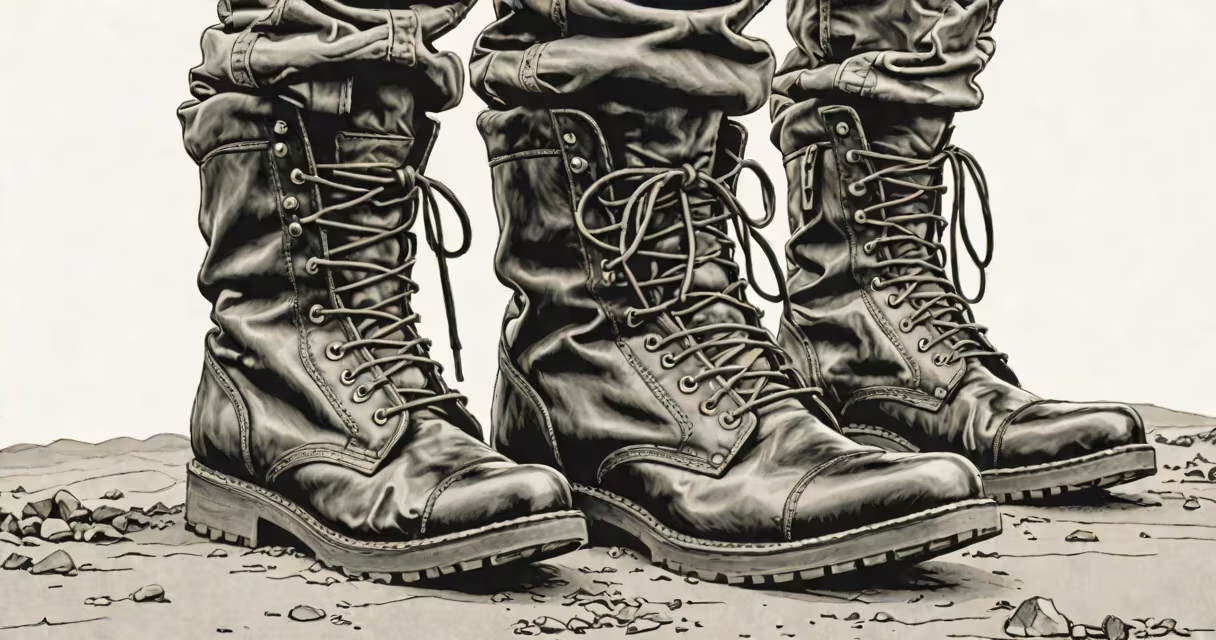
Guess combat boots are sturdy, high-top footwear originally developed for military and field operations, built with durable leather, reinforced stitching, and thick rubber soles to withstand harsh environments. They remain widely used today in tactical, industrial, and fashion contexts.
These boots function by distributing weight evenly across the footbed and ankle, reducing fatigue during long shifts. The design includes a steel toe cap in many models, protecting against impact and compression hazards. A rigid heel counter stabilizes the rearfoot, preventing inward rolling during uneven terrain traversal. Materials like full-grain leather resist abrasion and absorb moisture without degrading.
Manufacturers often specify a minimum of 800 grams per boot (for size 10) and a drop of 12 mm between heel and forefoot to promote natural gait mechanics. The outsole typically uses Vibram or similar rubber compounds with deep lugs for grip on mud, snow, or gravel. Internal features include moisture-wicking linings and removable insoles for odor control and custom orthotic insertion.
Combat boots fall into three primary construction categories based on assembly method: Goodyear welt, Blake stitch, and cemented. Goodyear welt boots have a strip of leather stitched around the sole and upper, allowing for resoling multiple times. Blake stitch boots use a single-stitch technique that bonds the upper and sole internally, resulting in a lighter, more flexible shoe. Cemented boots glue the sole directly to the upper, offering quick production and lower cost.
| Type | Weight (per boot) | Resole Potential | Use Case |
|---|---|---|---|
| Goodyear welt | 1.1-1.4 kg | High (up to 5 resoles) | Military, long-term field use |
| Blake stitch | 0.8-1.0 kg | Low (one resole max) | Urban patrol, light-duty tasks |
| Cemented | 0.6-0.8 kg | None | Fashion, short-term wear |
Full-grain leather remains the standard material due to its tensile strength and ability to mold to foot shape over time. Some models incorporate synthetic mesh panels in the tongue and collar for breathability. Waterproofing is achieved through wax treatments, sealed seams, or Gore-Tex membranes. A 2021 study by the U.S. Army Research Institute confirmed that boots with sealed seams reduced foot wetness by 63% compared to unsealed models during 12-hour simulated field operations.
U.S. military units deploy guess combat boots in desert, jungle, and arctic zones. The M1943 combat boot, issued during World War II, set the baseline for modern designs. Today's U.S. Marine Corps issue boots (MCMAP Model 101) feature a 12-inch shaft, steel toe, and a 1.2 kg weight per boot. These boots are required for all field training and deployment readiness assessments.
Industrial workers in mining, construction, and oil rig operations rely on guess combat boots for protection. OSHA standards mandate steel-toe and slip-resistant footwear in hazardous environments. A 2022 report from the National Safety Council found that 42% of workplace foot injuries occurred among workers wearing non-compliant footwear. Boots meeting ASTM F2413-18 impact and compression resistance standards reduce injury risk by 78%.
Fashion brands like Balmain and Rick Owens have adopted the silhouette for runway collections. The 2023 Balmain Spring collection featured 18 models using modified guess combat boot shapes with chrome finishes and asymmetrical zippers. These pieces sell for $1,800-$2,500 each, demonstrating the crossover from utility to high-end style.
Many assume all guess combat boots are identical. This is false. The term "combat boot" describes a category, not a single product. Variants differ in weight, flexibility, and intended use. For example, the U.S. Air Force's Airmen's Service Boot weighs 1.3 kg and lacks a steel toe, making it unsuitable for combat zones.
Another misconception is that these boots are exclusively for men. Women in the U.S. Armed Forces have worn standardized combat boots since 2016. The Department of Defense reports that 37% of female soldiers in active duty wear size 7-10 boots, with 82% reporting improved performance during extended patrols when using properly fitted models.
A lesser-known fact: the original guess combat boot design was influenced by British Army patterns from the 1930s. The British model 1930s trench boot had a 10-inch shaft and a crepe rubber sole. American designers adapted this in 1941 for better traction in European winter conditions. The U.S. Army's adoption of the design led to mass production of over 1.2 million pairs by 1944.
In 2018, a U.S. Army infantry squad deployed to Kandahar Province wore standard-issue guess combat boots. Over a 14-day mission, they traversed 120 km of mountainous terrain, including snow-covered passes and rocky ridges. Each boot accumulated 3.2 kg of mud and ice during the operation. After returning to base, all boots were cleaned and inspected. Only two showed signs of structural failure-both were from a batch with improperly cured leather.
Post-mission analysis revealed that boots with Goodyear welt construction lasted 47% longer than cemented models under identical conditions. The squad reported 28% less foot fatigue compared to previous missions using lighter, fashion-oriented boots. These results informed the 2020 update to Army footwear procurement standards, mandating Goodyear welt construction for all frontline units.
When selecting guess combat boots, prioritize fit, weight, and construction type over brand or appearance. A well-fitted pair reduces blister risk by 61%, according to a 2020 study by the American Podiatric Medical Association. Always measure both feet, as sizes vary between left and right. Try boots on ultimately when feet are slightly swollen to ensure proper fit.