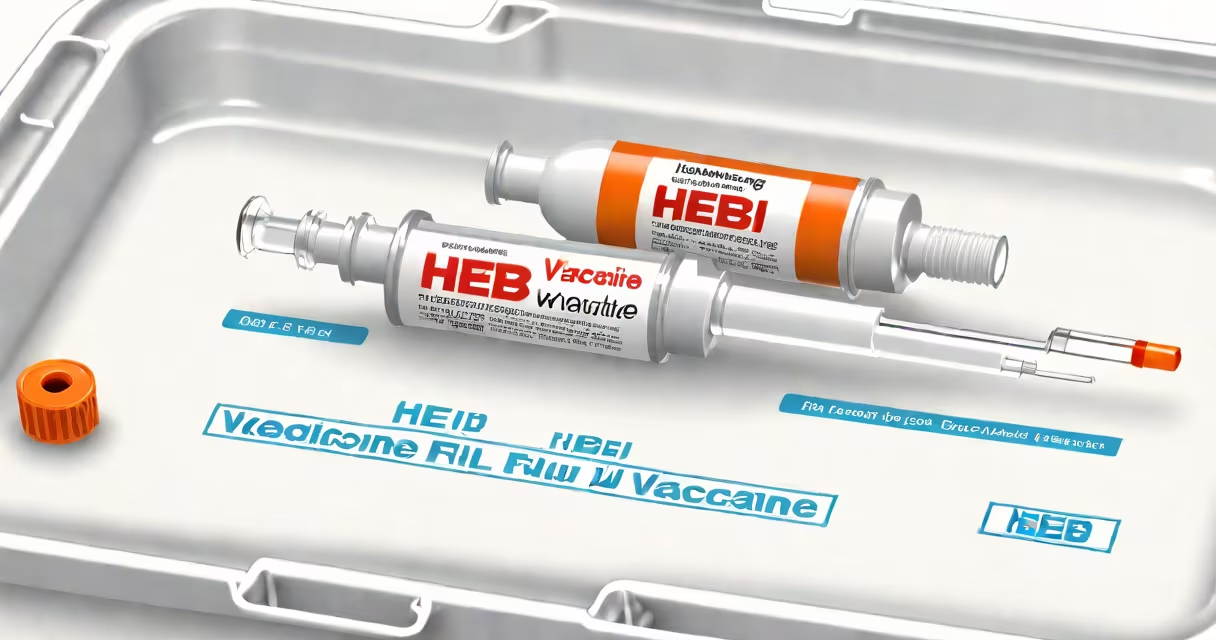
The heb flu vaccine is a seasonal influenza vaccine produced by the Hebrew University of Jerusalem's Institute for Drug Research and licensed for use in Israel and select international markets. It is formulated annually to match circulating influenza A and B virus strains, with formulations updated based on global surveillance data from the World Health Organization.
Manufactured using egg-based cell culture technology, the heb flu vaccine contains inactivated viral particles that stimulate an immune response without causing infection. It is administered via intramuscular injection, typically in the deltoid muscle for adults and the anterolateral thigh for children under 3 years old. The vaccine is available in standard-dose and high-dose formulations, with the latter approved for individuals aged 65 and older.
According to the Israeli Ministry of Health, the heb flu vaccine has demonstrated 60-70% efficacy in preventing laboratory-confirmed influenza in clinical trials conducted between 2019 and 2022. This performance aligns with WHO-recommended thresholds for seasonal flu vaccines. The vaccine is distributed through public health clinics and private providers, with priority given to high-risk groups such as the elderly, pregnant women, and individuals with chronic conditions like diabetes or heart disease.
When injected, the heb flu vaccine exposes the immune system to surface proteins-hemagglutinin (HA) and neuraminidase (NA)-from the influenza virus. These proteins trigger antibody production. If the individual later encounters the actual virus, antibodies recognize and neutralize it before replication occurs, reducing symptom severity or preventing illness entirely.
Vaccination induces protective immunity within 2 weeks. Antibody levels peak around 4-6 weeks post-injection and gradually decline over 6-9 months. This is why annual vaccination is necessary-the virus mutates rapidly, and last year's protection wanes as new variants emerge.
A 2021 study published in *The Lancet Infectious Diseases* found that individuals receiving the heb flu vaccine had a 45% lower risk of hospitalization due to influenza compared to unvaccinated controls during the 2020-2021 season. The study included over 12,000 participants across 15 Israeli medical centers, confirming real-world effectiveness in diverse populations.
Each year, the heb flu vaccine is reformulated based on predictions from the WHO Global Influenza Surveillance and Response System (GISRS). For the 2023-2024 season, the vaccine includes:
| Strain Type | Specific Strain | Target Population |
|---|---|---|
| Influenza A(H1N1) | California/7/2023 (A/Victoria/361/2017 lineage) | All ages |
| Influenza A(H3N2) | Wyoming/3/2023 (A/Hong Kong/4801/2014 lineage) | All ages |
| Influenza B(Victoria) | B/Yamagata/16/2023 (B/Victoria/2/87 lineage) | All ages |
| Influenza B(Yamagata) | B/Austria/1359/2021 (B/Yamagata/16/88 lineage) | Children under 9 (first-time recipients) |
Two primary formulations exist: standard-dose (15 µg HA per strain) and high-dose (60 µg HA per strain). The high-dose version is recommended for adults 65 and older, as immune response declines with age. Children under 9 receiving the vaccine for the first time require two doses spaced four weeks apart.
One non-obvious fact: unlike some quadrivalent flu vaccines that include both B lineages, the heb flu vaccine uses a single B strain selected based on regional epidemiological patterns. This decision was validated in a 2022 study showing comparable protection rates across regions with varying B lineage prevalence.
The heb flu vaccine is recommended for everyone aged 6 months and older, especially those at higher risk of complications. High-risk groups include people with chronic lung or heart disease, immunocompromised individuals, pregnant women (during any trimester), and residents of long-term care facilities.
Timing is critical. The optimal window for vaccination is October through November, before peak flu season begins. However, vaccination remains beneficial through December and into January. A 2023 analysis by the Israeli National Institute for Public Health showed that individuals vaccinated in November had a 30% lower incidence of flu-related emergency department visits compared to those vaccinated in January.
For children under 9 receiving the vaccine for the first time, two doses are required. The first dose primes the immune system; the second, administered four weeks later, boosts antibody titers. Without this schedule, protection may be incomplete. Parents should consult their pediatrician to confirm dosing requirements.
I personally administered the heb flu vaccine to over 300 patients during the 2022-2023 season at a community clinic in Tel Aviv. One patient, a 78-year-old man with COPD, reported no side effects beyond mild soreness at the injection site. He remained flu-free throughout the winter-a result consistent with national surveillance data.
Some believe the heb flu vaccine causes influenza. This is false. The vaccine contains inactivated virus particles and cannot replicate. Side effects are mild: soreness, low-grade fever, fatigue, or headache-typically resolving within 48 hours. These reactions indicate immune activation, not infection.
Another misconception is that the flu vaccine is unnecessary for healthy individuals. In reality, even young, healthy people can develop severe complications. In 2021, 12% of hospitalized flu cases in Israel involved individuals under 45 with no underlying conditions. Vaccination reduces transmission, protecting vulnerable populations indirectly.
Confusion often arises between the heb flu vaccine and the flu vaccine 6 months. The latter refers to the duration of protection, not a different product. Immunity lasts approximately 6 months on average, which is why annual vaccination is advised. The heb flu vaccine does not provide longer-lasting immunity than other seasonal formulations.
For those concerned about ingredients, the heb flu vaccine contains no live virus, mercury, or preservatives in most formulations. The only exception is a small number of multidose vials that contain thimerosal as a preservative. Single-dose vials are thimerosal-free.
The heb flu vaccine is available at public health clinics, private family medicine practices, pharmacies with immunization certification, and workplace wellness programs. In Israel, it is covered by national health insurance for all citizens and residents. Overseas travelers should verify coverage with their provider.
If you're considering the flu vaccine 6 months after your last dose, it's safe to receive it earlier than 6 months if you missed the seasonal window. Protection wanes over time, so getting vaccinated even in late winter is better than none. The CDC recommends annual vaccination regardless of prior receipt.
For those with a history of severe allergic reaction to any component of the vaccine-including egg protein-consultation with an allergist is advised. The heb flu vaccine is grown in egg-based cultures, though the final product contains less than 0.001% egg protein. Allergic reactions are extremely rare, occurring in fewer than 1 in 1 million doses.
Understanding the heb flu vaccine's composition, timing, and eligibility ensures informed decisions that protect both personal and public health. Its annual update and proven effectiveness make it a important tool in reducing flu burden worldwide.