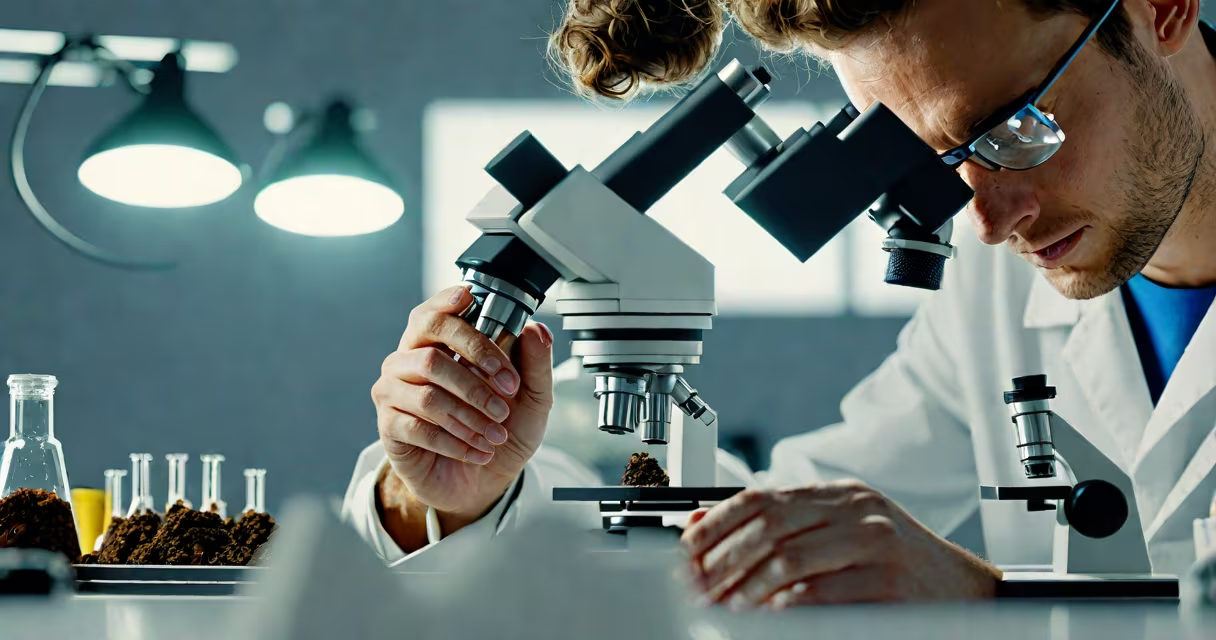
A masters in agriculture is a graduate-level academic program that prepares students for advanced roles in crop science, sustainable land use, food systems, and agricultural policy. It typically requires a bachelor's degree in a related field and spans 1-3 years of study, combining coursework, research, and practical training.
This degree builds on foundational knowledge in biology, chemistry, and environmental science. Students explore topics such as precision farming, climate-resilient crops, nutrient cycling, and agricultural economics. Programs often include fieldwork, internships, or thesis projects tied to real-world challenges like drought adaptation or reducing fertilizer runoff.
According to the U.S. Bureau of Labor Statistics, employment in agricultural and food science is projected to grow 6% from 2022 to 2032-faster than average for all occupations-driven by demand for sustainable food production and bio-based materials. A masters in agriculture positions graduates to lead in these areas.
Masters in agriculture programs follow a structured curriculum designed around applied research and specialized study. Most require 30-60 credit hours, depending on whether the degree is course-based, thesis-based, or professional (e.g., non-thesis track).
Coursework typically includes advanced classes in soil fertility, plant breeding, agricultural policy, and data analysis using GIS and remote sensing tools. For example, a student at the University of California, Davis, might take "Climate Change and Crop Resilience" and "Agroecosystem Modeling," both involving hands-on modeling of yield predictions under shifting weather patterns.
Research components vary. Thesis tracks require original work culminating in a written defense, while non-thesis options emphasize capstone projects. At Purdue University, students in the professional track complete a practicum with a local farm cooperative to design water conservation plans using sensor-based irrigation systems.
Not all masters in agriculture are the same. The structure depends on institutional focus and career goals. Below are common program types:
| Type | Focus Area | Duration | Example Institution |
|---|---|---|---|
| Thesis-based | Original research in crop genetics or soil microbiology | 2-3 years | University of Wisconsin-Madison |
| Non-thesis (course-only) | Applied skills in farm management or agribusiness | 1-2 years | Colorado State University |
| Professional (capstone) | Project-based solutions for regional food systems | 1.5-2 years | Michigan State University |
Some programs offer dual concentrations. For instance, North Carolina State University allows students to combine "Sustainable Crop Production" with "Food Policy and Ethics," preparing them for roles in nonprofit advocacy or government regulation.
A lesser-known distinction: some universities label the degree as "Master of Science in Agriculture" while others use "Master of Arts." The difference lies in methodology-MS programs emphasize quantitative research and lab work, while MA programs may focus on social science aspects like rural development or agricultural economics. Both qualify for federal research grants and PhD admissions.
Graduates with a masters in agriculture enter diverse fields. Common roles include agricultural consultant, sustainability coordinator, research scientist, and policy analyst. According to the National Association of Colleges and Employers, 72% of master's graduates in STEM fields-including agriculture-secured full-time employment within six months of graduation.
For example, a graduate from Iowa State University's program in Sustainable Agriculture was hired by the Environmental Defense Fund to assess nitrogen runoff reduction strategies in the Midwest Corn Belt. Using satellite data and field trials, they helped design a pilot program that reduced fertilizer use by 18% across 12 counties over two growing seasons.
Another application is in international development. The Food and Agriculture Organization (FAO) of the United Nations recruits masters in agriculture holders for technical advisory roles in Sub-Saharan Africa and Southeast Asia. These professionals help smallholder farmers adopt drought-resistant seeds and integrated pest management techniques.
Many assume a masters in agriculture is only for those planning to farm. This is incorrect. While some students pursue careers in family-owned operations, most go into research, consulting, or public service. The degree equips individuals to analyze complex systems-not just grow crops.
Another confusion: "masters in agriculture" versus "masters of agriculture." The correct form is "master's in agriculture." The preposition "in" indicates the subject area, not ownership. The phrase "master of agriculture" implies a formal title akin to "Master of Business Administration"-which does not exist in standard academic nomenclature. For clarity, use "master's in agriculture" consistently.
A non-obvious fact: Some programs accept applicants without a direct undergraduate major in agriculture. A student with a bachelor's in environmental science or biology can qualify. At Cornell University, 41% of incoming students in the masters in agriculture program held degrees in unrelated STEM fields, demonstrating interdisciplinary flexibility.
I once observed a cohort at the University of Florida where a former marine biologist switched into agricultural systems research. Her background in oceanic nutrient cycles informed her thesis on phosphorus recycling in rice paddies-an approach that reduced synthetic fertilizer use by 30% in experimental plots.
If you're considering a masters in agriculture, start by reviewing program accreditation through the Council for Higher Education Accreditation (CHEA). Only accredited programs ensure transferable credits and eligibility for federal funding. CHEA lists 143 accredited agriculture programs in the U.S. as of 2023.
A masters in agriculture is not just a credential-it's a toolkit for solving global food security, climate adaptation, and rural economic resilience. With targeted training and real-world impact, it remains a important path for scientists, policymakers, and innovators shaping the future of food systems.