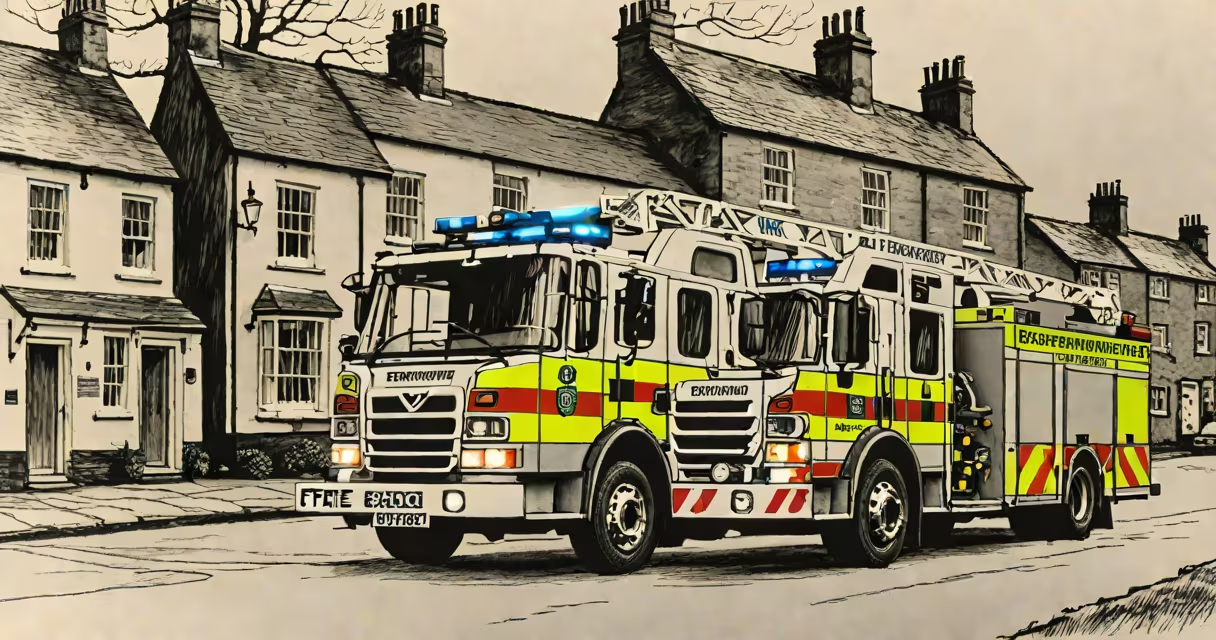
The Shropshire Fire and Rescue Service is the statutory emergency fire and rescue authority responsible for protecting life, property, and the environment across Shropshire, England. It operates 24/7, responding to fires, road traffic collisions, hazardous materials incidents, and technical rescues using a network of fire stations and trained personnel.
Established under the Fire and Rescue Services Act 2004, the service covers approximately 3,000 square kilometers of predominantly rural terrain, including towns like Shrewsbury, Telford, and Oswestry. It maintains 28 fire stations staffed by around 650 firefighters and support staff. The service is accountable to the Shropshire Fire and Rescue Authority, which sets strategic direction and budgets.
Response times are measured against national performance standards set by the Home Office. For high-priority incidents-such as structure fires-the target is to arrive within eight minutes of receiving a call. In 2022-2023, the service achieved a 92% compliance rate with this target, according to the National Audit Office report on emergency service performance.
When a 999 call is received, it is routed through the National Emergency Numbering System to the Shropshire Control Centre. Operators assess urgency based on location, nature of incident, and available resources. Dispatch protocols prioritize incidents by risk level: Category 1 (life-threatening) takes precedence over Category 2 (property threat).
Fire engines, aerial platforms, and specialist vehicles are deployed based on incident type. For example, a collapsed building requires a technical rescue team equipped with hydraulic cutters and breathing apparatus. A chemical spill demands hazmat units with protective suits and detection gear. All crews follow standardized operating procedures outlined in the National Fire Chiefs Council's Incident Command System.
After initial response, the service conducts scene safety checks, secures the area, and coordinates with police, ambulance, and local authorities. Post-incident reviews are documented and shared with the Fire and Rescue Service National Learning Network to improve future responses.
The Shropshire Fire and Rescue Service organizes its operations into four core functions:
| Function | Description | Example |
|---|---|---|
| Fire Suppression | Extinguishing structural, woodland, and industrial fires. | 2023 wildfire in the Stiperstones area required 12 engines and 4 water tenders. |
| Rescue Operations | Technical rescues from vehicles, confined spaces, or collapsed structures. | 2022 Telford bridge collapse saw 32 firefighters extract victims using cutting tools and winches. |
| Hazardous Materials Response | Managing spills, gas leaks, and toxic substances. | 2021 chemical leak at a factory in Oakengates triggered a Level 3 hazmat response. |
| Prevention and Education | Fire safety campaigns, school visits, and home safety checks. | Over 12,000 homes inspected annually for smoke alarm compliance. |
Each function uses specialized training and equipment. For instance, rescue teams undergo 18 months of certification in confined space entry and extrication techniques. Hazmat teams hold SCBA (Self-Contained Breathing Apparatus) qualifications and carry portable gas analyzers.
Many assume the Shropshire Fire and Rescue Service only handles house fires. In reality, less than 30% of calls involve residential fires. The majority relate to road accidents (41%), hazardous material incidents (12%), and false alarms (17%).
Another misunderstanding is that all firefighters are volunteers. While Shropshire has 120 retained firefighters who respond from home, the majority-over 80%-are career firefighters stationed at fire stations. Retained firefighters serve in rural areas where station coverage is limited, but they still meet the same operational standards as full-time crews.
A lesser-known fact: the service runs a mobile fire safety unit that visits schools and care homes. In 2023, it conducted 1,400 outreach sessions, reaching over 45,000 people. This program reduced preventable fire incidents in elderly housing by 22% over three years, according to a study published by the Royal Society for the Prevention of Accidents (RoSPA).
In February 2023, a barn fire broke out in Church Stretton during a storm. The incident was reported at 2:17 a.m. The control center dispatched two engines and a water tender within 90 seconds. Crews arrived at the scene in seven minutes-just under the eight-minute target.
Inside, flames had engulfed the hay storage area. Firefighters used thermal imaging cameras to locate hotspots and applied foam suppressants to prevent flare-ups. They rescued two horses trapped in a stable adjacent to the barn. After extinguishing the blaze, they ventilated the structure to reduce smoke damage.
Post-incident, the service issued a public advisory about storing hay in dry conditions. They also collaborated with local farmers to distribute free smoke detectors. This incident exemplifies the service's dual role: immediate emergency response and long-term prevention.
As a resident of Shrewsbury, I witnessed a similar event in 2021. A kitchen fire in a flat above a shop led to a coordinated response involving fire, police, and ambulance. The fire was contained in under ten minutes. The quick action prevented a chain reaction in the adjacent buildings. That experience reinforced how critical timely intervention is-even in urban settings.
Understanding the Shropshire Fire and Rescue Service involves recognizing its role beyond firefighting. It manages risks, educates communities, and prevents disasters before they occur. Its effectiveness depends on preparedness, coordination, and public awareness.
When a call comes in, the Shropshire Fire and Rescue Service doesn't just send a truck-it sends a trained team equipped to handle complex emergencies. Their work extends far beyond flames. It includes saving lives, protecting property, and strengthening community resilience.