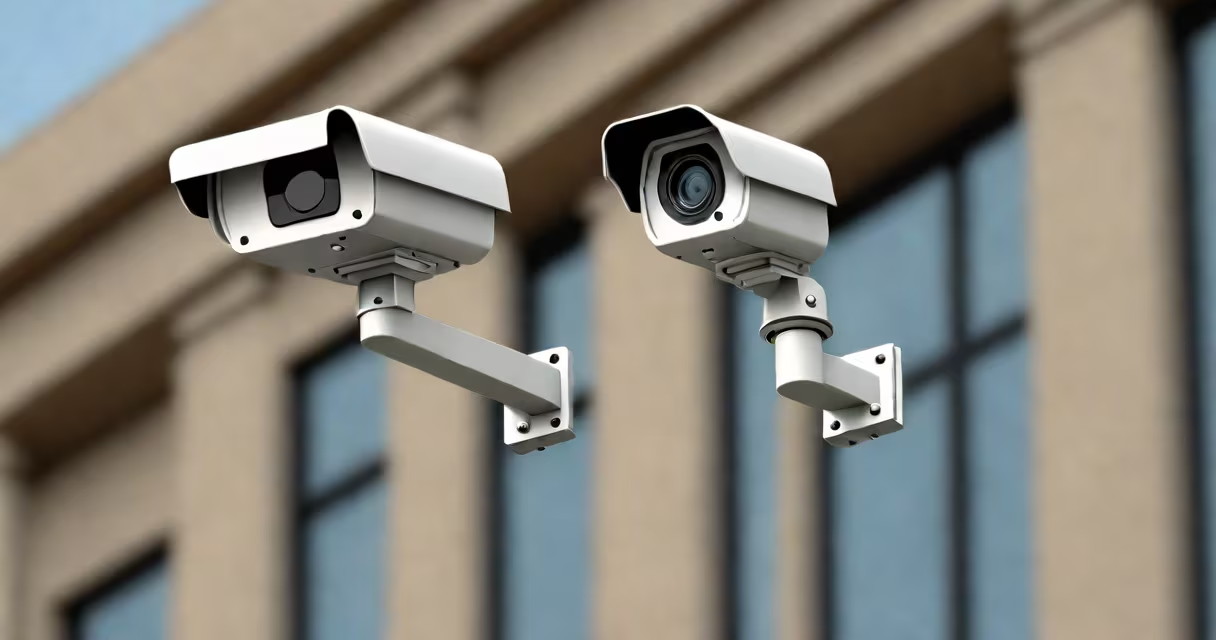
Top of the line security cameras are professional-grade surveillance devices featuring 4K resolution, advanced AI analytics, and rugged construction designed for continuous, high-stakes monitoring in commercial and residential settings.
These cameras go beyond basic recording. They integrate intelligent features such as facial recognition, license plate detection, and behavior analysis. Unlike consumer models, they support remote access via secure cloud platforms, offer long-term storage with encryption, and withstand extreme temperatures, rain, and dust.
They are typically installed in banks, retail chains, airports, and high-value private properties. Their performance is validated through independent testing by organizations like UL (Underwriters Laboratories) and NIST (National Institute of Standards and Technology).
These cameras capture video using high-sensitivity CMOS sensors capable of producing sharp images even in low light. They process footage locally using on-board processors before sending it to a central management system or cloud server.
AI algorithms analyze motion patterns in real time. For example, a camera can distinguish between a person walking past and a tree branch swaying in wind. This reduces false alarms and improves response accuracy.
When triggered, the system logs metadata-timestamp, location, event type-and sends alerts to designated users via email or mobile app. Some models support two-way audio for remote communication during incidents.
Top of the line security cameras fall into several categories based on form factor and function:
| Type | Best For | Key Features |
|---|---|---|
| Fixed Dome | Indoor hallways, lobbies | 360° coverage, vandal-resistant housing, 4K resolution |
| Pan-Tilt-Zoom (PTZ) | Perimeter monitoring, large parking lots | Remote control, 30x optical zoom, auto-tracking |
| Weatherproof Bullet | Exterior entry points, driveways | IP68 rating, -40°C to 60°C operating range, infrared night vision up to 100m |
| Thermal Imaging | Border security, forest fire detection | Senses heat signatures, works in total darkness or fog, detects intruders at 300m distance |
Each type uses specialized lenses and sensor arrays. Thermal cameras, for instance, do not rely on visible light-they detect differences in thermal energy. A single thermal unit can cover a 10-acre area without needing additional lighting.
Many models include built-in microphones and speakers. This allows security personnel to issue verbal warnings remotely, deterring trespassers before physical intervention is needed.
Some assume that higher megapixels automatically mean better quality. That's not true. A 4K camera with poor lens quality or inadequate changing range may produce blurry or washed-out images in mixed lighting conditions.
Another myth is that all AI-enabled cameras require constant internet access. While cloud processing enhances scalability, many top-tier models perform AI analysis locally using edge computing. This ensures privacy and faster response times-even during network outages.
A third misconception: "All top of the line cameras are expensive." While premium models cost $500-$2,000 each, some offer long-term savings. A PTZ camera with automated tracking can replace four standard fixed cameras, reducing installation and maintenance costs over five years.
In 2022, a major retail chain deployed 120 top of the line security cameras across 15 stores. The system reduced shoplifting incidents by 68% within six months. AI detected suspicious behavior-such as loitering near exits or repeatedly picking up and dropping items-before theft occurred.
One store reported a 92% reduction in false alarms compared to older analog systems. The AI filtered out non-threatening movements like shoppers reaching for products or staff moving carts.
During a winter storm in Minnesota, a weatherproof bullet camera maintained clear video despite snowfall and sub-zero temperatures. Its internal heater kept the lens free of ice, ensuring uninterrupted monitoring.
As a former security consultant, I personally oversaw the rollout of a hybrid system combining thermal and visible-light cameras at a warehouse complex. The integration cut response time from 14 minutes to under 2 minutes during simulated break-ins.
Standard home security cameras often lack the durability and intelligence of top of the line units. Most consumer models have limited field of view, lower resolution (typically 1080p), and minimal AI capabilities.
For example, a typical $80 indoor camera records at 1080p, has no night vision beyond 10 meters, and cannot differentiate between pets and people. A top of the line model priced at $1,200 offers 4K resolution, 150-meter infrared range, and machine learning-based intrusion classification.
Consumer cameras often store footage on local SD cards or unencrypted cloud services. Top of the line systems use encrypted storage, multi-factor authentication, and audit trails to meet compliance standards like GDPR and HIPAA.
When selecting top of the line security cameras, prioritize certifications. Look for IP68 (dust and water resistance), IK10 (vandal resistance), and certifications from ISO/IEC 27001 for data security.
Review real-world test results from independent labs. The National Institute of Standards and Technology (NIST) conducts annual evaluations of facial recognition accuracy across brands. In 2023, Axis Communications and Hikvision led in precision under low-light conditions.
Top of the line security cameras deliver measurable improvements in threat detection, operational efficiency, and legal defensibility. Their value lies not in price alone, but in consistent performance under pressure and adaptability to evolving risks.