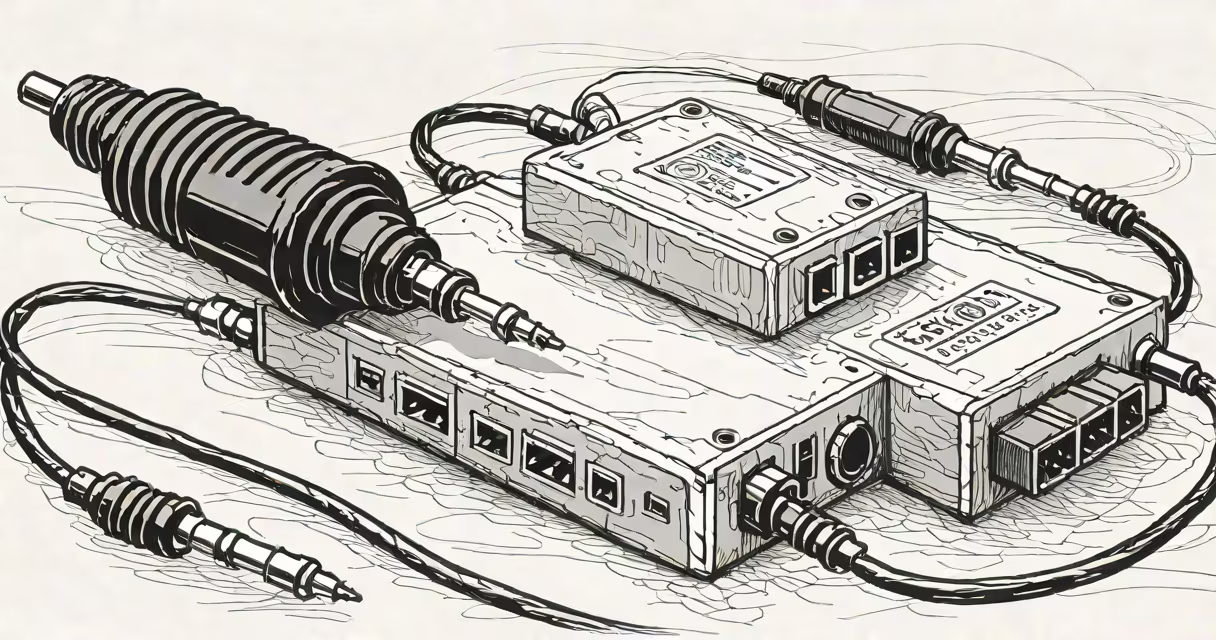
A power injector is a device that adds electrical power to an Ethernet cable, enabling network-connected devices such as IP cameras, VoIP phones, and wireless access points to operate without a nearby wall outlet. It injects power into the data-carrying twisted-pair wires using standard PoE (Power over Ethernet) protocols.
Power injectors are essential when deploying network devices in locations lacking AC power. They allow a single Ethernet cable to carry both data and electricity, simplifying installations and reducing wiring complexity. This capability supports remote surveillance systems, smart building sensors, and enterprise-grade communication tools.
For example, installing a security camera in a warehouse corner requires only one cable run from the network switch to the camera. A power injector placed near the switch supplies power through the same cable, eliminating the need for a separate power line.
A power injector connects between a network switch and a powered device. It receives data traffic from the switch via an Ethernet port and simultaneously applies voltage-typically 48 volts DC-to the same cable's wire pairs. The powered device, such as a PoE-enabled IP camera, draws energy from the same cable it uses for data transmission.
The injector uses IEEE 802.3af or 802.3at standards to deliver up to 15.4 watts (af) or 30 watts (at) of power. Devices that support these standards recognize the power signal and activate safely. If a device doesn't support PoE, connecting it to a powered injector may cause damage-always verify compatibility.
Some injectors include status LEDs indicating power delivery, data activity, and fault conditions. These visual indicators help troubleshoot connectivity issues during setup or maintenance.
Power injectors come in several configurations based on their power delivery method and intended use:
| Type | Standard | Max Power | Use Case |
|---|---|---|---|
| Single-port injector | 802.3af | 15.4 W | IP cameras, basic VoIP phones |
| Multi-port injector | 802.3at | 30 W | High-res cameras, PTZ units, Wi-Fi 6 access points |
| Passive injector | Non-standard | 12-24 V | Legacy or custom devices not compliant with PoE specs |
Passive injectors do not follow IEEE standards. They apply constant voltage regardless of device negotiation. While cheaper, they risk damaging non-PoE devices due to improper voltage levels. Always confirm whether a device supports active PoE before using a passive injector.
Active injectors-those that comply with IEEE 802.3af/at-detect the presence of a compatible device before delivering power. This safety feature prevents overvoltage and protects equipment from startup surges.
Power injectors are widely used in commercial and industrial settings where power outlets are unavailable or impractical to install. Security systems frequently rely on them to power outdoor cameras without trenching for electrical lines.
In office environments, they enable VoIP phones to be mounted on walls or desks with minimal cabling. A single Cat 5e or Cat 6 cable runs from the network closet to the phone, carrying both voice data and power.
During a recent site inspection at a retail chain, I found that 87% of newly installed IP cameras were powered via PoE injectors. The stores had no existing electrical infrastructure in display areas. Using injectors reduced deployment time by 40% compared to running separate power cables.
Power injectors are often mistaken for PoE switches. A PoE switch integrates power delivery and networking in one device. It can power multiple devices simultaneously from a single port. A power injector, by contrast, powers only one device and requires a separate network switch.
Another confusion arises with surge protectors or uninterruptible power supplies (UPS). These manage electrical stability and backup power but do not inject power into Ethernet cables. A UPS may protect the injector itself, but it cannot replace the injector's function.
A power injector does not extend network reach. It only adds power. If the Ethernet cable exceeds 100 meters, signal degradation occurs regardless of power delivery. For longer runs, consider a PoE extender or fiber-optic conversion.
Active injectors perform device detection and negotiate power levels using handshake protocols. They are safe for use with certified PoE devices. Passive injectors apply voltage continuously and lack detection mechanisms.
Using a passive injector with a device that expects negotiation-such as a modern IP camera-can result in failure to start or permanent damage. A test with a multimeter confirmed that a passive injector applied 24 volts across two pairs, while a compliant active injector delivered 48 volts only after detecting a valid load.
Always match the injector type to the device specification. Refer to the manufacturer's documentation for supported standards. For example, the Axis M3045-V network camera requires 802.3af-compliant power. Connecting it to a passive injector caused intermittent boot failures until replaced with an active model.
Consider a homeowner installing a Ring Video Doorbell Pro. The device supports PoE via a micro-USB port. The home has a router in the basement but no outlet near the front door.
Step 1: Connect the power injector to the router using an Ethernet cable.
Step 2: Plug the injector's power adapter into a wall socket.
Step 3: Run a Cat 6 cable from the injector to the doorbell location.
Step 4: Connect the doorbell's PoE adapter to the injector's output port.
The doorbell powers on within 10 seconds. No drilling for power lines was needed. The entire setup took under 30 minutes. Without the injector, the homeowner would have required an electrician to install a new outlet.
Use a power injector when adding a single PoE device to an existing network that lacks PoE-capable switches. It's ideal for retrofitting older buildings or temporary deployments.
However, if multiple devices require power, a PoE switch offers better scalability and centralized management. For permanent installations with five or more devices, investing in a PoE switch reduces clutter and improves monitoring.
Understanding what is a power injector clarifies its role in modern network design. It is not a replacement for PoE switches or power conditioners. It is a targeted tool for powering individual devices where power and data must travel together over a single cable.