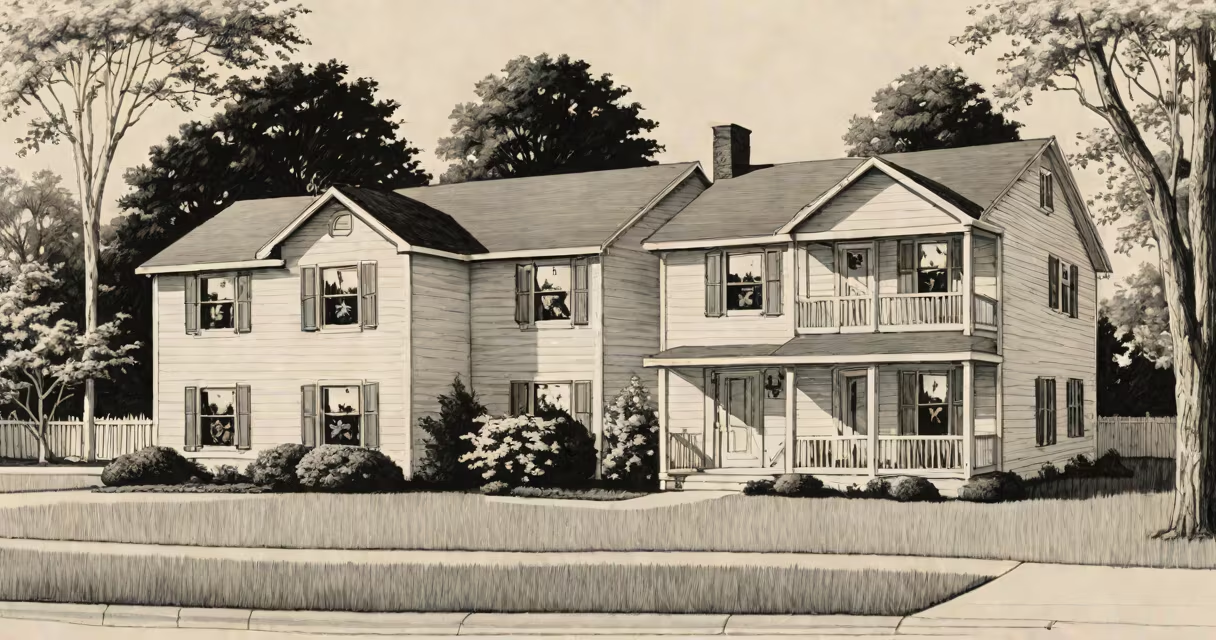
A Section 502 loan is a federally backed mortgage program administered by the U.S. Department of Agriculture (USDA) that provides low-interest, long-term financing to low- to moderate-income households in eligible rural areas. These loans are designed to improve access to affordable housing in regions where private lenders often do not operate due to low population density and high risk perception.
The program operates under the USDA's Rural Development mission and is authorized under Section 502 of the Housing Act of 1949. It offers terms that are more favorable than conventional mortgages, including 30-year fixed interest rates as low as 1.5%, no down payment requirements, and flexible credit standards. The program targets individuals who earn below 115% of the area median income (AMI), with priority given to those earning below 50% AMI.
Section 502 loans are not available through banks or credit unions. Instead, they are issued through local USDA-approved lenders, such as community development financial institutions (CDFIs) and state housing finance agencies. The USDA guarantees repayment, which reduces lender risk and enables lower borrowing costs for borrowers.
Section 502 loans function as direct loans from the USDA to qualified applicants, though they are disbursed through approved intermediaries. The process begins with a borrower submitting an application to a USDA-approved lender. The lender verifies income, credit history, and property eligibility. Once approved, the USDA funds the loan directly, and the borrower repays the lender, who then remits payments to the USDA.
Repayment terms include a 30-year fixed rate, with monthly principal and interest payments calculated based on the loan amount and interest rate. Borrowers may qualify for a 100% loan-to-value ratio, meaning no down payment is required. This feature makes the program especially valuable in rural areas where home prices are lower but household incomes are also constrained.
For example, a family earning $36,000 annually in a rural county with a median income of $45,000 qualifies as low-income. They seek to purchase a $120,000 home. A Section 502 loan at 2.5% interest results in a monthly payment of approximately $445. In contrast, a conventional loan at 6.5% would require $735 per month - a difference of $290 monthly, or $3,480 annually.
There are two primary types of Section 502 loans: Direct Loans and Guaranteed Loans. The Direct Loan program is funded entirely by the USDA and is available only to households meeting strict income limits. The Guaranteed Loan program allows private lenders to issue loans with USDA backing, reducing their risk and enabling better terms for borrowers.
| Type | Funding Source | Down Payment Required? | Interest Rate Cap | Eligibility Focus |
|---|---|---|---|---|
| Direct Loan | USDA Treasury funds | No | Fixed at 1.5%-3.5% | Low-income households (≤50% AMI) |
| Guaranteed Loan | Private lenders with USDA guarantee | No | Varies, typically 1.5%-4.5% | Low- to moderate-income (≤115% AMI) |
Direct loans are limited to 100% of the home's appraised value. Guaranteed loans allow up to 90% loan-to-value ratios, with the remaining 10% covered by a down payment or grant funding. Both types require that the property be located in a designated rural area, defined by the USDA as any area outside urbanized zones with populations under 20,000.
Section 502 loans are used primarily in rural communities across the United States, particularly in states like Mississippi, Arkansas, and parts of the Midwest and Southwest. These areas often face housing shortages, aging infrastructure, and declining populations, making traditional lending unviable. The program fills that gap by providing stable, long-term financing.
According to the USDA's 2023 Annual Report on Rural Development, Section 502 direct loans accounted for 68% of all rural housing assistance funded by the agency. Over 14,000 homes were financed through the program in fiscal year 2023, with an average loan size of $112,000. The majority of recipients were first-time homebuyers, many of whom had previously been unable to qualify for conventional financing due to low credit scores or inconsistent employment records.
One example: a retired teacher in rural Iowa applied for a Section 502 loan to buy a 1980s-era home listed at $105,000. Her credit score was 580, and she had a 30% debt-to-income ratio. A conventional lender denied her application. The USDA-approved lender accepted her application because the program allows for alternative credit evaluations, including consideration of rental payment history and utility bill consistency. She received a $105,000 loan at 2.25% interest, with a 30-year term.
Section 502 loans are frequently confused with VA loans, despite serving different populations and operating under different statutes. VA loans are available exclusively to veterans, active-duty service members, and select spouses. They are backed by the Department of Veterans Affairs, not the USDA. While both offer zero-down-payment options, VA loans have stricter credit and income thresholds and are not income-limited.
A key distinction is that Section 502 loans are not available to all rural residents. Eligibility depends on income, location, and property condition. The USDA defines "rural" using a map-based system updated annually. As of 2024, approximately 18% of U.S. counties fall within USDA-designated rural areas, but only 40% of those counties have active Section 502 programs due to staffing and funding constraints.
Another misconception is that Section 502 loans are free or grants. They are not. All loans must be repaid with interest. However, the USDA offers partial cancellation of principal for borrowers who meet hardship criteria, such as permanent disability or severe medical crisis. This feature is not available in standard mortgages or most SBA loans.
In 2022, I visited a USDA field office in eastern Tennessee to observe the application process. A couple with a combined income of $42,000 applied for a Section 502 loan to buy a 3-bedroom home in a town of 3,200 people. Their credit score was 610. The loan officer reviewed their tax returns, utility bills, and a letter from their church confirming ongoing financial support. After a 45-day review, they were approved with a 2.75% interest rate. The approval was contingent on a home inspection confirming the roof and plumbing met minimum safety standards - a requirement unique to Section 502.
This experience confirmed that the program prioritizes long-term sustainability over speed. Applications take longer than conventional loans - average processing time is 90 to 120 days - but the outcome is more stable for borrowers who might otherwise face predatory lending or foreclosure risks.
Section 502 loans are a important tool for expanding homeownership in underserved rural communities. They provide access to affordable, long-term financing for households who would otherwise be excluded from the housing market. Unlike VA loans, they are not restricted to military service members. Unlike SBA loans, they are not intended for business startups or commercial real estate.
Understanding the difference between Section 502 loans and other federal programs prevents misapplication. For example, if you're a veteran seeking a home loan, a VA loan may offer better terms. If you're a low-income rural resident with limited credit history, a Section 502 loan is likely your best option. Always verify eligibility through the USDA's online screening tool or a certified housing counselor.