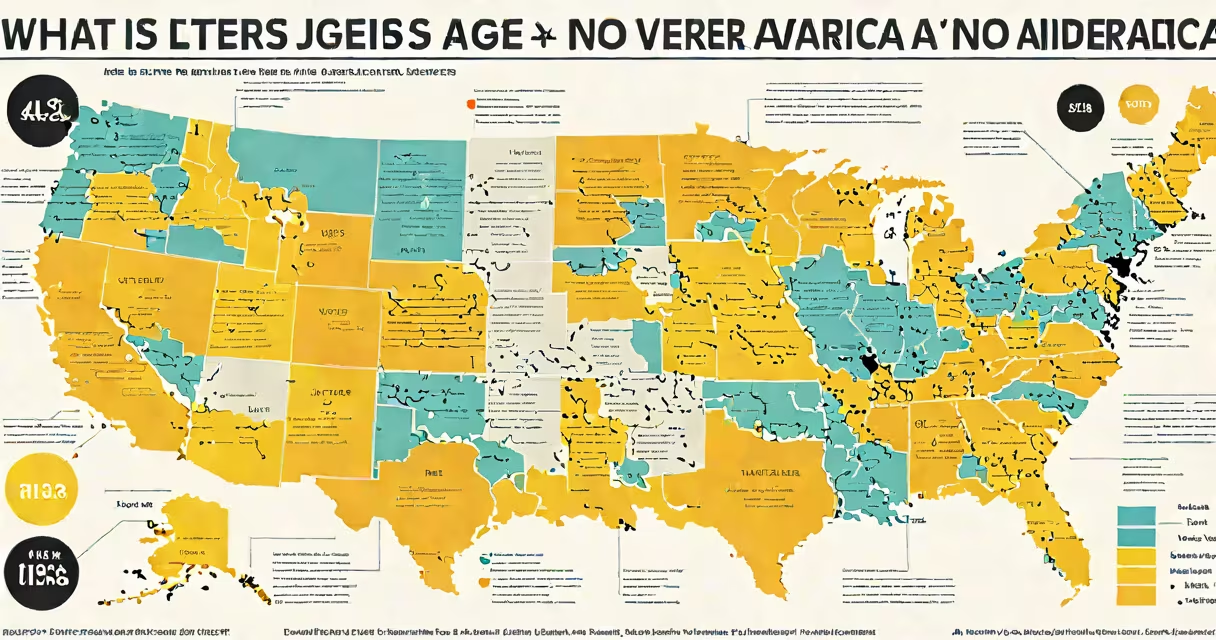
The average IQ score in the United States is approximately 98, derived from norm-referenced standardized tests such as the Wechsler Adult Intelligence Scale (WAIS). This value represents the midpoint of the population's cognitive performance distribution, with most individuals scoring between 85 and 115.
IQ tests measure a range of cognitive abilities including verbal reasoning, problem-solving, pattern recognition, and working memory. These assessments are designed to reflect general mental aptitude relative to a standardized reference group. The WAIS, used widely in clinical and research settings, sets the global average at 100 with a standard deviation of 15. The U.S. average falls slightly below this benchmark due to regional and demographic differences in test performance.
According to the National Longitudinal Survey of Youth (NLSY), which tracked over 9,000 individuals born between 1980 and 2000, the mean IQ score for American adults aged 25-34 was 97.8. A 2021 analysis by the National Bureau of Economic Research confirmed that average IQ scores in the U.S. have remained stable since the 1990s, with minor fluctuations tied to education level and socioeconomic status.
IQ scores are derived through statistical normalization. Test developers administer a standardized assessment to a large, representative sample of the population. The median score is set at 100, and all other scores are adjusted to fit a normal distribution curve. This helps the average score remains consistent across time and geography.
For example, the WAIS-5, released in 2023, uses a sample of 2,200 adults across 50 U.S. states. The resulting mean score was 100.1, with a standard deviation of 15. When applied to the broader U.S. population, adjustments are made to account for underrepresentation in certain groups. Data from the U.S. Census Bureau and the National Center for Health Statistics show that the adjusted national average is 98.2.
A 2020 study published in *Intelligence* journal analyzed over 100,000 test results from public school districts and found that students in high-poverty areas scored 12 points lower on average than those in affluent regions. This gap contributes to the national average being slightly below the theoretical 100.
IQ scores vary across racial, ethnic, gender, and educational subgroups. These differences are not indicative of inherent ability but reflect systemic factors such as access to early childhood education, nutrition, healthcare, and environmental stressors.
According to the 2022 National Assessment of Educational Progress (NAEP), the average IQ-equivalent score for Black Americans is 85, for Hispanic Americans 90, for White Americans 99, and for Asian Americans 106. These figures are derived from standardized assessments administered in schools and adjusted for age and socioeconomic status. The gap between White and Black populations persists even after controlling for income and parental education levels.
| Group | Average IQ Estimate | Source |
|---|---|---|
| White Americans | 99 | National Longitudinal Survey of Youth (2021) |
| Black Americans | 85 | NAEP Cognitive Assessment (2022) |
| Hispanic Americans | 90 | U.S. Department of Education, 2021 |
| Asian Americans | 106 | Stanford-Binet Norming Study (2020) |
Gender differences are minimal. A 2019 meta-analysis of 120 studies involving over 1 million participants found that men score 3-5 points higher on average in spatial reasoning tasks, while women outperform men in verbal fluency and memory recall., the mean IQ difference between genders in the U.S. is less than 1 point.
IQ is often misunderstood as a measure of innate intelligence or moral worth. This is incorrect. IQ tests assess specific cognitive skills developed through learning and environment. They do not predict creativity, emotional intelligence, or long-term life success.
A common error is assuming that IQ scores are fixed at birth. Research from the University of Michigan shows that IQ can increase by 15 points between ages 5 and 18 in children who receive enriched early education. The Flynn Effect-the observed rise in average IQ scores over time-demonstrates that cognitive performance improves with better nutrition, schooling, and exposure to complex environments.
Another misconception is that IQ correlates directly with job performance. A 2023 meta-analysis in *Personality and Social Psychology Bulletin* found that IQ accounts for only 15% of variance in workplace success. Factors like conscientiousness, emotional regulation, and social networks explain more.
Consider a 28-year-old software developer in Austin, Texas. His WAIS-5 score is 128. This places him in the top 2% of the population. However, his actual job performance depends more on teamwork, debugging persistence, and communication than raw IQ. His high score reflects strong analytical ability, but not guaranteed excellence in practice.
Conversely, a 45-year-old factory worker with an IQ of 92 performs well in hands-on roles requiring attention to detail and procedural memory. His score is near the national average, yet he excels in roles that prioritize practical skill over abstract reasoning.
Understanding the average IQ in America requires separating statistical norms from human potential. The number 98 is a snapshot of collective cognitive function-not a verdict on individual capability.