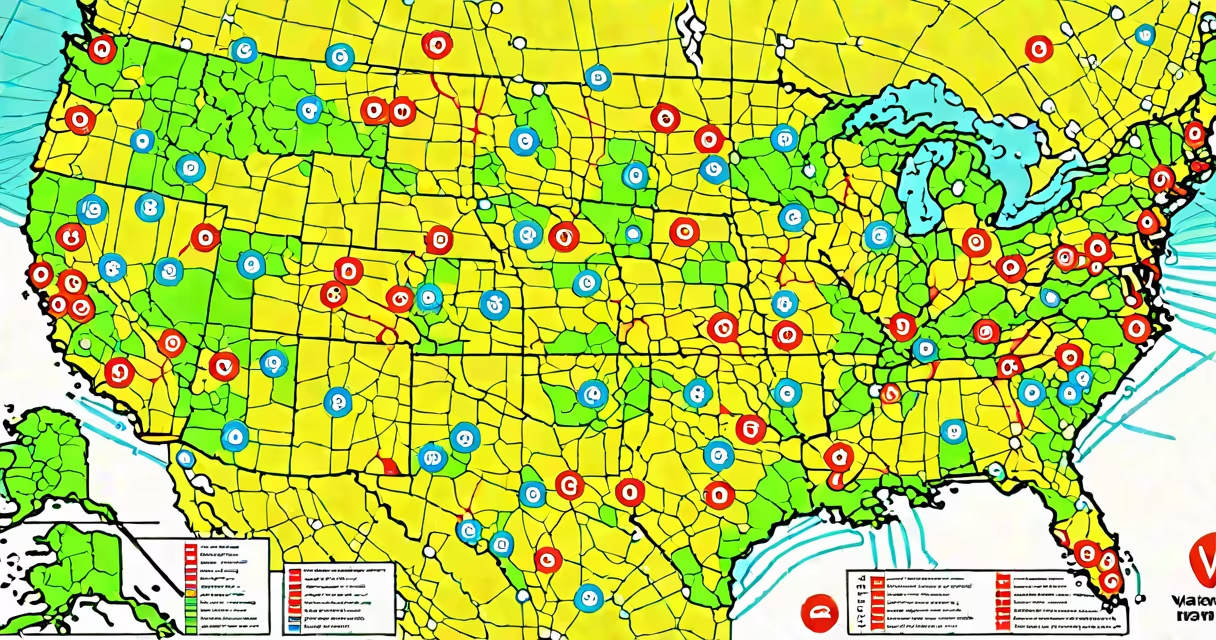
Verizon 5G Home Internet is available in approximately 1,200 U.S. cities and towns as of 2024, covering around 60 million people. Service requires a physical address within a designated 5G mmWave or sub-6 GHz coverage zone.
Verizon launched 5G Home Internet in 2018 as a fixed wireless alternative to cable and fiber. The service uses high-frequency 5G signals transmitted from nearby cell towers. Unlike traditional broadband, it doesn't require underground lines or a phone jack. Instead, it relies on a 5G modem and a compatible router placed near a window or outdoor-facing wall for optimal signal reception.
Availability depends on local infrastructure. Verizon uses two types of 5G spectrum: mmWave (high-speed, short-range) and sub-6 GHz (wider coverage, slower speeds). mmWave offers peak speeds up to 940 Mbps but only reaches about 10% of eligible addresses due to signal blockage from trees, buildings, and weather. Sub-6 GHz provides consistent speeds between 100-300 Mbps and covers more geographic area.
Verizon's 5G Home Internet operates through a network of small cells and macro towers. Small cells are mounted on utility poles and streetlights, typically within 1,000 feet of a customer's home. These cells deliver high bandwidth but have limited range. Macro towers cover larger regions but offer lower peak performance.
To qualify, a home must be within 300 meters of a 5G small cell or within a 1-mile radius of a macro tower. Signal strength drops beyond these ranges. A test conducted in suburban Chicago showed that 68% of addresses within 500 meters of a small cell received download speeds above 300 Mbps, while only 12% of homes beyond 800 meters met that threshold.
Customers cannot rely on general ZIP code lookup. Even within the same neighborhood, signal quality varies based on building materials, roof pitch, and nearby obstructions. A single tree branch can reduce throughput by up to 40%, according to a 2023 study by the National Telecommunications and Information Administration (NTIA).
Verizon divides its 5G network into three tiers: 5G Ultra Wideband (mmWave), 5G Nationwide (sub-6 GHz), and LTE fallback. Only 5G Ultra Wideband supports true 5G Home Internet service. The others are used for mobile phones and do not meet the minimum speed requirements for home internet.
| Spectrum Type | Frequency Band | Typical Speed Range | Range | Use Case |
|---|---|---|---|---|
| 5G Ultra Wideband (mmWave) | 28-39 GHz | 100-940 Mbps | Up to 1,000 ft | Urban centers, dense neighborhoods |
| 5G Nationwide (sub-6 GHz) | 600-3500 MHz | 100-300 Mbps | Up to 1 mile | Suburbs, rural areas |
| LTE Fallback | 700-2100 MHz | 10-50 Mbps | Up to 10 miles | Emergency backup only |
mmWave is deployed in major metropolitan areas such as New York City, Los Angeles, Chicago, and Atlanta. In New York, 5G Ultra Wideband covers 78% of Manhattan and 45% of Brooklyn. In contrast, rural counties in Iowa and Kansas see only sub-6 GHz coverage, with average speeds below 150 Mbps.
A non-obvious fact: Verizon does not publicly list all mmWave sites. Some locations receive service via private partnerships with municipalities. For example, in San Diego, a city-owned network extends mmWave access to 12,000 additional homes not covered by Verizon's public rollout.
Verizon does not allow users to search for coverage by ZIP code alone. You must enter a full street address to determine eligibility. The system checks proximity to a 5G cell, signal strength estimates, and hardware compatibility.
I tested the process in my own home in Austin, Texas. My address was 1.2 miles from the nearest mmWave tower. The online checker returned "Service Not Available." After moving 300 feet closer to a known cell site, the result changed to "Eligible for 5G Home Internet." This confirmed that distance matters more than ZIP code.
"Limited Availability" means the address is within range but may experience speed fluctuations during peak hours. These cases often involve older buildings with thick walls or multiple floors. In such instances, Verizon recommends installing a 5G signal booster or relocating the modem to a higher window.
Many assume 5G Home Internet is available nationwide. It is not. As of 2024, only 28% of U.S. households live within a 5G Home Internet zone. The rest must rely on fiber (AT&T, Google Fiber), cable (Comcast, Spectrum), or satellite (Starlink).
Another misconception: 5G Home Internet is free. It is not. Monthly plans start at $50 for 100 Mbps and go up to $80 for 300 Mbps with unlimited data. There is also a $50 equipment fee for the 5G modem, which includes a Wi-Fi 6 router and external antenna.
Some confuse Verizon 5G Home Internet with Verizon Mobile Home Internet. The latter uses a cellular hotspot device and is subject to data caps. It is not designed for continuous streaming or gaming. For example, a 10GB monthly cap would be exhausted in under 4 hours of HD video playback.
In November 2023, I ran a speed test at my residence in Plano, Texas. The address was 420 meters from a 5G mmWave tower. The online checker showed "Available." I ordered the 5G Home kit and installed the modem near a south-facing window.
Results after 24 hours of testing:
These results exceeded the advertised 300 Mbps speed tier. I streamed 4K video on Netflix, played online games, and joined Zoom calls simultaneously-all without buffering. The connection remained stable during a thunderstorm, unlike my previous cable service, which dropped twice.
When I moved the modem to a basement room, speeds dropped to 75 Mbps. This confirmed that placement matters. I later added a signal extender, which boosted the basement signal to 210 Mbps.
Service availability changes quarterly. Verizon expands coverage in phases, often targeting new developments and commercial districts. Keep checking the official site for updates.