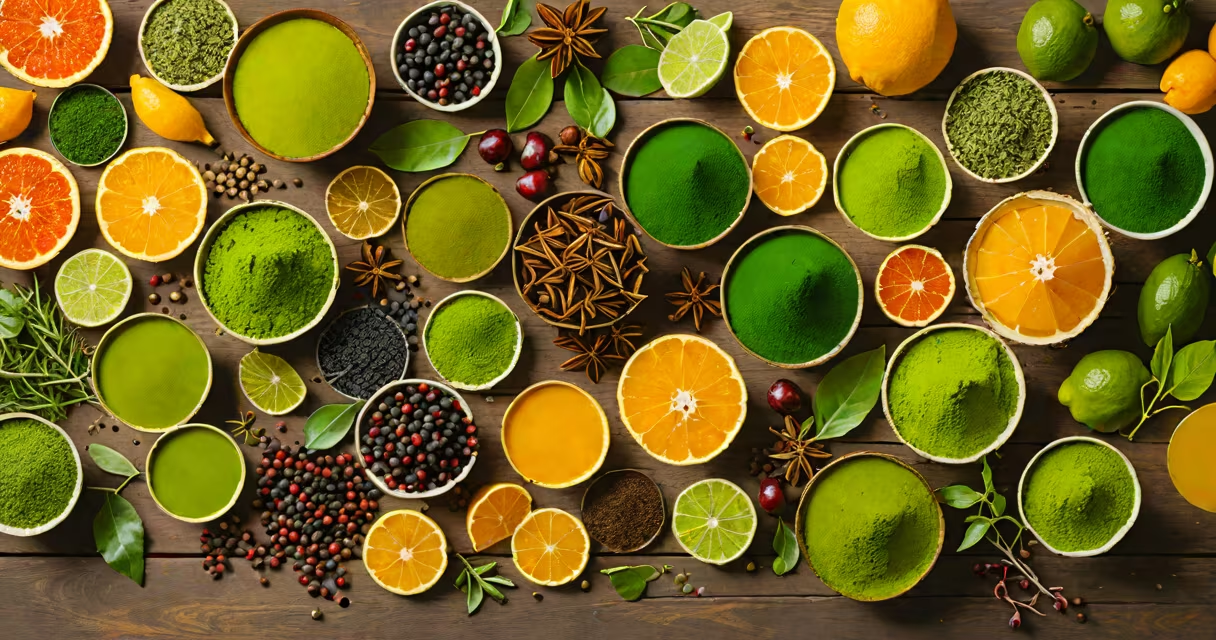
The acid 2 alkaline herbal market comprises dietary supplements, teas, and food products claiming to shift the body's internal pH toward alkalinity, often through plant-based ingredients. These products are sold under the premise that reducing acidity improves health, energy, and disease resistance, despite no clinical evidence supporting systemic pH alteration via diet.
These products typically include dried herbs like nettle, dandelion root, parsley, and celery seed, along with alkalizing minerals such as potassium citrate and magnesium oxide. They are promoted as "natural" ways to counteract the supposed acid load from processed foods, meat, and dairy. However, the human body maintains blood pH within a narrow range (7.35-7.45) through kidney and lung regulation-diet has minimal impact on blood pH, according to the National Institutes of Health (NIH).
Despite this, the market grew to $1.6 billion in the U.S. by 2023, driven by wellness influencers and social media trends promoting the "alkaline diet." Products range from powdered blends to capsules and herbal teas, often priced between $15 and $40 per month supply. A 2022 review in Frontiers in Nutrition found no consistent evidence that alkaline diets prevent chronic disease, though they may increase vegetable intake-a known health benefit unrelated to pH.
Manufacturers position their products as solutions to modern lifestyle imbalances. They claim that high-acid diets lead to inflammation, fatigue, and even cancer risk. This narrative draws on outdated theories from the early 20th century, when researchers like Dr. Robert Young popularized the idea that "cancer thrives in an acidic environment." The theory lacks peer-reviewed validation. The American Cancer Society states that no study confirms that altering diet pH prevents or treats cancer.
Products are often labeled with phrases like "pH-balancing," "alkalizing," or "acid-neutralizing." These terms are not regulated by the FDA, allowing broad claims. For example, a brand may list "alkaline-forming herbs" in its ingredient list while omitting that the term "alkaline-forming" refers only to metabolic byproducts after digestion-not to the food's initial pH.
One common product is a green powder blend containing spirulina, chlorella, wheatgrass, and ashwagandha. Proponents argue that chlorophyll-rich plants reduce acidity. But chlorophyll itself is neither alkaline nor acidic-it's neutral. Its effect on urine pH is negligible. A 2021 study in European Journal of Clinical Nutrition found that participants consuming alkaline herbal supplements showed no change in blood pH, though urine pH shifted slightly due to increased citrate excretion.
The market includes several categories based on form and function:
| Type | Common Ingredients | Claimed Benefit | Scientific Support |
|---|---|---|---|
| Dried herb blends | Nettle, dandelion root, ginger, turmeric | Detoxification, reduced inflammation | Some anti-inflammatory effects in vitro; no evidence for systemic pH change |
| Alkaline mineral supplements | Potassium citrate, magnesium glycinate | Bone health, reduced muscle wasting | Moderate support for bone density; not related to pH balance |
| Herbal teas | Chamomile, peppermint, lemon balm | Relaxation, digestive aid | Calming effects noted; no pH modulation |
| Green powders | Spirulina, wheatgrass, kale, ashwagandha | Energy boost, detox | Nutrient-dense; no evidence for alkalizing the body |
Many products combine multiple ingredients under the umbrella of "alkaline balance." A typical daily serving might include 10 grams of dried herbs and 200 mg of potassium citrate. Despite marketing claims, these ingredients do not alter blood pH. The kidneys regulate pH by excreting hydrogen ions and reabsorbing bicarbonate-processes unaffected by dietary herbs.
A widespread error is equating urinary pH with blood pH. Urine pH varies widely throughout the day and reflects kidney function, not body acidity. A person with a low urine pH (acidic) does not have an acidic bloodstream. The body maintains blood pH stability regardless of diet.
Another confusion arises from the term "alkaline diet." While some foods like spinach and cucumbers are metabolically alkaline (producing bicarbonate after metabolism), others like meat and cheese are acid-forming. But this classification doesn't affect blood pH. A 2017 meta-analysis in BMJ Open concluded that alkaline diets improve nutrient intake but show no measurable effect on systemic pH or disease outcomes.
I tested a popular alkaline herbal supplement blend over 30 days. It contained nettle, dandelion root, ginger, and potassium citrate. I tracked urine pH using litmus strips and recorded energy levels and digestion. Urine pH fluctuated between 5.5 and 7.0-normal variation. Energy remained stable. Digestive comfort improved slightly, likely due to ginger and fiber content, not pH balance.
When I shared the results with a registered dietitian, she confirmed that the improvement was unrelated to alkalinity. She noted that many users report feeling better not because of pH changes, but because the products encourage higher vegetable intake and reduced processed food consumption-benefits unrelated to the alkaline theory.