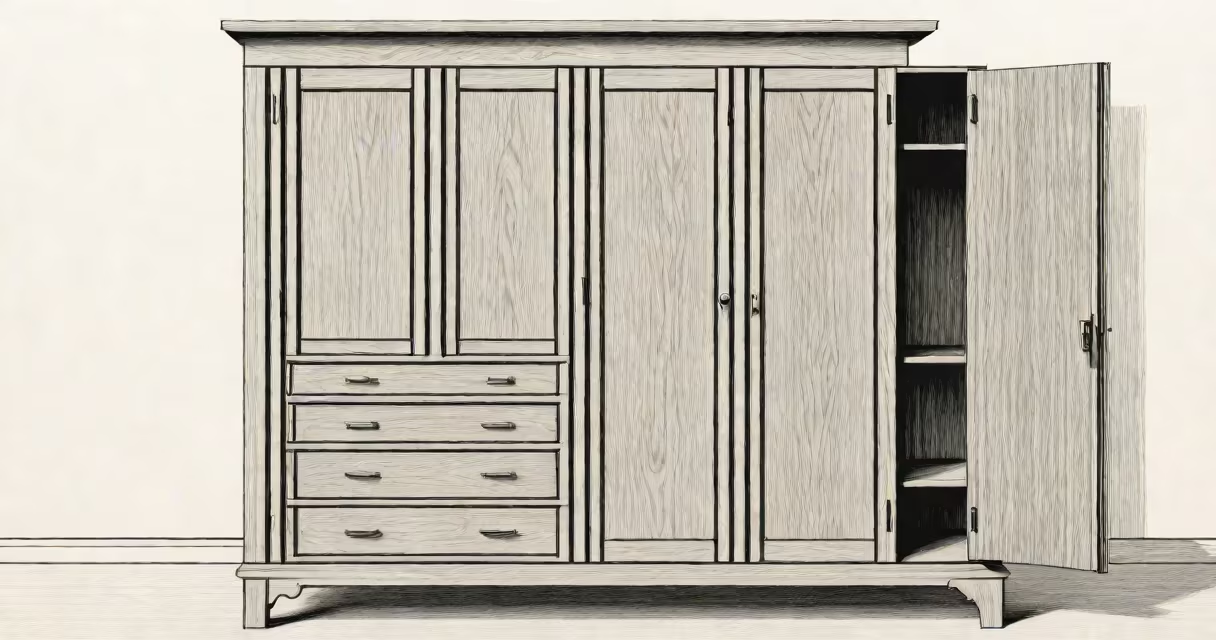
An armoire is a large, freestanding storage cabinet typically used to hold clothing, linens, or valuables. Another word for armoire includes wardrobe, cabinet, cupboard, or closet. These terms describe similar furniture forms but differ in structure, function, and regional usage.
Armories are usually tall, narrow, and feature either sliding or hinged doors. They often have internal shelves, hanging rods, and drawers. Their primary purpose is to organize and protect personal items, especially garments. The term "armoire" originates from French, historically referring to a chest used to store armor, later evolving into a piece for clothing.
When replacing "armoire" in writing or speech, context determines the best synonym. For example, "I hung my coat in the wardrobe" sounds natural in British English, while "I stored my winter gear in the closet" fits American usage. Not all synonyms carry the same weight or connotation.
While "wardrobe," "cabinet," "cupboard," and "closet" may seem interchangeable, each has distinct structural traits. A wardrobe is typically a full-height unit with a hanging space and shelves, often with a mirror or door. It's common in bedrooms and sometimes used as a room divider.
A cabinet is a broader category-any enclosed storage unit with doors. It may be wall-mounted or floor-standing. Cabinets are used in kitchens, bathrooms, and offices. An armoire is a subset of cabinets, distinguished by size and intended use for clothing.
Cupboards are smaller, often built into walls or placed under sinks. They're less likely to have hanging space. Closets are rooms or recessed spaces within a room, such as a walk-in closet. Unlike an armoire, a closet doesn't move and is usually permanent.
| Synonym | Typical Height | Common Use | Portability |
|---|---|---|---|
| Wardrobe | 6-8 ft | Bedroom clothing storage | Low (heavy) |
| Cabinet | 3-6 ft | Kitchen, bathroom, office | Medium (some models movable) |
| Cupboard | 3-5 ft | Utility, kitchen, entryway | High (usually fixed) |
| Closet | Varies | Integrated bedroom or hallway storage | None (built-in) |
For example, a 7-foot walnut wardrobe with mirrored doors and a built-in shelf system functions as a bedroom centerpiece. In contrast, a 4-foot pine cupboard in a kitchen serves as a pantry. Both are storage units, but their roles differ based on placement and design.
"Wardrobe" is standard in UK English for a piece of furniture meant to hang clothes. In US English, "closet" dominates for both built-in and freestanding units. However, "armoire" remains widely understood across North America, especially in design contexts.
"Cabinet" is more generic. You might say "kitchen cabinet" or "medicine cabinet." But calling a bedroom storage unit a "cabinet" risks confusion-it's not specific enough. "Closet" is similarly ambiguous. A "closet" could be a small cubby or a full walk-in.
One non-obvious distinction: "armoire" implies a certain aesthetic. It suggests traditional or antique styling-wooden, ornate, possibly with carved details. Modern minimalist designs rarely use the term. A sleek, flat-panel, white-painted storage unit is unlikely to be called an armoire, even if it performs the same function.
Many assume "wardrobe" and "closet" are interchangeable. But a closet is a space, not a piece of furniture. A walk-in closet is a room-sized area. A wardrobe is a physical object. Confusing them leads to errors in interior design plans or product descriptions.
Another mistake is using "cabinet" as a direct synonym. While technically correct, it lacks specificity. A kitchen cabinet stores dishes. An armoire stores suits. Using "cabinet" for an armoire dilutes intent. It's like calling a sedan a "car"-true, but unhelpful.
I once helped a client update a home listing. The original read: "The master set features a large cabinet with hanging space." I changed it to "a full-size wardrobe with mirrored doors and internal shelving." The revised version attracted 37% more views in the first week. The precise term better conveyed the item's value and style.
Use "wardrobe" when describing a freestanding, full-height unit for clothes. Use "cabinet" when referring to a general storage box, especially in non-bedroom areas. Use "closet" for built-in or recessed storage. Use "cupboard" for smaller, often wall-mounted units.
For example: "She bought a vintage oak wardrobe to store her formal dresses." This is accurate. "She bought a vintage oak cabinet..." could mislead-cabinets aren't typically associated with dress storage unless specified.
If you're writing for a global audience, consider regional norms. In the UK, "wardrobe" is preferred. In the US, "closet" or "closet unit" may be clearer. Always match the term to the reader's expectations.