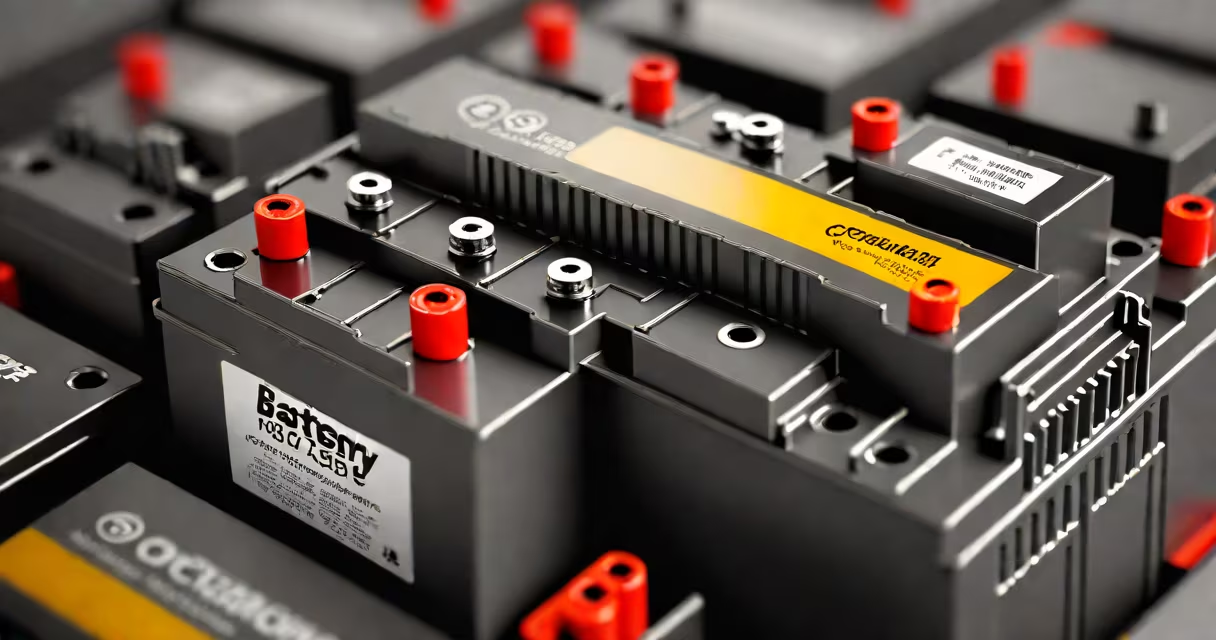
A battery for car stores electrical energy to start the engine, power lights and electronics, and stabilize voltage. It's a sealed lead-acid unit typically located under the hood, designed to deliver high current for short bursts during startup.
Car batteries rely on a chemical reaction between lead plates and sulfuric acid. When the engine turns over, the battery releases stored electrons through the starter motor. Once running, the alternator recharges the battery. Most modern vehicles use a 12-volt system, with cold cranking amps (CCA) indicating starting strength. A standard battery lasts 3-5 years under normal conditions.
The battery for car is not a single component-it's a system. Internal lead grids coated with lead dioxide (positive) and sponge lead (negative) sit in an electrolyte solution of sulfuric acid and water. During discharge, both plates convert to lead sulfate, releasing electrons. Recharging reverses the process. The battery casing is made of polypropylene to resist corrosion and impact.
When you turn the key, the battery sends a surge of electricity-up to 400 amps-to the starter solenoid. This engages the flywheel, spinning the engine. The battery also powers the ignition system, fuel injectors, and dashboard instruments until the alternator takes over. Without it, the car won't start.
Under normal driving, the alternator maintains charge. But idling with headlights, AC, or infotainment on drains the battery faster. After 30 minutes of idling with accessories on, a healthy battery drops below 12 volts-a sign it may be weak.
Testing voltage with a multimeter shows state of charge: 12.6 volts = fully charged; 12.4 volts = 75% charged; 12.0 volts = 50%. Below 11.9 volts indicates low capacity. A load test confirms whether the battery can sustain power under stress.
Most cars use a maintenance-free, sealed lead-acid battery. These have no removable caps and don't require topping off with distilled water. They're rated by Cold Cranking Amps (CCA), Reserve Capacity (RC), and Amp-Hour (Ah) rating.
| Type | CCA Range | Typical Use | Life Expectancy |
|---|---|---|---|
| Standard Lead-Acid | 500-800 | Basic sedans, older models | 3-5 years |
| AGM (Absorbent Glass Mat) | 600-1000+ | Start-stop systems, luxury vehicles | 5-7 years |
| Enhanced Flooded Battery (EFB) | 600-900 | Hybrid systems, frequent stop-start | 4-6 years |
AGM batteries use fiberglass mats to hold the electrolyte. They handle deeper discharges and higher vibration better than standard batteries. They're common in vehicles with automatic start-stop features because they maintain charge during frequent cycling.
EFB batteries improve on traditional flooded cells with thicker plates and enhanced separators. They're cheaper than AGM but still support regenerative braking and frequent restarts. Not all vehicles accept EFB batteries-check the owner's manual.
Many assume a dead battery means it's old. But a failing alternator can drain it daily. If the battery dies within weeks of replacement, the alternator may not be charging properly. A faulty voltage regulator can cause overcharging, boiling the electrolyte and warping plates.
Corrosion on terminals doesn't always mean the battery is bad. It's often caused by moisture and acid vapor. Cleaning with baking soda and water restores conductivity. But if the battery case bulges or leaks fluid, it's past repair.
One overlooked issue: heat. High under-hood temperatures accelerate sulfation-the buildup of lead sulfate crystals on plates. This reduces capacity. According to the National Institute for Automotive Service Excellence (ASE), heat-related degradation accounts for 40% of premature failures. A battery in Phoenix may last 2 years; one in Anchorage could last 6.
John's 2018 Honda Accord wouldn't start. He checked the battery voltage: 11.8 volts. That's below the threshold for reliable starting. He tried jump-starting it. The car started, ran for 30 seconds, then died. The alternator wasn't charging.
He tested the alternator output: 13.2 volts while idling. That's within range. But when he turned on the AC and headlights, voltage dropped to 11.9 volts. The alternator couldn't meet demand. He replaced the battery and alternator belt. After replacing both, the system stabilized at 14.2 volts under load.
He later discovered his original battery had leaked acid due to overcharging. The acid corroded the terminal posts and damaged the battery case. A visual inspection caught the leak-bubbling white residue around the positive terminal. He replaced the battery and cleaned the terminals with a wire brush and baking soda solution.
First, confirm the battery is the issue. Try jump-starting the car. If it starts and runs, the battery likely needs replacement. If it starts but stalls after a few minutes, the alternator may be failing.
Use a multimeter to test voltage. Disconnect the negative cable, set the meter to DC volts, touch probes to terminals. A reading below 12.4 volts suggests low charge. A load test at an auto parts store confirms performance under simulated engine load.
When replacing, match the group size, CCA, and reserve capacity to the vehicle's specs. Installing a battery with lower CCA may fail in cold weather. Using a higher CCA battery is safe but unnecessary. Always connect the positive terminal first, then negative. Reverse connection can fry the ECU.
After installation, reset the car's computer. Some models require a key fob press or diagnostic tool to relearn settings. For example, Ford vehicles need a "battery learn" procedure via OBD2 scanner to recalibrate the charging system.
Regular checks prevent breakdowns. Inspect terminals quarterly. Clean corrosion. Ensure the battery is securely mounted. A loose battery vibrates, damaging internal connections. If you notice dimming headlights or slow cranking, test the battery early.
Understanding the battery for car isn't just about replacements. It's about recognizing symptoms, knowing specifications, and acting before the car won't start. A well-maintained battery avoids roadside stops and costly repairs. If you're unsure, consult a mechanic or use a professional testing service.