Bull vs bear refers to contrasting market conditions in financial investing: a bull market indicates rising asset prices and optimistic sentiment, while a bear market reflects declining prices and widespread pessimism. These terms describe investor psychology and price trends, not literal animals.
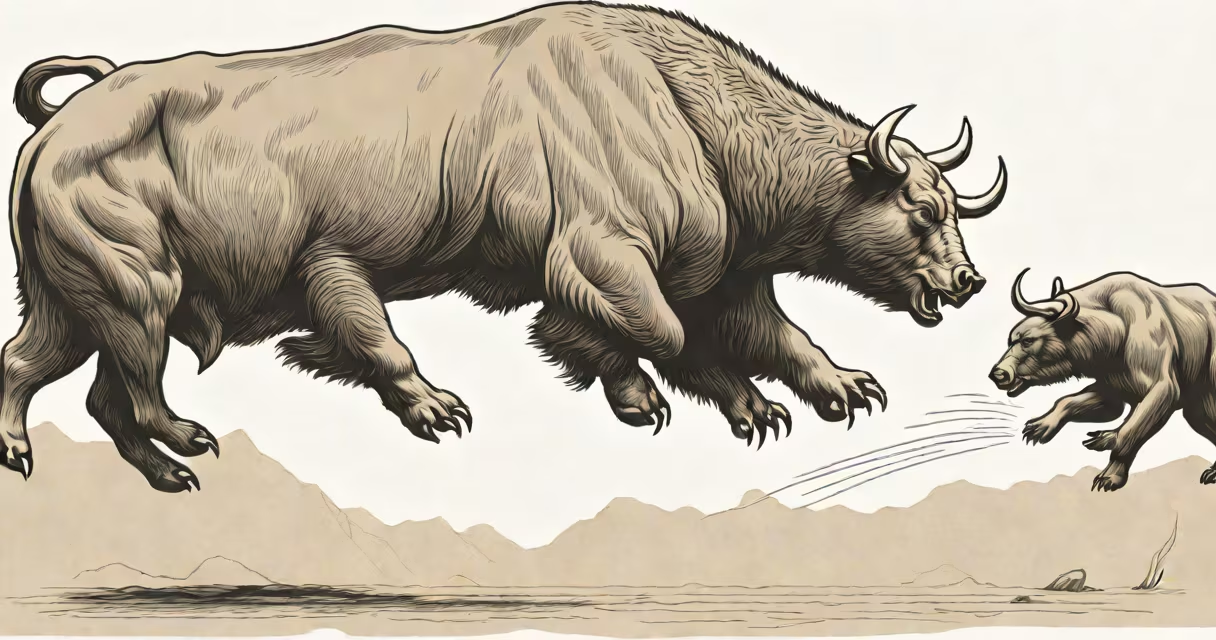
The concept originated in 18th-century London, where traders used animal metaphors to describe market behavior. A bull attacks upward with its horns, symbolizing rising markets. A bear swipes downward with its claws, representing falling prices. This imagery persists in finance today.
Market direction is measured by price changes over time. A bull market typically begins after a significant decline and continues for months or years, marked by sustained gains. A bear market starts after a peak and lasts until prices fall 20% or more from their high. These phases influence investment decisions, policy, and consumer behavior.
Bull markets emerge when confidence grows. Economic indicators such as employment, GDP growth, and corporate earnings improve. Investors buy assets expecting higher returns, increasing demand and pushing prices up. This cycle reinforces itself: rising prices attract more buyers, fueling further gains.
Bear markets form during downturns. Weak economic data, inflation spikes, or geopolitical events trigger selling. As prices drop, fear spreads. Investors sell to avoid losses, which drives prices lower. This creates a feedback loop where panic accelerates declines.
For example, the S&P 500 rose 300% from 2009 to 2021, marking a long bull phase following the 2008 financial crisis. During that period, average annual returns were 14.5%, according to Morningstar. Conversely, the S&P 500 fell 33.9% from January to October 2022, meeting the technical definition of a bear market.
Bull and bear markets differ in duration, severity, and causes. Bulls often last longer-averaging 4.5 years since 1926, per the Federal Reserve Bank of St. Louis. Bears are shorter but sharper, averaging 1.3 years. The longest bull run was from 2009 to 2020, lasting 11 years.
Common triggers include interest rate shifts, earnings reports, and global events. The 2020 bear market began in February amid the pandemic, with the S&P 500 dropping 34% in 23 days. The bull recovery started in March, driven by stimulus packages and vaccine rollout.
| Market Type | Price Change | Avg Duration | Key Trigger |
|---|---|---|---|
| Bull | +20% or more from low | ~4.5 years | Strong earnings, low unemployment |
| Bear | -20% or more from peak | ~1.3 years | Recession, rate hikes, war |
Not all declines are bear markets. A 10% drop is a correction, not a bear phase. The 2022 selloff saw the S&P 500 fall 20% in less than a month-a classic bear onset. But it wasn't a full bear market until the index stayed below its prior high for several months.
Many assume bear markets are always bad. But they're necessary for market health. They reset inflated valuations, clear out weak companies, and create buying opportunities. After the 2008 crash, the S&P 500 rebounded with a 300% gain over 12 years.
Another myth: bulls and bears are always opposite. They aren't. Some sectors move independently. In 2022, tech stocks dropped 35% while energy stocks rose 30%. A bear market in equities didn't mean all assets declined.
Also, the terms don't predict future movement. A bull market doesn't guarantee continued gains. The 2000 dot-com bubble burst despite a decade-long bull run. Similarly, bear markets can reverse quickly. The S&P 500 recovered 30% in six months after the 2020 lows.
In 2020, I watched a small portfolio of ETFs lose 25% in March. My initial reaction was fear. But I reviewed historical data: the 2008 bear market lasted 17 months, yet the S&P 500 gained 11% in the next 12 months. That insight helped me hold through volatility.
During the 2022 bear market, retail investors sold $12 billion in equity funds in one month, according to EPFR Global. Meanwhile, institutional investors bought $4.5 billion in U.S. equities. This divergence shows how sentiment shapes action-but not always correctly.
Investors use bull and bear signals to adjust strategy. In bull markets, they may increase exposure to growth stocks. In bear markets, they shift to defensive sectors like utilities or healthcare. Some use options or hedging tools to protect against downside risk.
Understanding bull vs bear isn't about picking winners. It's about recognizing context. A bull market doesn't mean all stocks rise. A bear market doesn't mean all assets fall. The key is knowing when to act-and when to wait.
For deeper insight into how these terms evolved and what they mean in practice, explore the origins and modern usage of bear and bull in financial markets.