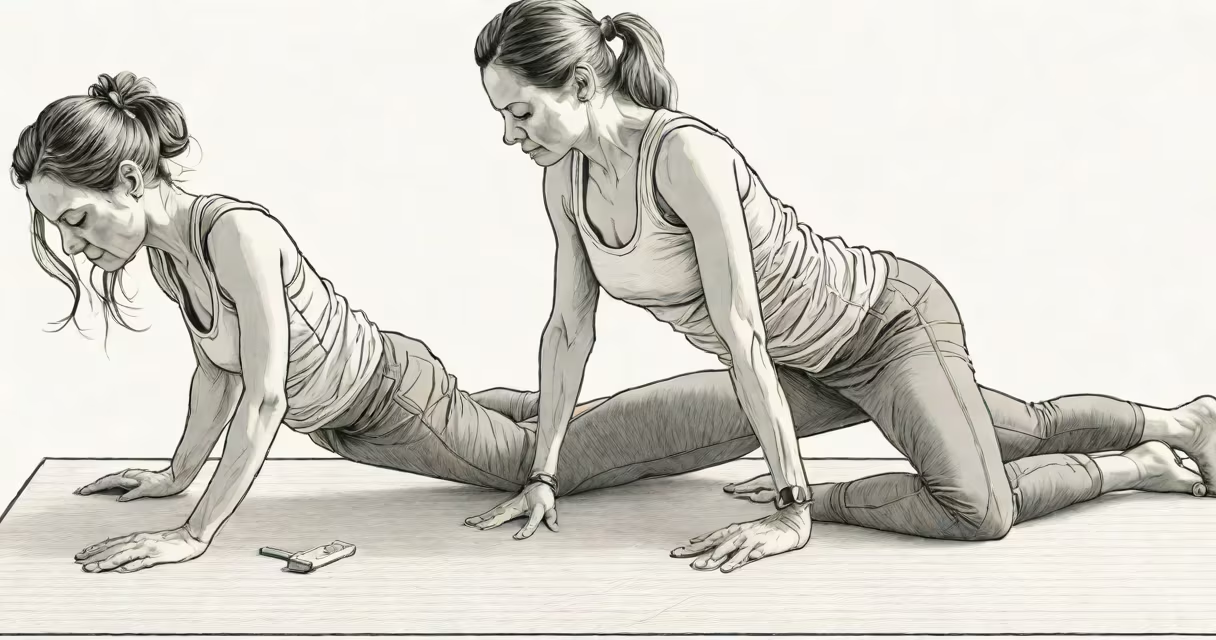
A back pain cure exercise is a structured movement or series of movements designed to reduce discomfort, strengthen supporting muscles, and restore functional mobility in the spine. These exercises focus on improving core stability, correcting posture, and increasing flexibility in the lumbar region. They are not quick fixes but tools grounded in clinical research and physical therapy protocols.
Back pain cure exercises work by retraining the neuromuscular system to support the spine more efficiently. Weakness in the deep abdominal and gluteal muscles contributes to poor load distribution across the lower back. By activating these stabilizers through controlled motion, the exercises reduce strain on intervertebral discs and facet joints. For example, the bird-dog exercise improves coordination between the transverse abdominis and multifidus muscles-key stabilizers often underused in people with chronic low back pain.
These routines are typically low-impact and progressive. They begin with isometric holds and gentle joint mobilization, advancing to changing movements as strength and control improve. A consistent practice of 10-15 minutes daily, performed with proper form, leads to measurable improvements in pain scores and functional capacity within four to six weeks, according to a 2021 study published in the Journal of Orthopaedic & Sports Physical Therapy.
When the spine lacks adequate muscular support, everyday motions like bending or lifting place excessive stress on ligaments and joints. Back pain cure exercises counteract this by reinforcing the body's natural stabilization mechanisms. The goal is not to build bulk but to improve motor control-the ability to engage the right muscles at the right time.
For instance, the dead bug exercise requires lying on your back, arms extended toward the ceiling, legs bent at 90 degrees. You slowly lower one arm and the opposite leg while maintaining a neutral spine. This movement activates the deep core muscles without compressing the lower back. Over time, it rewires neural pathways to prevent compensatory movements during daily tasks.
Research from the American Physical Therapy Association confirms that patients who perform prescribed back pain cure exercises show greater reductions in pain and disability compared to those using passive treatments like heat or medication alone. A 2020 randomized trial found that participants doing a 6-week program of targeted exercises reported 40% less pain and 30% better function on the Oswestry Disability Index.
Not all back pain cure exercises serve the same purpose. Different movements address distinct underlying causes such as muscle imbalance, joint stiffness, or nerve irritation. Selecting the right ones depends on whether pain stems from mechanical issues, disc problems, or neurological involvement.
| Type | Purpose | Example Exercise | Best For |
|---|---|---|---|
| Core stabilization | Improve spinal control and reduce disc pressure | Pelvic tilt, dead bug | Chronic low back pain, postural strain |
| Flexibility and mobility | Restore range of motion in stiff joints | Seated forward fold, cat-cow | Stiffness after prolonged sitting, limited movement |
| Nerve gliding | Reduce sciatic nerve tension | Sciatic nerve flossing, knee-to-chest | Leg numbness, radiating pain down the leg |
| Postural re-education | Correct forward head and rounded shoulder patterns | Wall angels, chin tucks | Desk workers, neck and upper back tension |
One common mistake is jumping into advanced moves too soon. A person with a history of disc herniation may benefit from gentle mobilization before progressing to loaded movements. The National Institute of Neurological Disorders and Stroke advises starting with non-weight-bearing exercises and gradually incorporating standing and walking variations.
Many assume that stretching alone resolves back pain. While flexibility helps, it doesn't address instability. A 2019 study in Spine journal showed that participants who focused only on hamstring stretches saw no significant improvement in pain or function compared to those doing core-strengthening routines.
Another error is treating back pain cure exercises as a one-size-fits-all solution. Pain originating from a pinched nerve may require different movements than pain due to weak glutes. For example, someone with sciatica might worsen symptoms by doing deep forward bends. Instead, they should prioritize nerve gliding techniques and avoid prolonged sitting.
I once observed a patient with persistent lower back pain who had been doing hundreds of sit-ups daily. After evaluation, we discovered he was overusing his hip flexors and underactivating his glutes. Switching to pelvic tilts and bridging reduced his pain by 60% in three weeks. This highlights that not all exercises are equal-and some can make things worse.
Consider a 42-year-old office worker with dull lower back pain that worsens after 90 minutes of sitting. The pain is localized, not radiating, and eases with walking. This suggests mechanical overload rather than nerve compression.
The back pain cure exercise plan begins with:
Perform this routine daily for two weeks. After that, add standing marches and bird-dogs. Track pain levels weekly using a 0-10 scale. Most patients report noticeable improvement by week four, with reduced reliance on pain medication.