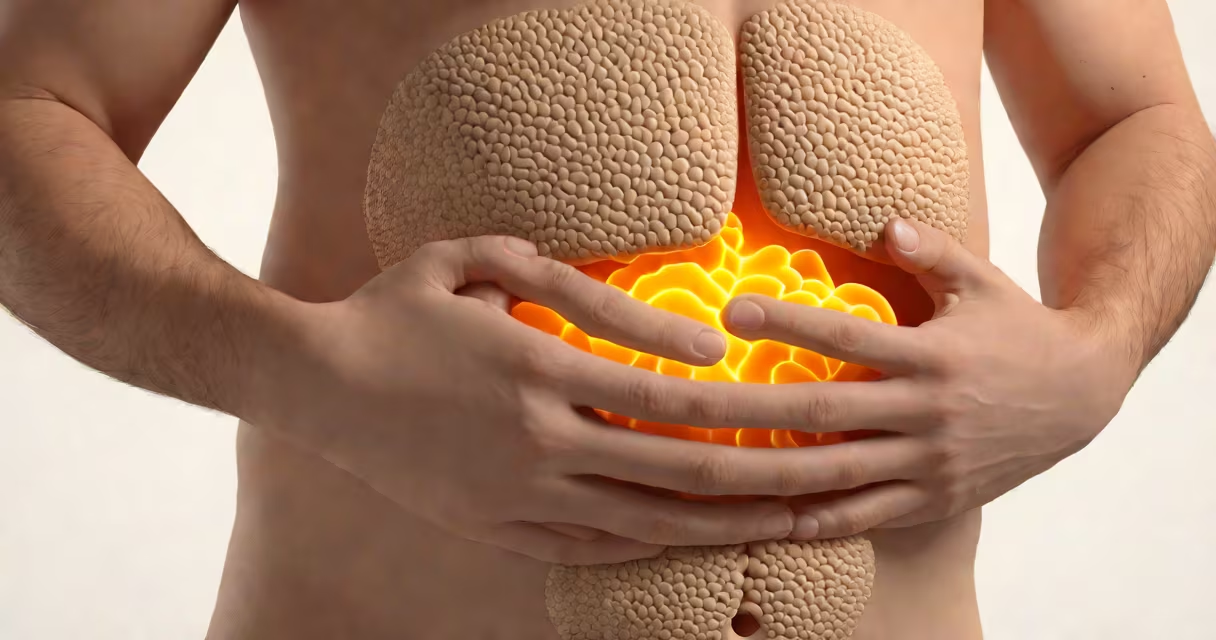
Intestinal gas pain results from excess gas buildup in the digestive tract, often due to swallowed air, undigested carbohydrates, or bacterial fermentation in the colon. This pressure can cause cramping, bloating, and sharp or dull abdominal discomfort.
Gas forms when food breaks down in the gut, especially carbohydrates that resist digestion in the small intestine. Bacteria in the large intestine ferment these leftovers, producing gases like methane, hydrogen, and carbon dioxide. The resulting pressure stretches the intestinal walls, triggering nerve signals perceived as pain.
Common triggers include beans, cruciferous vegetables, dairy products, artificial sweeteners, and carbonated drinks. Swallowing air while eating quickly, chewing gum, or wearing ill-fitting dentures can also contribute. Pain typically occurs within 30 minutes to two hours after eating and may shift location as gas moves through the intestines.
When you eat, your stomach and small intestine break down proteins, fats, and simple sugars. But complex carbohydrates-like raffinose in broccoli, lactose in milk, and fructans in wheat-pass undigested into the large intestine. There, resident bacteria consume them, releasing gas as a byproduct.
These gases accumulate and create pressure. The intestinal wall stretches, activating nociceptors-pain-sensing nerves. This sends signals to the brain, interpreted as cramping or stabbing sensations. Not all gas causes pain; the intensity depends on gas volume, sensitivity of the intestinal lining, and individual nervous system response.
A 2021 study published in *Gastroenterology & Hepatology* found that people with irritable bowel syndrome (IBS) report higher visceral sensitivity to gas, meaning they feel pain at lower volumes than others. This explains why some individuals experience severe pain from minimal gas, while others pass gas frequently without discomfort.
The following table outlines major contributors to intestinal gas pain, their mechanisms, and typical symptoms.
| Source | Mechanism | Typical Symptoms |
|---|---|---|
| Swallowed air (aerophagia) | Occurs during eating, drinking, or talking. Air enters the esophagus and travels to the stomach. | Burping, upper abdominal bloating, occasional lower pain |
| Dairy consumption | Lactose intolerance: lack of lactase enzyme prevents breakdown of lactose. | Cramps, diarrhea, bloating within 30-60 minutes |
| Beans and legumes | High in raffinose, a complex sugar fermented by colonic bacteria. | Flatulence, diffuse abdominal pain, loud gurgling sounds |
| Artificial sweeteners (e.g., sorbitol, xylitol) | Not absorbed in small intestine; drawn into colon via osmosis, then fermented. | Diarrhea, bloating, sharp cramps |
| Carbonated beverages | Direct introduction of CO₂ into the stomach and intestines. | Immediate burping, bloating, pressure in upper abdomen |
Non-dietary factors also play a role. Stress alters gut motility and increases sensitivity to gas. A 2020 review in *The American Journal of Gastroenterology* linked anxiety and depression to heightened perception of abdominal discomfort, even with normal gas levels.
Some conditions mimic gas pain. Small intestinal bacterial overgrowth (SIBO) produces excessive gas from early fermentation, leading to chronic bloating and pain. Inflammatory bowel disease (IBD) can cause similar symptoms, though usually with blood in stool or weight loss-red flags requiring medical evaluation.
Many assume that frequent passing of gas indicates poor health. In reality, healthy adults pass gas 10-20 times daily. The average volume is 150-200 mL per day. What matters is symptom burden, not frequency.
Another myth: "Gas pain always means something is wrong." Not true. Gas is a normal part of digestion. Pain arises only when gas accumulates faster than the body can expel it-or when the gut is hypersensitive.
One underappreciated factor: posture. Lying flat after eating slows gas movement. A 2019 clinical trial showed that sitting upright or walking after meals reduced bloating by 40% compared to lying down. This simple change can prevent pain onset.
Consider a 34-year-old woman who experiences sharp left-sided abdominal pain 90 minutes after lunch. She eats a sandwich with whole wheat bread, cheese, lettuce, and a side of green salad. She drinks a soda with her meal.
Her symptoms begin shortly after finishing. She reports bloating and audible gurgling. She passes gas and feels relief, but pain returns after 30 minutes. She notes no fever, vomiting, or changes in bowel habits.
Analysis: The soda introduces carbonation. The whole wheat bread contains fructans. The salad includes cruciferous vegetables. All three are known gas producers. Eliminating one at a time reveals that switching to a non-carbonated drink reduces episodes by 70%. Adding a digestive enzyme supplement (alpha-galactosidase) further cuts symptoms.
This case illustrates that multiple triggers often coexist. Isolating the primary offender requires elimination testing over several days.
Intestinal gas pain is rarely a sign of serious illness. However, red flags warrant investigation:
If you experience any of these, consult a gastroenterologist. Conditions like Crohn's disease, celiac disease, or colorectal cancer can present with gas-like symptoms. Early diagnosis improves outcomes.
For milder cases, tracking food intake and symptoms in a journal helps identify patterns. Apps like *Fooducate* or *MyFitnessPal* allow logging meals and correlating them with pain timing and severity.