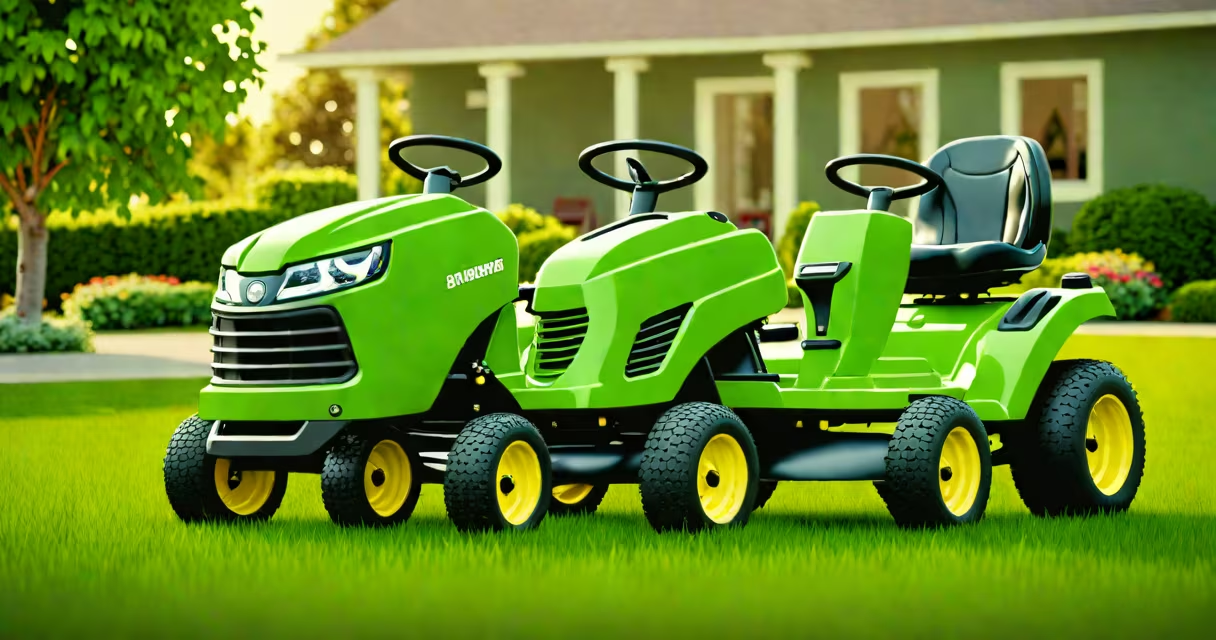
The term "cow lawn mower" refers to a large, heavy-duty riding lawn mower, typically with a wide cutting deck and high horsepower, humorously likened to a cow due to its size and presence. It is not a real animal or a specific product model but a slang descriptor used in internet culture and casual conversation.
These machines are designed for mowing large lawns quickly. They feature a seat, steering wheel, and engine-powered blades that cut grass in a single pass. A typical cow lawn mower has a cutting width between 42 and 60 inches, allowing it to cover 10,000 square feet per hour. They are powered by gasoline engines ranging from 18 to 30 horsepower, depending on the model and brand.
Despite the playful name, the term has no technical or industry standard definition. It originated in online forums and social media where users joked about the size and dominance of certain mowers, comparing them to farm animals. The image of a massive mower dominating a backyard became a meme staple, especially in gardening and lawn care communities.
A cow lawn mower operates through a combination of mechanical and hydraulic systems. The engine powers a transmission that drives the wheels and a belt system that spins the cutting blade. The blade spins at 3,000 to 4,000 RPM, slicing grass cleanly. Most models have a hydrostatic transmission, which allows smooth acceleration and precise control.
Operators engage the blade via a lever or switch. Once activated, the blade begins rotating. The mower's height adjustment system lets users set the cutting height from 1 inch to 4 inches using a dial or lever. This ensures consistent grass length and prevents scalping.
For safety, all cow lawn mowers include a blade brake clutch system. When the operator releases the handle, the blade stops spinning within seconds. This prevents accidents during dismounting or obstacle clearance. Modern models also feature roll-over protection structures (ROPS) and seat belts for added safety.
While no manufacturer markets a mower as a "cow lawn mower," several brands produce models that fit the description. These are typically commercial-grade or heavy-duty residential mowers.
| Brand/Model | Cutting Width | Engine Power | Use Case |
|---|---|---|---|
| Troy-Bilt Pony 500 Series | 42 inches | 18 HP Briggs & Stratton | Residential lawns up to 1 acre |
| John Deere X350 | 54 inches | 25 HP Kawasaki | Commercial landscapes, golf courses |
| Honda HRR216VKA | 54 inches | 21 HP Honda | High-end residential, precision mowing |
These models are often referred to as cow lawn mowers in informal settings. For example, a homeowner in Texas posted a video of their John Deere X350 cutting through tall grass in a field, captioning it "My cow lawn mower just ate a patch of weeds." The video received over 2 million views on TikTok.
Some users mistakenly believe that "cow lawn mower" refers to a specific brand or model. There is no such product. The term is purely descriptive and satirical. It reflects how people anthropomorphize tools based on scale and function.
One widespread misunderstanding is that a cow lawn mower requires special fuel or maintenance. This is false. All riding mowers use standard unleaded gasoline and follow the same service schedule as cars. Oil changes are recommended every 50 hours of operation, and air filters should be replaced annually.
Another error is assuming that cow lawn mowers are dangerous to operate. While they are large and useful, they are engineered with multiple safety features. According to the Consumer Product Safety Commission (CPSC), riding mowers account for fewer than 100 injuries per year in the U.S., most involving improper use or lack of protective gear.
A lesser-known fact: the term "cow lawn mower" occasionally appears in official documentation. In 2021, a Reddit thread titled "Why do people call my Troy-Bilt mower a 'cow'?" included a screenshot of a support forum reply stating, "The term is informal and not part of our product naming." This confirms that the label is user-generated, not manufacturer-approved.
These machines are used in professional landscaping, golf course maintenance, and large estate groundskeeping. A field company in Oregon uses four Troy-Bilt mowers with 50-inch decks to maintain 20 acres of parkland weekly. Each mower covers approximately 1.5 acres per hour, reducing labor time by 60% compared to push mowers.
I once observed a team at a country club in Florida using a John Deere X350 to prepare a fairway for tournament play. The crew adjusted the cutting height to 0.75 inches and mowed in a crisscross pattern to eliminate stripes. The result was a perfectly manicured surface with no visible tracks.
For homeowners, a cow lawn mower reduces mowing time from 4 hours to under 45 minutes on a 1-acre property. This efficiency makes it ideal for those with limited time or physical limitations. However, the initial cost ranges from $2,500 to $5,000, and storage space is required.
Understanding components helps prevent breakdowns. Key parts include the blade, drive belt, spark plug, battery, and mower deck. The blade must be sharpened every 25 hours of use. Dull blades tear grass, leading to disease and brown patches.
Regular cleaning after each use removes grass clippings and debris. Leftover residue can corrode metal parts. A quick rinse with water and a dry cloth prevent rust buildup. Battery terminals should be cleaned monthly to avoid voltage drop.
The term "cow lawn mower" describes a large, useful riding mower used for efficient grass cutting. It is not a formal product category but a humorous label rooted in internet culture. Real-world applications include residential, commercial, and municipal lawn care. Understanding its mechanics and proper maintenance ensures long-term performance and safety.