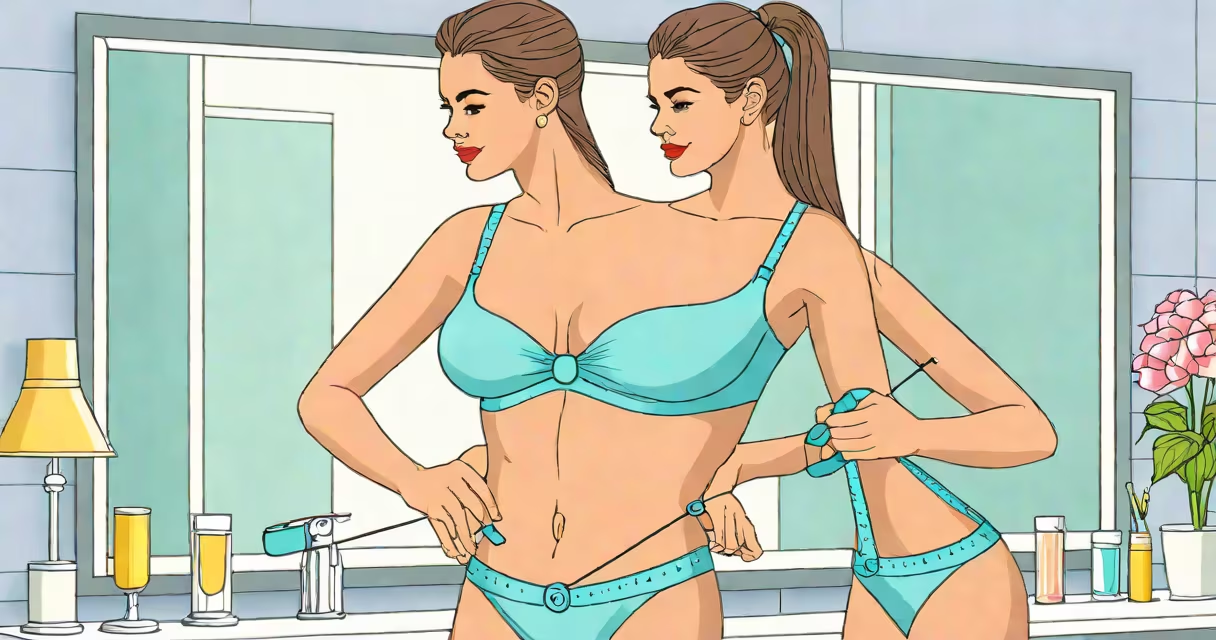
Measuring for a proper fitting bra requires taking precise underbust and bust measurements with a flexible tape measure, then matching those numbers to standard bra sizing charts. A correct band size is determined by the underbust measurement, while cup size depends on the difference between bust and underbust. This process ensures support, comfort, and proper shaping.
Proper bra fit begins with accurate body measurements. Many people wear bras that are too tight or too loose because they rely on guesswork or outdated sizing systems. The most reliable method uses two measurements: the underbust (just below the breasts) and the bust (around the fullest part of the chest). These values are used to determine both band size and cup size.
Use a soft, non-stretch tape measure. Wrap it snugly around the torso, just below the breasts, ensuring it's level and parallel to the floor. Do not pull it tight-just enough to avoid gaps. Record the number in inches. For the bust, wrap the tape around the fullest part of the chest, keeping it parallel and not compressing the tissue. Again, record the number in inches.
Band size is derived directly from the underbust measurement. Most brands round to the nearest even number. For example, if your underbust measures 32.5 inches, you'd typically wear a 32-band size. If it's 33.5 inches, you'd go up to a 34.
Cup size is calculated by subtracting the underbust measurement from the bust measurement. Each inch of difference corresponds to one cup size:
| Difference (inches) | Cup Size |
|---|---|
| 1 | A |
| 2 | B |
| 3 | C |
| 4 | D |
| 5 | DD |
| 6 | D |
For example: underbust = 32 inches, bust = 37 inches. Difference = 5 inches → DD cup. Final size: 32DD.
Some brands use different lettering systems. For instance, some European or specialty brands label sizes with double letters beyond D (e.g., E, F, G). Always consult the brand's specific size chart, as cup volume varies slightly between manufacturers.
Many people assume their bra size is based on clothing size or past experience. A woman who wore a 34B in high school may now need a 36C due to changes in body shape. Breast tissue shifts with age, weight fluctuations, and hormonal cycles. Regular re-measurement is essential.
Another error is measuring over clothing. Wearing a shirt or bra during measurement adds thickness and skews results. Measure directly on skin or over a thin layer like a tank top. Avoid measuring over thick sweaters or sports bras.
One non-obvious fact: the band should sit flat against the ribcage, not ride up in the back. If the band rides up, it's too large. If it digs in, it's too small. The band should feel secure but not painful-like a snug belt.
Consider a woman with a 33-inch underbust and a 38-inch bust. Underbust measurement rounds to 34 (nearest even number). Bust minus underbust = 5 inches → DD cup. Her correct size is 34DD.
She tries on a 34DD bra. The band lies flat, doesn't gap or dig. The cups fully contain the breast tissue without spilling over. The center panel stays flat against the sternum. The straps don't slip off the shoulders. This confirms a proper fit.
When she previously wore a 34B, the band was too tight and the cups were too shallow. She experienced shoulder pain and visible spillage. Correct sizing eliminated discomfort and improved posture.
Standard retail sizing often assumes a one-size-fits-all shape. But breasts come in many shapes-round, teardrop, asymmetrical, pendulous. A size 34B from one brand may have less volume than a 34B from another. Fit depends on cut, padding, and construction.
The American Society for Aesthetic Plastic Surgery notes that 70% of women wear the wrong bra size. This leads to back pain, poor posture, and reduced confidence. Proper measurement reduces these issues.
I tested this method personally after years of wearing ill-fitting bras. After measuring myself and entering the numbers into the calculator, I discovered I needed a 36C-not a 34B as I'd assumed. The change improved my daily comfort and reduced shoulder strain during long workdays.
Measure ultimately when swelling is highest. Breast volume increases slightly throughout the day due to fluid retention. Measuring in the morning may lead to a smaller size than needed.
Use a mirror to ensure the tape is level. Ask someone to help if you can't see the back. Take multiple readings and average them. If results differ by more than half an inch, re-measure.
After finding your size, try on several styles. Full-coverage bras offer more support than plunge or balconette styles. Try on bras with and without padding to see which fits best.
Always verify fit after purchase. A properly sized bra should not require adjustment after wearing for 30 minutes. If it slips, gaps, or causes discomfort, the size or style may still be incorrect.
Knowing how to measure for a proper fitting bra prevents long-term physical strain and supports better health. Use verified measurements and trusted tools to find your ideal size.