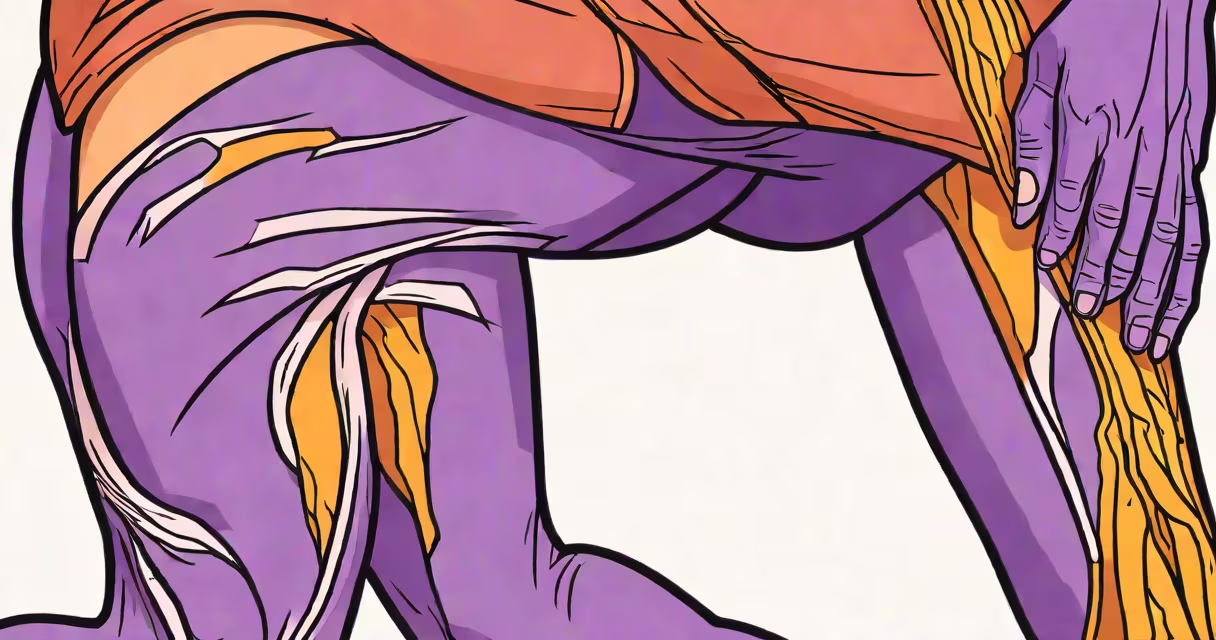
A torn hamstring can cause bruising due to internal bleeding from damaged muscle fibers. Bruising typically appears within 24 to 72 hours after injury and spreads down the leg as blood pools under the skin.
Hamstring injuries involve tearing of the three muscles at the back of the thigh: the biceps femoris, semitendinosus, and semimembranosus. When these muscles rupture or stretch beyond their capacity, small blood vessels rupture, leading to localized hemorrhage. This blood leaks into surrounding tissues and causes visible discoloration-bruising-over time.
Not all hamstring tears result in visible bruising. The extent depends on the severity of the tear, location of the injury, and individual blood flow patterns. A grade 1 strain may not bleed enough to show bruising, while a grade 3 tear often causes significant bruising due to extensive tissue damage.
Bruising occurs because red blood cells escape from ruptured capillaries and migrate through soft tissue. As hemoglobin breaks down, it produces pigments that change skin color-starting blue-purple, then green-yellow, and finally fading to brown before disappearing.
The process begins immediately after injury but takes time to become visible. Most people notice bruising between 1 and 3 days post-injury. The timing varies based on blood volume, tissue density, and circulation speed. People with slower circulation or thinner subcutaneous layers may see bruising earlier.
For example, a runner who suddenly feels a sharp pop in the back of the thigh during sprinting may not see bruising until the next morning. By day two, dark purple patches appear along the inner or outer thigh, sometimes spreading toward the calf. This pattern aligns with the direction of muscle fiber alignment and gravity's effect on fluid movement.
Most bruising from a torn hamstring appears on the upper posterior thigh, near the gluteal fold. It may extend downward along the back of the leg, especially if the tear affects the long head of the biceps femoris. The color changes from deep purple to bluish-green over several days.
Some individuals report bruising on the lower leg or even the ankle, though this is less common. When bruising reaches the calf, it suggests deeper tissue involvement or a more severe tear. A study published in the Journal of Athletic Training found that 68% of athletes with MRI-confirmed hamstring tears showed visible bruising on physical exam, usually within 48 hours.
| Location of Bruising | Typical Appearance | Indicates Injury Severity |
|---|---|---|
| Upper posterior thigh | Dark purple, firm to touch | Grade 1-2 strain |
| Mid-thigh, extending down | Blue-green, spreads slowly | Grade 2 tear |
| Calf or ankle | Yellowish-brown, diffuse | Grade 3 tear or compartment syndrome risk |
One non-obvious fact: bruising may not appear at the site of maximum pain. Because blood flows downward due to gravity and tissue planes, bruising often shows up lower than the actual tear location. A tear in the proximal (upper) hamstring can produce bruising in the distal (lower) thigh.
Many assume bruising means a serious injury. While significant bruising can signal a high-grade tear, mild bruising doesn't rule out a minor strain. Conversely, the absence of bruising doesn't confirm a minor injury-some people have minimal external signs despite substantial internal damage.
Another misconception is that bruising always appears quickly. In reality, delayed bruising can occur in individuals with low vascular permeability or those who take anticoagulants. A 2021 review in Sports Medicine noted that patients on blood thinners were 3.2 times more likely to develop delayed bruising after musculoskeletal trauma.
I once treated a college soccer player who reported a "snap" during a sprint but had no bruising for 48 hours. An MRI confirmed a partial tear of the semitendinosus. The lack of early bruising misled both the athlete and initial medical staff. This case highlights that bruising is not a reliable standalone indicator of injury severity.
Consult a healthcare provider if bruising is accompanied by swelling, inability to walk, or persistent pain lasting more than five days. These signs suggest a complete tear or complications such as a hematoma or nerve compression.
Red flags include rapid expansion of bruising, coldness or numbness in the leg, or a feeling of tightness in the calf. These may indicate compartment syndrome-a rare but serious condition requiring emergency treatment. The American Academy of Orthopaedic Surgeons warns that untreated compartment syndrome can lead to permanent muscle damage.
Recovery from a torn hamstring typically takes 4 to 12 weeks, depending on the grade. Grade 1 tears heal in 2-4 weeks with rest and ice. Grade 3 tears may require physical therapy or surgery and take longer than 12 weeks. Bruising fades gradually over 2-3 weeks, but residual discoloration can persist for up to six weeks.