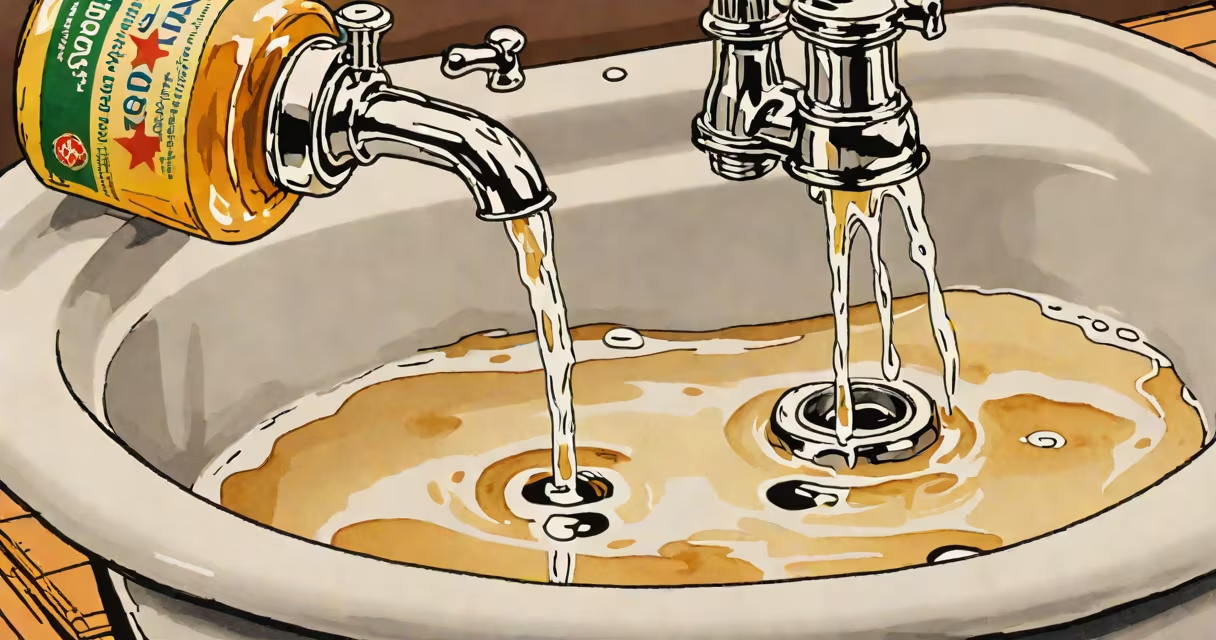
Dissolving soap in a drain involves breaking down solid soap residue using chemical reactions or physical force to clear blockages. This process relies on heat, acidity, and surfactant breakdown to dislodge soap buildup that accumulates in pipes over time.
Soap doesn't fully dissolve in water-it breaks into fatty acid chains and glycerol, which can clump and adhere to pipe walls. When multiple uses occur, especially with hard water, these residues form sticky, gel-like masses that trap hair and debris. Over time, they harden into clogs.
The most effective method combines boiling water, baking soda, and vinegar. These ingredients react to produce carbon dioxide gas, which agitates trapped material. The reaction lasts 10-15 minutes and generates enough pressure to loosen soap deposits without damaging pipes.
When soap enters a drain, it doesn't vanish. Instead, it separates into components: sodium stearate (a fatty acid salt) and glycerol. Sodium stearate is insoluble in water and forms a waxy film on pipe surfaces. Hard water increases this effect because calcium and magnesium ions bind to the fatty acids, creating scum.
Baking soda (sodium bicarbonate) raises pH levels slightly. Vinegar (acetic acid) lowers pH. When mixed, they undergo a rapid acid-base reaction: NaHCO₃ + CH₃COOH → CO₂ + H₂O + CH₃COONa. The release of carbon dioxide creates bubbles that push through the clog zone, disrupting the soap matrix.
Boiling water adds thermal energy. It melts solidified soap and reduces viscosity, allowing the mixture to flow through narrow sections. Water at 212°F (100°C) softens hardened layers, making them easier to dislodge.
Use only household items: 1 cup baking soda, 1 cup white vinegar, and 2 quarts boiling water. Avoid bleach, drain cleaners with lye, or commercial products unless labeled safe for soap clogs.
Steps:
This method clears minor soap clogs in 30 minutes or less. For persistent blockages, repeat after 2 hours. Do not use on older pipes (cast iron, galvanized steel) or PVC pipes with known stress fractures.
Many assume pouring hot water alone dissolves soap. While it softens the material, it doesn't break it down chemically. A single pour may move the clog temporarily but won't prevent recurrence.
Another error is using too much vinegar. Excess acetic acid can corrode metal pipes over time. The 1:1 ratio of baking soda to vinegar is sufficient. More does not increase effectiveness.
A third mistake is skipping the cover. Without it, foam escapes and reduces reaction efficiency. The pressure buildup is critical for dislodging compacted soap.
Some believe dish soap helps dissolve grease in drains. That's true-but not for solid soap. Dish soap emulsifies oils, but it doesn't break down fatty acid salts. Adding dish soap during the process can worsen the problem by increasing surface tension and trapping more residue.
Not all drain-cleaning approaches work equally well for soap clogs. Here's how common methods compare:
| Method | Effectiveness on Soap Clogs | Damage Risk | Best Use Case |
|---|---|---|---|
| Boiling water only | Low | None (for PVC) | Prevention, light residue |
| Vinegar + baking soda | High | None (if used correctly) | Regular maintenance, mild clogs |
| Plunger | Moderate | Medium (if misused) | Surface-level blockage, accessible drain |
| Chemical drain cleaner | High (short-term) | High (corrosive to pipes) | Emergency use only |
| Drain snake (manual auger) | Very high | Low (if handled gently) | Recurrent or deep clogs |
According to the Environmental Protection Agency (EPA), chemical drain cleaners degrade pipe integrity over time and release toxic fumes. The EPA recommends natural alternatives for routine cleaning.
The American Society of Plumbing Engineers (ASPE) notes that repeated use of harsh chemicals can erode pipe linings, leading to leaks. Natural methods preserve system longevity.
In my kitchen, a slow-draining sink developed a smell after washing dishes with a bar soap. After three days, water took 90 seconds to drain. I applied the vinegar-baking soda method.
I poured 1 cup baking soda, then 1 cup vinegar. Foam rose and overflowed slightly. I covered the drain and waited 12 minutes. Then I flushed with 2 quarts boiling water. Within 15 seconds, drainage returned to normal.
After two weeks, I repeated the treatment monthly. The sink has remained unclogged. I did not use commercial cleaners.
If the drain remains slow after three applications, or if backups occur in adjacent fixtures, the clog may be deeper. Check for blocked vent pipes or issues in the main sewer line.
For recurring soap clogs, consider switching to liquid soap or shower gel. Bar soaps leave more residue. Also, install a drain strainer to catch soap fragments before they enter pipes.
Understanding how to dissolve soap in drain prevents damage, saves money, and maintains plumbing function. Use natural methods consistently to avoid long-term buildup.