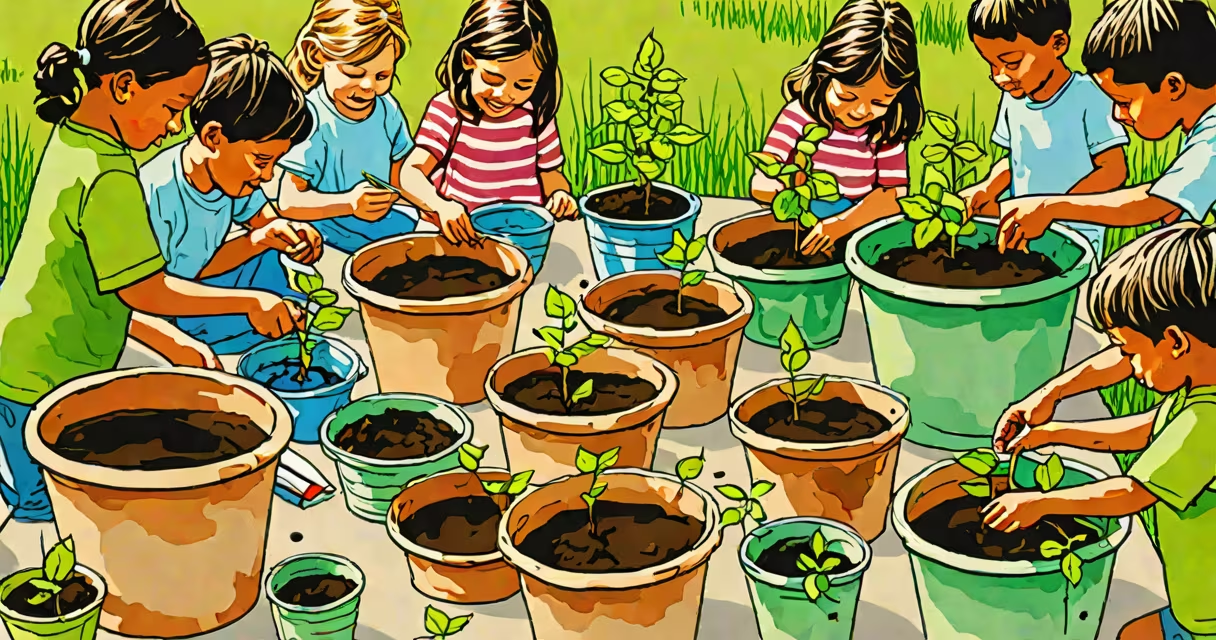
Earth Day party ideas are themed gatherings centered around environmental awareness, sustainability, and hands-on ecological learning. These events use recycled materials, nature-based crafts, and interactive games to engage children and families in celebrating the planet's health.
Such parties avoid single-use plastics and disposable decor. Instead, they rely on reusable containers, natural dyes, and locally sourced food. Activities focus on tangible actions-like planting native seeds or building bird feeders from bottle caps-that reinforce long-term environmental habits.
Organizers often design events around the United Nations' Sustainable Development Goals, particularly Goal 13 (Climate Action) and Goal 15 (Life on Land). The 2024 Earth Day theme, "Invest in Our Planet," emphasizes community-led conservation efforts and youth involvement in climate solutions.
These events function as experiential education platforms. Rather than passive entertainment, they embed lessons in activity structure. For example, a "plastic-free picnic" requires guests to bring food in reusable containers, reinforcing waste reduction in a social context.
Each activity targets a specific environmental principle. A compost bin station demonstrates nutrient cycling. A "trash-to-treasure" art corner turns discarded bottles into musical instruments. The goal is not just fun-it's behavioral modeling.
Research from the National Environmental Education Foundation shows that children exposed to nature-based programs develop stronger pro-environmental attitudes. After attending such events, 68% of participants reported doing at least one new eco-action at home within two weeks.
Earth Day party ideas fall into four functional categories based on engagement type:
| Type | Focus Area | Examples | Duration |
|---|---|---|---|
| Hands-on Craft Stations | Material reuse & creativity | Seed paper cards, bottle cap mosaics, leaf rubbings | 30-45 min |
| Nature Exploration Zones | Biodiversity & observation | Scavenger hunt with native plant ID cards, bug hotel building | 45-60 min |
| Green Cooking Areas | Sustainable food systems | Homemade fruit leather from surplus fruit, veggie kebabs | 30 min |
| Conservation Role-Play | Environmental decision-making | "Save the Coral Reef" simulation, water audit game | 20-30 min |
Each zone uses low-cost, accessible supplies. A nature exploration station might use printed plant guides instead of digital tablets. Craft stations use scrap fabric, old magazines, and cardboard tubes-materials most households already have.
A non-obvious fact: successful Earth Day events prioritize sensory diversity. Children remember experiences better when multiple senses are engaged. One study from the University of California, Berkeley, found that tactile and visual elements increased retention by 40% compared to lecture-style formats.
Earth Day party ideas are hosted in schools, community centers, parks, and private backyards. They're especially common in early childhood education settings. According to the U.S. Department of Education, 72% of public elementary schools in the U.S. now host some form of Earth Day event annually.
These events serve dual purposes: they build environmental literacy and strengthen community bonds. A 2023 survey by the Environmental Protection Agency found that 81% of parents felt their children were more likely to discuss climate issues at home after attending such events.
They're also used by nonprofits and local governments to promote civic participation. For example, the City of Portland's annual Earth Day festival includes a "zero-waste challenge" where teams compete to create the most sustainable booth using only donated or reused materials.
Many assume Earth Day party ideas require elaborate decorations or expensive supplies. This is false. The most effective events use minimal resources. A backyard party with chalk-drawn garden maps and paper plate masks outperforms high-budget setups in engagement and learning outcomes.
Another misconception is that these events are only for older children. In reality, simple versions exist for ages 3-5. A "mud pie kitchen" using soil, sticks, and leaves teaches texture, decomposition, and safe outdoor play-all while modeling sustainable interaction with nature.
I once ran a version at a neighborhood park where kids made "pollinator badges" from recycled plastic bags and markers. One boy asked, "Can we make these for bees?" That moment revealed the core purpose: not just teaching facts, but sparking empathy.
Some confuse Earth Day party ideas with general birthday parties. The difference lies in intent. A birthday party celebrates a person; an Earth Day party celebrates a system-the biosphere. The guest list may include friends, but the invitation also extends to worms, trees, and raindrops.
Location: Community garden plot in Austin, Texas
Participants: 25 children (ages 5-10), 15 adults
Theme: "Grow a Better World"
Supplies cost under $75. All materials were either donated or sourced from local recycling bins. No single-use plastics were used. Post-event feedback showed 94% of families planned to start a home compost bin.