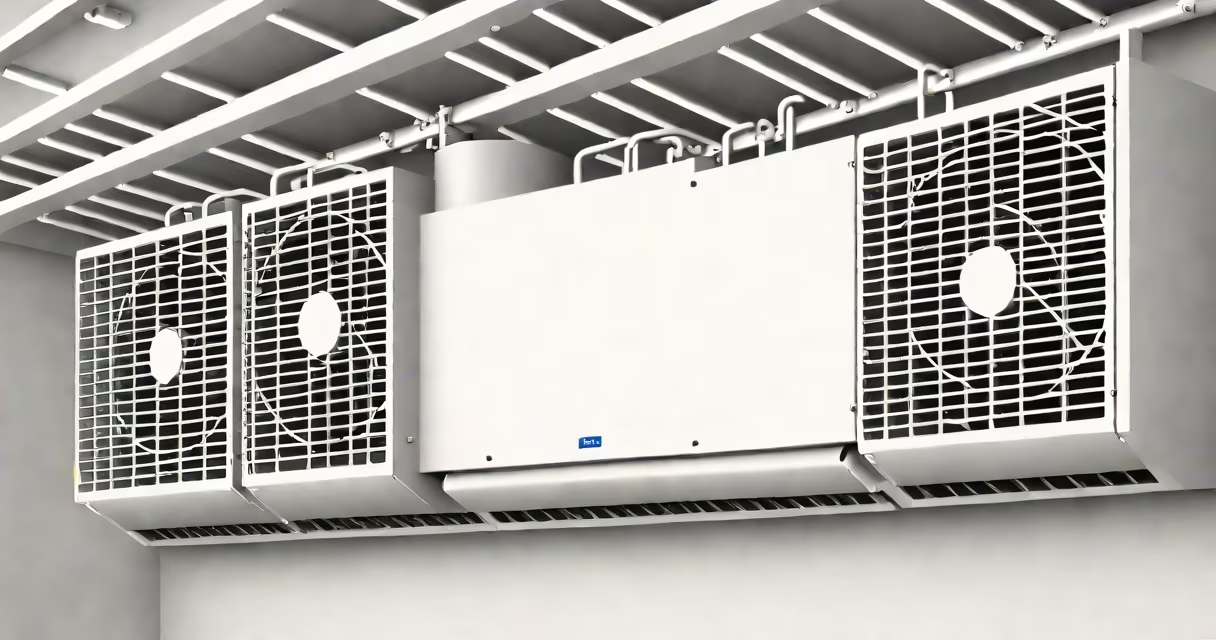
FCU means fan coil unit in HVAC systems-a compact indoor device that cools or heats air using refrigerant, typically paired with a central chiller or boiler. It circulates air over a coil to adjust temperature in individual rooms or zones.
Fan coil units are widely used in commercial buildings, hotels, and residential complexes where precise temperature control per zone is needed. They operate independently of the main air handler, allowing users to adjust room temperatures without affecting other areas. A typical FCU includes a fan, a heating or cooling coil, a drain pan, and controls for temperature and airflow.
These units are often installed in ceilings, walls, or under windows. They rely on a chilled water or hot water supply from a central plant, or in some cases, direct expansion (DX) refrigerant. The fan pulls indoor air through the coil, where it's cooled or heated before being released back into the space.
A fan coil unit functions by drawing return air from a room through a filter, then passing it over a heat exchange coil. If the coil contains chilled water, the air loses heat and becomes cooler. If the coil uses hot water or steam, the air gains heat. The fan then pushes the conditioned air back into the room.
The system is controlled by a thermostat. When the room temperature rises above the setpoint, the controller activates the chilled water valve (or DX compressor) and turns on the fan. Once the desired temperature is reached, the system shuts off until the next cycle.
For example, in a hotel room, an FCU maintains a consistent 72°F during summer. The unit runs only when the room exceeds 73°F, minimizing energy waste. This zonal control reduces building load compared to centralized systems that condition entire floors at once.
Each fan coil unit consists of four core parts: a blower fan, a heat exchanger coil, a condensate drain pan, and a control system. The fan moves air across the coil. The coil transfers heat between the fluid (water or refrigerant) and the air. The drain pan collects condensation formed during cooling cycles. Controls manage fan speed, valve position, and temperature settings.
There are two main types: water-based and direct expansion (DX). Water-based FCUs use chilled water from a central chiller or hot water from a boiler. These are common in large office buildings and hospitals because they're efficient and quiet. DX units use refrigerant directly, similar to window ACs, and are simpler to install but less efficient in high-humidity environments.
| Type | Fluid Source | Efficiency | Common Use |
|---|---|---|---|
| Water-Based | Chilled/hot water from central plant | High (COP 4.0-6.0) | Office towers, schools, hospitals |
| Direct Expansion (DX) | Refrigerant (e.g., R-410A) | Moderate (COP 2.5-3.5) | Small offices, apartments, retrofits |
Another distinction is mounting style. Wall-mounted FCUs are common in hotels and dormitories. Ceiling-mounted units are used in open-plan offices. Floor-standing models appear in retail spaces and lobbies. Each configuration affects noise levels, installation cost, and maintenance access.
FCUs are ideal for buildings requiring individual climate control. In a multi-story office building, each floor may have different occupancy patterns. Some departments work late; others close early. With FCUs, managers can set different schedules per zone, reducing energy waste.
They're also useful in retrofit projects. Replacing old window units with wall-mounted FCUs improves aesthetics and efficiency. For example, a 2005-era apartment complex in Chicago replaced 42 outdated window ACs with 42 wall-mounted FCUs. After installation, average cooling energy use dropped by 31%, according to a 2022 study by the American Society of Heating, Refrigerating and Air-Conditioning Engineers (ASHRAE).
FCUs are not meant for whole-building conditioning. They don't handle ventilation or humidity control on their own. That's why they're almost always paired with a dedicated outdoor air system (DOAS) or a central HVAC system that supplies fresh air. Without proper ventilation, indoor air quality degrades quickly-even if the temperature is correct.
People often mistake FCUs for air handlers or split systems. An air handler moves large volumes of air through ducts and handles both cooling and ventilation. A split system is a standalone unit with an indoor FCU and an outdoor condenser. FCUs are smaller, quieter, and designed for localized control-not whole-space conditioning.
Another misconception is that FCUs are always energy-efficient. While water-based units are highly efficient, DX units struggle in humid climates. In Miami, a DX FCU running continuously in August can consume 2.5 times more electricity than a water-based unit serving the same space, per data from the U.S. Department of Energy's Building Energy Data Book (2023).
Also, FCUs do not remove moisture from air unless the coil surface drops below dew point. In high-humidity areas, additional dehumidification may be needed. A single FCU cannot maintain relative humidity below 60% without supplemental equipment.
In a 300-room hotel in Orlando, Florida, each guest room uses a wall-mounted FCU. The system is connected to a central chiller that provides 44°F chilled water. Each FCU has a thermostat and a variable-speed fan. Guests set their preferred temperature via a wall panel.
When a guest sets the thermostat to 72°F, the FCU checks the room temperature. If it's above 73°F, the control opens the chilled water valve and starts the fan. Air passes over the coil, dropping from 82°F to 65°F before entering the room. The fan adjusts speed based on how far the room is from the setpoint-slower when close, faster when far.
After 15 minutes, the room reaches 72°F. The valve closes, and the fan slows to idle. The system remains off until the temperature rises again. Over 24 hours, this process uses about 1.2 kWh per room-well below the national average for hotel cooling, which is 1.8 kWh per room per day (Energy Information Administration, 2023).
During maintenance, technicians clean the coils and drain pans monthly. A clogged drain pan caused a water leak in one room last winter, leading to mold growth. The issue was traced to a failed float switch. This shows that while FCUs are reliable, regular upkeep prevents failures.
FCU means fan coil unit in HVAC systems-small, indoor devices that condition air using refrigerant or water. They offer precise, zone-specific climate control and are common in commercial and residential buildings. Understanding how they work helps avoid misapplication and ensures better performance.
When selecting an FCU, consider the building's layout, climate, and existing infrastructure. Water-based units are more efficient in large facilities. DX units suit small installations with limited plumbing access. Always pair FCUs with a ventilation system to maintain healthy indoor air quality.
If you're being empathetic means understanding someone's comfort needs, think of FCUs as the HVAC equivalent-adjusting temperature and airflow to match human preferences, not just technical specs.