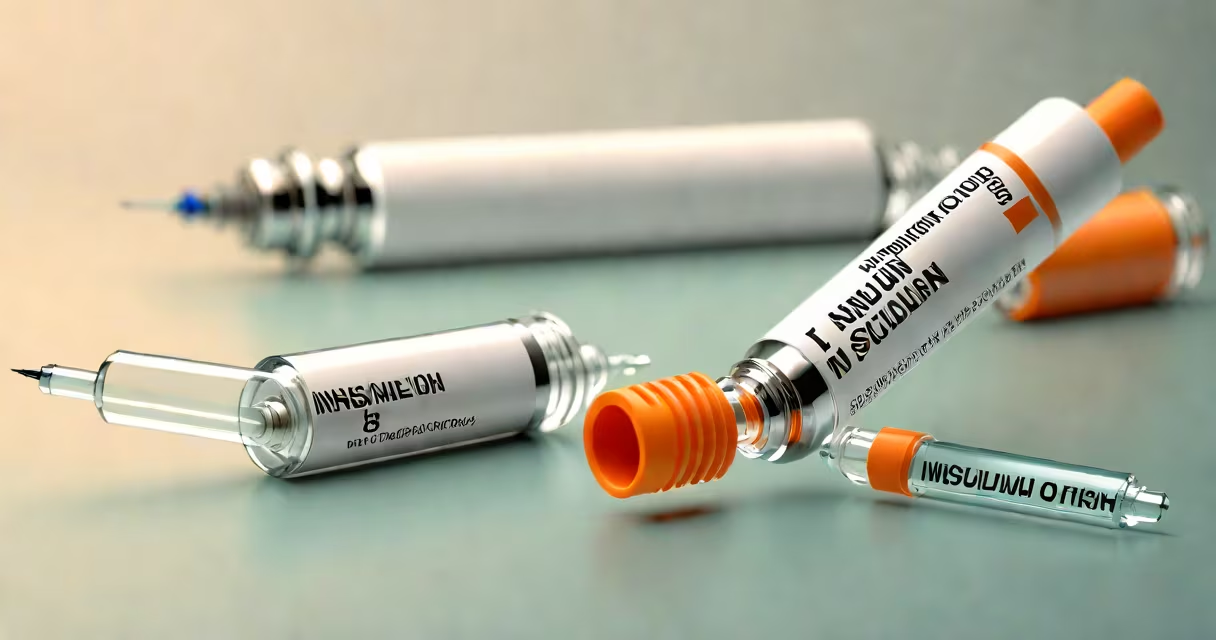
Insulin is a peptide hormone produced by beta cells in the pancreas that lowers blood glucose levels by facilitating glucose uptake into muscle, fat, and liver cells. It acts as the body's primary regulator of carbohydrate metabolism, ensuring energy is stored or used efficiently.
When blood glucose rises-after eating, for example-insulin is released into the bloodstream. It binds to receptors on cell surfaces, triggering the translocation of GLUT4 transporters to the cell membrane. This allows glucose to enter the cell, where it can be used for energy or stored as glycogen. Without insulin, cells cannot access glucose effectively, leading to hyperglycemia.
The term "insulin" was coined in 1921 by Canadian scientists Frederick Banting and Charles Best, who isolated it from dog pancreases and successfully treated diabetic dogs. Their work led to the first clinical use of insulin in humans in 1922, transforming type 1 diabetes from a fatal condition to a manageable one.
Insulin's action begins in the pancreas. Beta cells in the islets of Langerhans detect rising blood glucose levels-typically above 7 mmol/L (126 mg/dL) fasting. They respond by secreting insulin in two phases: a rapid initial release within minutes, followed by a sustained secretion over several hours.
Once in circulation, insulin travels to tissues throughout the body. In skeletal muscle and adipose tissue, it activates signaling pathways involving IRS-1 and PI3K, which move GLUT4 vesicles to the plasma membrane. These vesicles fuse with the membrane, inserting glucose transporters that allow glucose entry.
In the liver, insulin suppresses gluconeogenesis-the production of new glucose-and promotes glycogen synthesis. It also inhibits lipolysis, preventing the breakdown of fats into free fatty acids. This prevents ketosis and maintains metabolic balance during feeding states.
Medical insulin is classified by onset, peak, and duration of action. There are four main categories:
| Type | Onset | Peak | Durability | Use Case |
|---|---|---|---|---|
| Regular (short-acting) | 30 min | 2-3 hours | 3-6 hours | Mealtime dosing |
| NovoLog (rapid-acting analog) | 10-20 min | 1-2 hours | 3-5 hours | Pre-meal insulin |
| Lantus (long-acting basal) | 1 hour | No peak | 24 hours | Basal control |
| Humalog Mix 75/25 (premixed) | 15 min | 1-2 hours | 16 hours | Two-dose regimen |
Each type serves a distinct purpose. Rapid-acting insulins like Humalog are taken before meals to cover carbohydrate intake. Long-acting insulins such as Lantus provide a steady background level to prevent fasting hyperglycemia. Premixed formulations combine both for simplified dosing.
Insulin analogs-modified versions of human insulin-were developed to reduce hypoglycemia risk. For example, insulin glargine (Lantus) has a flat pharmacokinetic profile, avoiding sharp peaks that increase low-blood-sugar episodes.
Many assume insulin causes weight gain. While insulin promotes fat storage, weight changes depend on calorie balance. A 2020 study in *Diabetes Care* found that patients using insulin had a median weight gain of 2.5 kg over 12 months-but this was offset by improved glucose control and reduced complications.
Another myth is that insulin is only for people with type 1 diabetes. In reality, type 2 diabetes often progresses to requiring insulin. According to the American Diabetes Association, nearly 50% of people with type 2 diabetes use insulin within 10 years of diagnosis.
Some confuse insulin with glucagon-a hormone that raises blood glucose. Glucagon is released during hypoglycemia and counteracts insulin. Together, they maintain glucose homeostasis. Using insulin without understanding this balance can lead to dangerous swings in blood sugar.
Consider a 52-year-old woman diagnosed with type 2 diabetes five years ago. Her HbA1c was 9.2% despite metformin and lifestyle changes. Fasting glucose averaged 180 mg/dL. She began a basal-bolus regimen: 20 units of insulin glargine at bedtime and 10 units of insulin lispro before each meal.
After three months, her HbA1c dropped to 6.8%. Fasting glucose stabilized at 95 mg/dL. She reported fewer fatigue episodes and improved concentration. Her doctor adjusted doses based on continuous glucose monitoring data, showing she needed less insulin at breakfast due to lower morning cortisol levels.
This case illustrates insulin's precision: it's not a blunt tool but a finely tuned intervention. Dosing requires ongoing adjustment based on diet, activity, and individual physiology.
Insulin is central to metabolic health. Deficiency leads to hyperglycemia, cellular starvation, and long-term damage to nerves, kidneys, and blood vessels. Chronic high glucose triggers oxidative stress and inflammation, accelerating aging and disease progression.
For those managing diabetes, understanding insulin's role reduces fear and improves adherence. Knowing that insulin doesn't cause diabetes-it treats it-helps dismantle stigma. A 2021 survey by the National Institute of Diabetes and Digestive and Kidney Diseases showed that patients who understood insulin's function were 40% more likely to initiate therapy early.
Insulin remains one of medicine's most effective treatments. Its discovery saved millions. Modern delivery systems-pumps, pens, smart devices-have made administration easier, safer, and more personalized.
Insulin is not just a hormone-it's a lifeline. Its proper use depends on accurate knowledge, consistent monitoring, and informed decisions. With correct application, it restores balance to a system designed to thrive on regulated fuel availability.