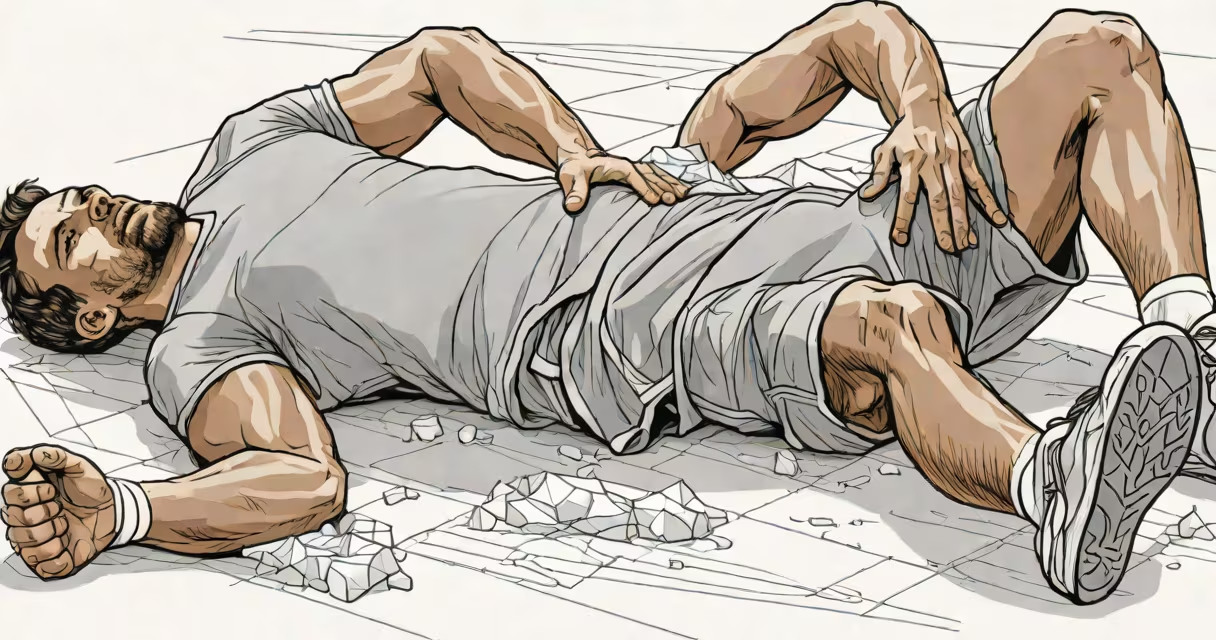
A groin injury in men involves damage to muscles, tendons, or ligaments in the inner thigh near the hip joint, typically caused by sudden twisting, sprinting, or kicking motions during sports. These injuries affect athletes and active individuals more frequently than sedentary populations.
Such injuries occur when the adductor muscles-responsible for pulling the legs together-overstretch or tear. Common activities that trigger them include football, hockey, soccer, and martial arts. The injury often presents as sharp pain in the groin area, worsening with movement or stretching.
According to the American Academy of Orthopaedic Surgeons (AAOS), groin strains account for nearly 15% of all sports-related muscle injuries in male athletes. Most cases resolve within 2 to 6 weeks with rest and targeted rehab, though severe tears may require medical intervention.
The primary mechanism behind a groin injury in men is excessive force applied to the adductor muscle group during rapid acceleration, deceleration, or lateral movement. For example, a soccer player making a quick side-step cut may overstress the adductors, leading to microtears or complete rupture.
These injuries fall into three grades based on severity: Grade 1 (mild strain with minimal tearing), Grade 2 (moderate tearing with significant pain and weakness), and Grade 3 (complete muscle tear requiring surgical repair). Symptoms progress from mild soreness to inability to walk or bear weight.
Repetitive strain without adequate recovery increases risk. A 2021 study in the British Journal of Sports Medicine found that male athletes who trained without proper warm-up were 3.4 times more likely to sustain a groin injury than those who did.
Three main types of groin injury in men involve different tissues:
| Type | Tissue Affected | Common Triggers | Recovery Time |
|---|---|---|---|
| Adductor strain | Muscle/tendon | Sudden sprint, kick, or change of direction | 2-6 weeks |
| Hip flexor strain | Rectus femoris or iliopsoas tendon | High kicks, jumping, rapid leg lifts | 3-8 weeks |
| Bursitis in groin | Fluid-filled sac near hip joint | Repetitive friction, prolonged sitting, overuse | 4-12 weeks |
While adductor strains dominate in contact sports, hip flexor injuries are frequent among dancers and runners. Bursitis in the groin is often misdiagnosed as a muscle strain due to overlapping symptoms, yet it stems from inflammation of the bursa-a small cushion between bone and soft tissue.
One overlooked cause is poor hip mobility. A 2020 study in the Journal of Orthopaedic & Sports Physical Therapy showed that men with limited internal rotation of the hip had a 62% higher incidence of groin injuries compared to peers with normal range of motion.
Many people confuse groin injury in men with hernias, particularly inguinal hernias. While both cause groin pain, hernias involve a protrusion of abdominal tissue through a weak spot in the abdominal wall. They often present with a visible bulge, especially when coughing or lifting, and may cause a dull ache or pressure.
Unlike muscle strains, hernias do not improve with rest and may worsen over time. If pain persists beyond 48 hours despite ice and reduced activity, medical evaluation is necessary to rule out a hernia.
Another confusion arises with referred pain from lower back issues. Sciatica or lumbar disc problems can radiate pain into the groin region. However, back-related groin pain usually affects both sides and is accompanied by numbness or tingling down the leg-symptoms absent in pure muscle injuries.
In 2022, a 27-year-old semi-professional soccer midfielder experienced sudden pain during a match while attempting a slide tackle. He reported sharp pain in the left groin, difficulty walking, and swelling within 24 hours. MRI confirmed a Grade 2 adductor strain.
He followed a structured rehab plan: 7 days of rest and ice, then progressive stretching and strengthening exercises. By week 3, he began light jogging. By week 5, he returned to non-contact drills. Full return to play occurred at 6 weeks, with no recurrence after 12 months of continued hip-strengthening routines.
This case illustrates that early diagnosis and adherence to a phased recovery reduce long-term complications. Delaying treatment increases the risk of chronic pain or reinjury.
Immediate care includes RICE-rest, ice, compression, elevation-for the first 48 to 72 hours. Ice reduces swelling and numbs pain. Compression wraps stabilize the area, and elevation minimizes fluid buildup.
After acute phase, gentle stretching and strengthening are essential. Exercises like the Copenhagen plank, resisted adduction, and hip bridge build stability. A physical therapist can tailor a program based on injury grade and sport demands.
Prevention focuses on changing warm-ups before activity and regular strength training. A 2019 randomized trial published in the Scandinavian Journal of Medicine & Science in Sports found that men who performed a 10-minute neuromuscular warm-up before training reduced groin injury rates by 45% over 12 months.
When pain persists beyond two weeks, seek evaluation. Early intervention prevents progression to chronic injury. If symptoms suggest bursitis or a hernia, imaging or specialist referral may be needed.
Recovery from groin injury in men depends on accurate identification, timely care, and consistent rehabilitation. Ignoring early signs leads to setbacks. Addressing the root cause prevents recurrence and restores function.