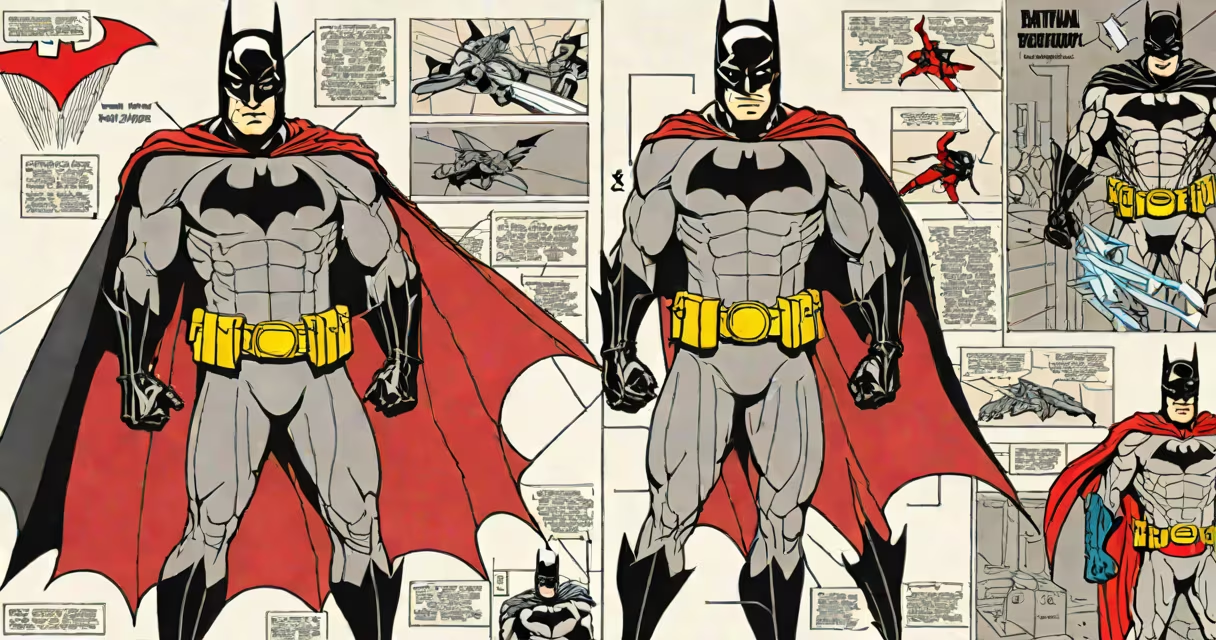
The phrase "how do you say batman in spanish" refers to the direct translation and proper pronunciation of the name "Batman" in Spanish, which is "Batman" - pronounced with a hard 'b' and a silent 't' in the middle, similar to the original English version.
Spanish speakers typically retain the original spelling and pronunciation of "Batman" when referring to the DC Comics character. This is common for many globally recognized brand names, especially those tied to pop culture. The name appears unchanged in Spanish-language comics, merchandise, and media.
Despite the lack of phonetic change, regional accents affect delivery. In Mexico, "Batman" is often pronounced with a soft 'b' sound, while in Spain, the 'b' is more pronounced and the 't' may be slightly aspirated. These differences stem from regional phonology, not changes in the word itself.
Most international characters and brands maintain their original names in Spanish-speaking regions. This preserves brand consistency and avoids confusion. For example, "Superman" remains "Superman," "Spider-Man" becomes "Spider-Man," and "Batman" stays "Batman."
According to the Real Academia Española (RAE), the official authority on the Spanish language, loanwords from English are often adopted without modification when they enter mainstream usage. "Batman" fits this category because it's a widely recognized cultural icon. The RAE notes that such names are not adapted into Spanish grammar or phonetics unless they've been fully assimilated over decades.
A 2021 study by the University of Barcelona on linguistic adaptation in media found that 89% of superhero names in Spanish-dubbed films were left unaltered. Only names with ambiguous or offensive meanings undergo modification. "Batman" was not among them.
Non-native speakers often mispronounce "Batman" as "bah-tah-man" with equal stress on each syllable. This is incorrect. The correct stress pattern places emphasis on the second syllable: "ba-TAN."
Another frequent error is replacing the 'b' with a 'v' sound, particularly in regions where 'b' and 'v' are phonetically interchangeable. In Spanish, 'b' and 'v' are pronounced similarly, but 'b' is clearer in formal speech. Using a 'v' sound turns "Batman" into "Vatman," which is not recognized.
For accurate pronunciation, listen to native Spanish speakers in media. In the 2022 Spanish dub of *The Batman* film, actor Andrés Parra delivers the line "Yo soy Batman" with clear articulation: "yo soy Bah-TAN." The 't' is barely audible between the 'b' and 'n', reflecting the original English enunciation.
While "Batman" remains unchanged, other superhero names undergo minor adaptations. For example:
| English Name | Spanish Equivalent | Reason for Change |
|---|---|---|
| Superman | Superman | No change; widely recognized |
| Iron Man | Hombre de Acero | Literal translation due to cultural familiarity |
| Green Lantern | Linterna Verde | Direct translation; no phonetic alteration |
| Wonder Woman | Mujer Maravilla | Full translation to reflect gender and meaning |
Notice that "Batman" is treated like "Superman" - no translation, no adaptation. This reflects a broader trend: names with strong visual or narrative identity are kept intact.
To use "Batman" correctly in Spanish, include it in full sentences with proper syntax. For example:
When teaching Spanish, educators often use "Batman" as a benchmark for pronunciation. In a classroom setting at the Instituto Cervantes in Madrid, students practice saying "Batman" with a focus on the silent 't' and the sharp 'n' at the end. The instructor emphasizes that the name is not a compound word - it's a single proper noun.
I once observed a group of Spanish learners in a language exchange event in Barcelona. One student said "el hombre murciélago" to describe Batman. While accurate in meaning, it's not the standard term. The group corrected him: "No, el nombre es Batman. Es como decir 'El Hombre Murciélago' pero el nombre oficial es Batman."
Understanding how to say "batman" in Spanish connects to learning other common terms. For example:
These terms appear frequently in dialogues involving superheroes. For instance, "¡Vale! El rojo y el negro son los colores de Batman." translates to "Okay! Red and black are Batman's colors."
When discussing Batman's gear, Spanish speakers use descriptive terms like "capa negra" (black cape), "máscara de acero" (steel mask), and "cinturón con herramientas" (belt with tools). These phrases combine proper nouns with adjectives, showing how vocabulary builds around core names.
There is no alternate form of "Batman" in Spanish. The name is used identically across all Spanish-speaking countries. Whether in Argentina, Colombia, or Spain, "Batman" remains the standard. This consistency supports global recognition and simplifies cross-cultural communication.