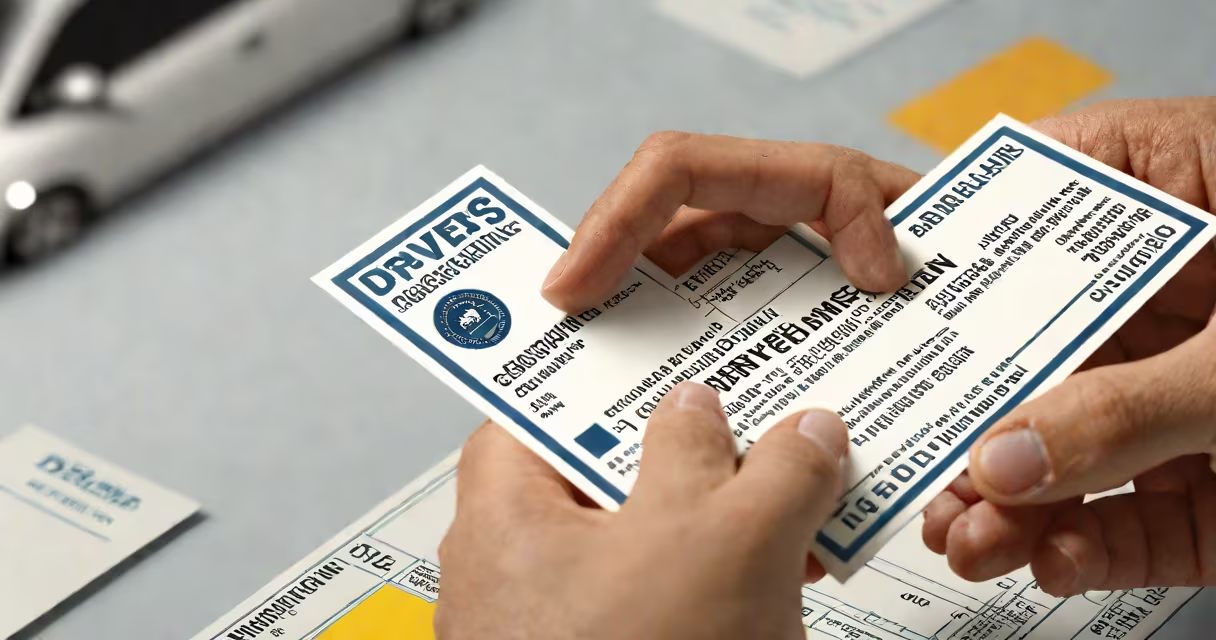
Processing time for a replacement driver's license ranges from 5 to 21 business days depending on the state, application method, and whether you choose expedited service. Most states issue replacements within 10 to 14 business days when applying in person or online through official channels.
Each U.S. state operates its own Department of Motor Vehicles (DMV) or equivalent agency, which sets individual processing schedules. For example, California's DMV reports average processing times of 10 business days for standard applications submitted online or in person. New York's DMV averages 14 business days, while Texas processes replacements in 5 to 7 business days when using the online portal. These differences stem from state-specific workflows, staffing levels, and document verification procedures.
Some states offer expedited services for an additional fee. Florida's DMV allows same-day issuance at select offices, though this requires visiting a physical location during specific hours. Other states, such as Illinois, provide rush processing for $25 extra, reducing wait times to 3-5 business days. Online applications generally move faster than mail-in submissions due to automated verification systems.
When you apply for a replacement driver's license, the state verifies your identity, checks your driving record, and confirms your current address. This verification step often takes longer than the actual printing and mailing of the card. States use databases like the National Driver Register and state-specific records to validate applicant details.
For in-person applications, the process begins when you submit required documents-such as a birth certificate, utility bill, or passport-to a DMV office. Staff scan your photo and run a background check. Once approved, the system generates a unique license number and prints the card. The entire process can take under 30 minutes at the counter, but delivery of the physical card may still require several days.
Online applications follow a similar path. You upload a photo of yourself and verify your identity via a secure portal. The state cross-checks your information against existing records. If discrepancies arise-such as a mismatched name or address-the system pauses processing until you resolve the issue. Delays often occur at this stage, especially if you've recently moved or changed your legal name.
Applications fall into three categories: in-person, online, and mail-in. Each has distinct timelines and requirements.
| Application Type | Average Processing Time | Best For | Common Issues |
|---|---|---|---|
| In-Person | 1-5 business days | Immediate pickup, urgent needs | Long wait times at offices, limited availability |
| Online | 5-14 business days | Fastest standard option, no travel | Photo rejection, identity verification delays |
| Mail-In | 14-21 business days | Low-cost option, no internet access | Lost or delayed mail, higher error rate |
For example, in California, submitting a replacement request online through the DMV's website takes approximately 10 business days. If you apply in person at a local office, you can receive the card the same day. However, walk-in lines can exceed 90 minutes during peak months, making online submission more efficient despite the slightly longer wait.
Mail-in applications are the slowest and most error-prone. A 2022 report from the National Conference of State Legislatures noted that 12% of mailed applications were rejected due to incorrect forms or missing documentation. These errors force applicants to restart the process, adding weeks to the timeline.
Timing differences between states result from infrastructure, population density, and funding. States with centralized DMV systems-like Washington and Oregon-process replacements faster because they use uniform digital platforms. In contrast, states with decentralized offices-such as Pennsylvania and Georgia-experience variable wait times based on local office capacity.
High-volume states like Florida and Texas see longer processing times during summer months due to increased demand from tourists and seasonal residents. The Florida DMV reported a 30% increase in replacement requests between June and August 2023, leading to extended wait times for non-expedited services.
A lesser-known factor is the use of third-party vendors. Some states contract with private companies to print and ship licenses. For example, New Jersey uses a vendor called ID Systems Inc., which handles 60% of license production. When technical issues arise-such as a server outage or shipping delay-the entire pipeline slows down. In 2021, a software glitch at ID Systems caused a 7-day backlog for all new and replacement licenses in New Jersey.
Many people assume that replacing a lost driver's license takes longer than it actually does. The average processing time is shorter than most expect. According to the American Automobile Association (AAA), 68% of drivers believe it takes two weeks or more, but the national median is just 10 business days.
Another misconception is that you can drive legally without a license while waiting for a replacement. This is false. Driving without a valid license-even temporarily-is illegal in all 50 states. In California, for example, operating a vehicle without a valid license results in a fine of $100 to $200 and possible suspension of driving privileges. You must carry a temporary permit issued by the DMV if you're driving during the replacement period.
Some applicants also believe that expediting a replacement is always available. That's not true. Expedited services are offered only at select locations and during certain hours. In Texas, for instance, rush processing is available only at major urban centers like Houston and Dallas. Rural areas lack this option entirely.
Consider Sarah, a resident of Colorado who lost her wallet containing her driver's license. She applied online through the Colorado DMV portal on a Monday. On Tuesday, she uploaded a photo of her government-issued ID and completed the identity verification step. The system flagged her application for review due to a mismatched address on file-her previous address was listed as a rental unit she had vacated six months earlier.
She contacted the DMV's support line and submitted a recent utility bill to update her address. The system cleared the application on Thursday. By Friday, the DMV confirmed the new license was printed and scheduled for shipment. The card arrived in her mailbox on the following Wednesday-exactly 10 business days after her initial application.
This timeline reflects the typical process: 1-2 days for submission, 1-3 days for verification, and 5-7 days for printing and delivery. Sarah avoided delays by ensuring her documents matched her current records.
I once applied for a replacement license in Michigan after a burglary. I submitted my application online on a Friday. The system returned a message saying "processing initiated" by 3 PM. On Monday, I received an email requesting a copy of my Social Security card. I uploaded it immediately. The license was issued on Wednesday and shipped the same day. I received it on Friday-just four business days after applying. The speed surprised me, especially since I expected a week-long wait.
If you need a replacement driver's license, start by checking your state's DMV website. Confirm the required documents and application method. Always use the official state portal to avoid scams. If you're unsure about eligibility or timing, review the fees and costs associated with each option. For those needing a temporary permit, contact your local DMV office directly.
Understanding the timeline helps you plan around travel, employment, or legal requirements. Most states allow you to track your application status online. Keep your application reference number handy. If your replacement doesn't arrive within 21 business days, contact the DMV with proof of submission.