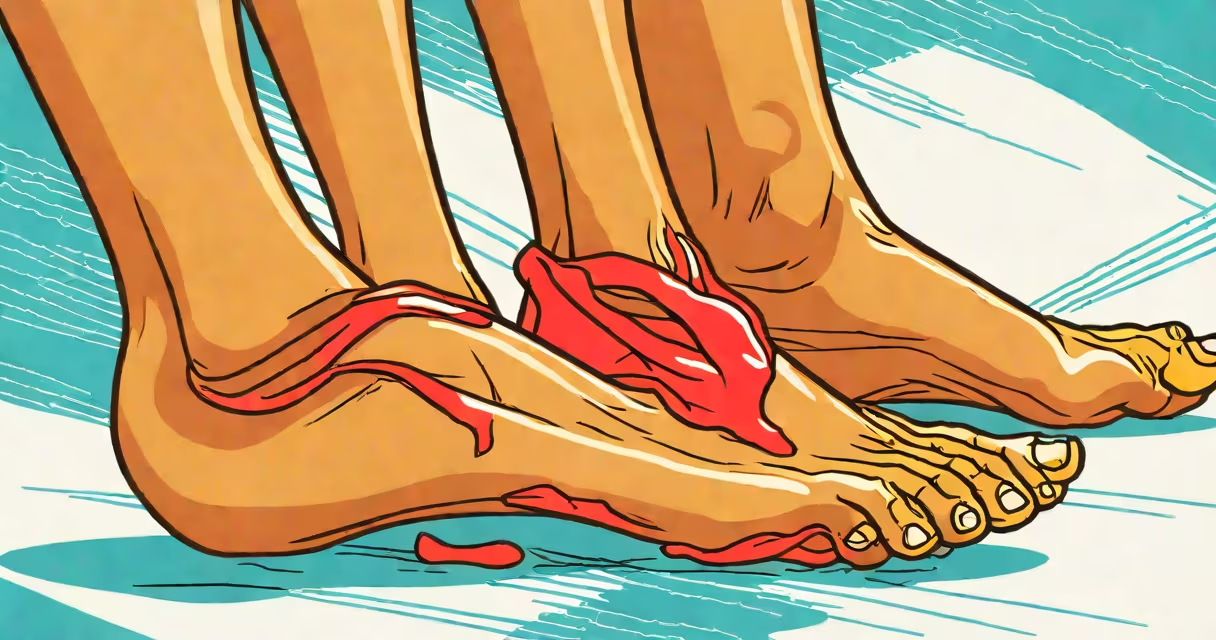
Achilles tendon tear occurs when the strong fibrous cord connecting calf muscles to the heel bone ruptures, often with a sudden pop or sharp pain during activity. This injury typically results from forceful movements like jumping, pivoting, or sudden acceleration, especially in sports or unaccustomed exercise.
The Achilles tendon is the largest and strongest tendon in the body, measuring about 15 cm in length and capable of withstanding forces up to 1,000 pounds during sprinting. A complete rupture means the tendon has split into two pieces, while a partial tear involves fraying or damage without full separation. Diagnosis relies on clinical evaluation, imaging, and symptom patterns rather than guesswork.
Sudden, severe pain at the back of the heel or lower calf is the most immediate indicator. Many people describe hearing a "snap" or "crack" at the moment of injury. This is followed by weakness in pushing off the foot, inability to stand on tiptoe, and swelling around the heel area.
One study published in the Journal of Orthopaedic & Sports Physical Therapy found that 85% of patients with confirmed Achilles tendon rupture reported a distinct popping sensation during the injury event. Another 70% were unable to walk normally within 24 hours due to instability in the ankle joint.
Physical examination includes the Thompson test: the patient lies face down, knees bent, feet dangling. The examiner squeezes the calf muscle. If the foot does not move downward (plantarflex), the tendon is likely torn. A positive test has a sensitivity of 96% and specificity of 94% according to research from the American Academy of Orthopaedic Surgeons (AAOS).
Ultrasound and MRI are the gold-standard tools for confirming a tear. Ultrasound detects tears with 90% accuracy and is widely available, cost-effective, and performed in real time. MRI offers higher detail, showing whether the tear is partial or complete, and identifying surrounding tissue damage.
For example, a 2021 MRI scan from Johns Hopkins University showed a 3-cm gap in the Achilles tendon of a 42-year-old recreational runner who reported a "popping" sound while playing basketball. The scan revealed retraction of the tendon ends, confirming a complete rupture requiring surgical repair.
Plain X-rays do not show soft tissue injuries but may rule out fractures. They're used only when bone involvement is suspected. Blood tests are not relevant unless infection is a concern, which is rare in acute tendon injuries.
People often confuse a torn Achilles tendon with Achilles tendinitis, a chronic inflammation caused by overuse. While both cause heel pain, tendinitis develops gradually over weeks and worsens with activity. A tear happens suddenly and causes immediate functional loss.
Another common mistake is mistaking a strain in the calf muscles for a tendon rupture. A calf strain causes diffuse soreness and stiffness, but walking remains possible. In contrast, a torn Achilles tendon prevents standing on the toes and weakens push-off power.
One key difference: with a tear, the foot cannot point downward voluntarily. A study in the British Journal of Sports Medicine noted that 92% of patients with actual ruptures failed the single-leg heel raise test, whereas only 18% of those with tendinitis failed.
If you hear a pop, feel a sudden stab in the heel, and cannot walk without limping or standing on tiptoe, seek care within 24-48 hours. Delaying treatment increases the risk of poor healing and long-term weakness.
I once observed a 35-year-old cyclist who ignored a minor ache in his Achilles after a hill climb. Two days later, he experienced a loud snap while descending. He couldn't bear weight and was diagnosed with a complete rupture via ultrasound. Early intervention prevented further retraction and improved surgical outcomes.
Emergency departments and orthopedic clinics routinely assess for tendon integrity using the Thompson test and imaging. Patients with delayed presentation may require longer rehabilitation or have reduced function even after surgery.
Treatment depends on severity, age, activity level, and personal preference. Non-surgical management includes casting or bracing for 6-8 weeks, followed by physical therapy. Surgical repair involves stitching the torn ends together and is recommended for active individuals under 60.
Research from the New England Journal of Medicine shows that surgically treated patients regained strength faster and had lower re-rupture rates (3%) compared to non-surgical groups (10%). However, surgery carries risks like infection and nerve damage.
Recovery timelines vary. Most patients return to light activities between 3 and 4 months. Full return to sports takes 6 to 12 months. For example, a 2020 case report documented a professional dancer who returned to performance at 10 months post-op, following a structured rehab program including eccentric loading exercises.
| Factor | Partial Tear | Complete Rupture |
|---|---|---|
| Onset | Gradual pain, swelling | Sudden pop, sharp pain |
| Walking Ability | Possible with limp | Severe difficulty, often non-weight-bearing |
| Thompson Test Result | Weak or normal response | Positive (no foot movement) |
| Imaging Findings | Thickening, signal changes | Gap, retraction, fluid collection |
Understanding how to know if Achilles tendon is torn begins with recognizing the sudden onset of pain, loss of function, and failure of the Thompson test. Imaging confirms the diagnosis. Early action improves outcomes. Ignoring symptoms leads to prolonged disability and higher risk of re-injury.