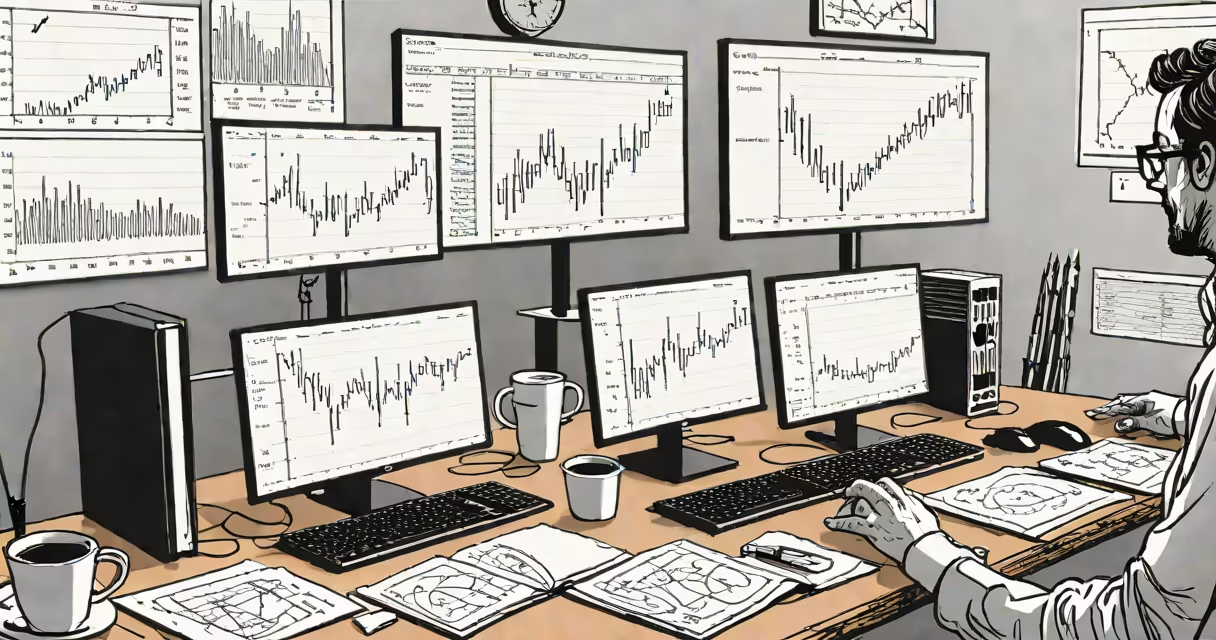
Introduction to stock trading is the process of buying and selling ownership shares in publicly traded companies through regulated exchanges. Traders aim to profit from short-term price fluctuations or long-term value growth. This activity forms the foundation of personal investing and capital markets.
Stock trading begins with understanding equity ownership. When you purchase a share of Apple Inc. (AAPL), you own a fractional stake in the company. Your return comes from capital gains-price appreciation-or dividends, periodic payments from company profits. The New York Stock Exchange (NYSE) and NASDAQ are primary venues where trades execute via electronic networks.
According to the U.S. Securities and Exchange Commission (SEC), over 60 million Americans held stocks directly or through retirement accounts in 2023. The average retail investor trades less than five times per year, indicating most participants adopt a long-term strategy rather than active day trading. The S&P 500 index, which tracks 500 large-cap U.S. companies, returned an average of 10% annually from 1926 to 2022, according to Yale's Robert Shiller.
Trading occurs on centralized exchanges or over-the-counter (OTC) markets. Orders are executed through brokers who act as intermediaries. A market order buys or sells immediately at the current best available price. A limit order sets a maximum purchase price or minimum sale price, ensuring control over entry and exit points.
For example, if Tesla (TSLA) trades at $200 per share and you place a limit order to buy at $195, the trade only executes if the price drops to $195 or lower. This prevents overpayment during volatile periods. Conversely, a stop-loss order automatically sells a position when the price falls below a set threshold, limiting downside risk.
Order execution speed matters. High-frequency traders use algorithms and co-location services-placing servers near exchange data centers-to gain microseconds advantages. Retail traders typically rely on standard brokerage platforms like Fidelity, Charles Schwab, or Robinhood, which offer delayed market data and basic tools.
Stock trading involves four core elements: capital, timing, analysis, and risk management. Capital is the money invested. Timing refers to when trades occur relative to news, earnings reports, or macroeconomic events. Analysis includes fundamental (company health) and technical (price patterns) methods. Risk management defines how much loss one tolerates per trade.
| Type | Time Horizon | Strategy Focus | Example |
|---|---|---|---|
| Day Trader | Minutes to hours | Short-term price movements | Buying and selling Nvidia (NVDA) within a single session based on intraday volume spikes. |
| Swing Trader | Days to weeks | Price swings between support and resistance levels | Holding Amazon (AMZN) for three days after a breakout above a 10-day moving average. |
| Long-Term Investor | Months to decades | Company fundamentals and economic growth | Purchasing shares in Johnson & Johnson (JNJ) for dividend income and compound growth. |
Day trading requires significant time commitment and discipline. The SEC notes that 70% of day traders lose money over a 12-month period due to high transaction costs and emotional decision-making. Long-term investors benefit from compounding returns and lower turnover fees.
Many assume stock trading is gambling. While both involve risk, trading relies on research, strategy, and continuous learning. Gambling outcomes are random; trading decisions stem from data, trends, and market psychology.
A frequent error is chasing hot stocks. In early 2021, GameStop (GME) surged over 1,000% in a month due to coordinated retail buying on Reddit's r/WallStreetBets. Many investors bought at peak prices and lost substantial capital when the bubble burst. The SEC later investigated the event for potential manipulation and lack of disclosure.
Another misconception is that higher returns require higher risk. While volatility can amplify gains, it also increases losses. Diversification reduces exposure. A portfolio with 10 different stocks across sectors has lower risk than one holding a single tech stock, even if the tech stock outperforms in the short term.
Consider a beginner allocating $10,000 to start trading. They choose a balanced approach: 60% in low-cost index funds (e.g., SPY tracking the S&P 500), 30% in individual stocks (e.g., Microsoft, Coca-Cola), and 10% in cash for opportunities.
After six months, SPY gains 8%. Microsoft rises 12%, Coca-Cola adds 5%. The portfolio grows to $10,850. The trader rebalances quarterly, selling excess shares from winning positions and reinvesting in underperforming ones to maintain allocation targets.
This strategy avoids emotional reactions to daily swings. The investor checks performance monthly, reviews earnings reports, and adjusts holdings based on updated company data-not headlines or social media hype.
When I began trading in 2018, I lost 15% in my first quarter by following a tip from a forum. I stopped trading for three months, studied historical returns, and learned to use stop-loss orders. Since then, I've focused on consistent, small gains rather than chasing big wins.
Always verify sources. The SEC's EDGAR database provides free access to company filings, including 10-K annual reports and 10-Q quarterly statements. These documents reveal revenue trends, debt levels, and executive compensation-critical inputs for informed decisions.
Introduction to stock trading is not a shortcut to wealth. It demands patience, continuous learning, and emotional control. Success comes from disciplined habits, not luck. Start small, learn consistently, and prioritize capital preservation over rapid growth.