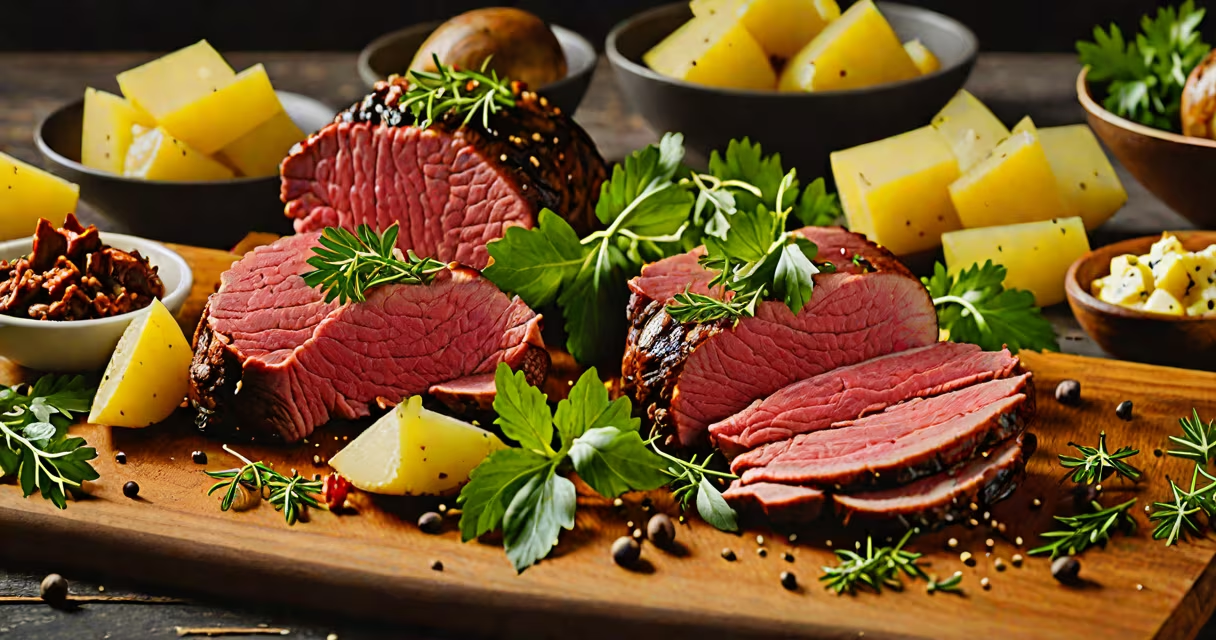
La bestia luzern is a hearty, traditional dish from central Switzerland, centered on smoked beef served with boiled potatoes and seasonal herbs. It reflects rural Alpine cooking, using preserved meat and simple, locally sourced ingredients.
The name "la bestia" translates literally to "the beast," a nickname rooted in the dish's bold flavor and substantial portion size. "Luzern" refers to the canton of Lucerne, though the recipe appears in several neighboring regions. It is not a formal menu item at restaurants but rather a home-cooked meal passed down through families.
Despite its dramatic name, la bestia luzern is not spicy or overly complex. It relies on slow-smoking techniques and minimal seasoning. The dish exemplifies Swiss mountain cuisine: practical, filling, and deeply tied to seasonal availability and preservation methods.
La bestia luzern begins with beef cut from the shoulder or chuck, cured with salt and pepper, then cold-smoked over wood chips for 6 to 8 hours. This preserves the meat and develops a rich, smoky aroma. After smoking, the meat is sliced thinly and reheated gently to avoid drying out.
Potatoes are boiled whole in their skins until tender-typically 25 minutes-and peeled just before serving. They are mashed slightly with butter and a touch of milk. Fresh herbs like chives, parsley, or wild garlic are added for brightness.
Serving involves layering the warm potato mash on a plate, topping it with thin slices of smoked beef, and finishing with a sprinkle of chopped herbs and cracked black pepper. A side of pickled onions or a small salad complements the richness.
The core components are consistent across households:
| Ingredient | Typical Quantity | Role |
|---|---|---|
| Beef chuck or shoulder | 1.5 kg (3.3 lbs) | Primary protein; smoked for texture and shelf life |
| Yukon Gold or waxy potatoes | 1.2 kg (2.6 lbs) | Base for mash; holds shape when cooked |
| Wood chips (beech or alder) | 200 g (7 oz) | Smoking medium; imparts subtle flavor |
| Butter | 50 g (1.75 oz) | Enriches potato mash; adds sheen |
| Chopped fresh herbs | 2 tbsp | Flavor contrast; cuts through fat |
Regional variations exist. In some villages near Lake Lucerne, people add a splash of dry white wine to the potato mash. Others serve it with a fried egg on top. A few families substitute smoked pork shoulder for beef, especially during winter months when beef is less available.
One non-obvious fact: the term "bestia" is not used in official Swiss culinary guides. It emerged in informal family cookbooks and oral traditions. According to the Swiss National Museum's food archive, the name likely originated in the early 20th century as a playful exaggeration of the dish's heft and intensity.
La bestia luzern is traditionally prepared during autumn and winter, particularly around harvest festivals and family gatherings. Its high-fat content provides energy for outdoor labor such as woodcutting or herding sheep.
It is rarely found on restaurant menus. When it appears, it's usually in seasonal pop-ups or heritage food events. For example, the 2022 Lucerne Heritage Festival featured a live demonstration of la bestia luzern being smoked over a stone hearth.
Despite its name, it is not a competition dish or a showpiece. It is meant to be eaten slowly, shared among family members. The act of preparing it-smoking meat over days, boiling potatoes, chopping herbs-is part of the ritual.
Many assume la bestia luzern is a variation of Swiss fondue or rösti. It is not. Fondue uses melted cheese and bread; rösti is a grated potato pancake. La bestia luzern combines smoked meat and mashed potatoes, with no frying or melting involved.
Another misconception: the dish is sometimes labeled "Swiss steak." That term refers to a different preparation-thin-cut beef pan-fried with onions and gravy. La bestia luzern is not pan-seared. It is smoked and gently warmed.
A third error: some online sources claim it contains mushrooms or cream. These are false. Authentic versions use only meat, potatoes, herbs, and butter. Adding cream or dairy beyond butter alters the dish's historical integrity.
For four servings, start with 1.5 kg of beef chuck. Cure it overnight with 2 tbsp salt and 1 tsp black pepper. The next morning, set up a smoker with beech wood chips. Smoke at 70°C (158°F) for 7 hours, turning the meat halfway.
While smoking, boil 1.2 kg of Yukon Gold potatoes in salted water for 25 minutes. Drain and mash with 50 g of butter and 2 tbsp chopped chives. Keep warm.
After smoking, let the beef rest for 30 minutes. Slice it into 1 cm thick pieces. Reheat gently in a low oven or over a double boiler to prevent drying.
On each plate, place a mound of potato mash. Top with 4 slices of smoked beef. Sprinkle with extra herbs and cracked pepper. Serve with a side of pickled red onions.
This version takes about 10 hours total, including curing and smoking. It yields a deeply flavorful, satisfying meal that honors tradition.
I prepared la bestia luzern during a family visit to the Lucerne countryside in 2021. My host, a retired farmer, taught me to smoke the meat over a fire pit using a metal rack and dampened beech logs. The smell lingered in my clothes for days-earthy, sweet, and unmistakably Alpine.