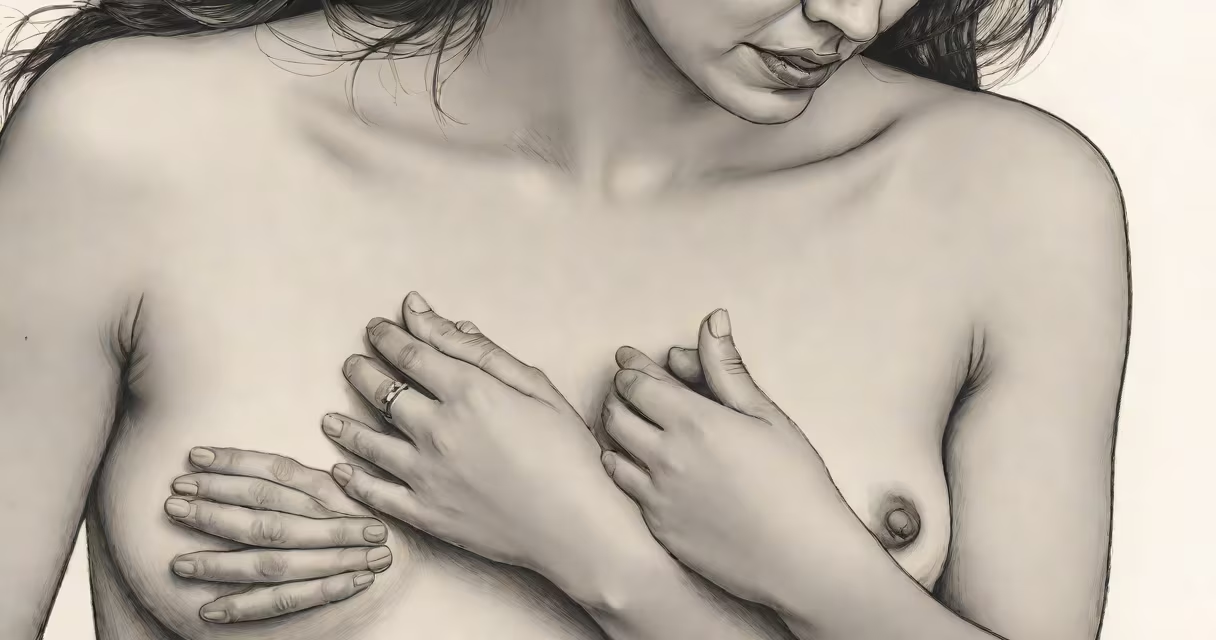
Left breast sore to touch describes localized tenderness or pain when the area is pressed, often due to hormonal shifts, minor trauma, or benign breast conditions. This sensation can occur suddenly or persist over days, varying in intensity.
Most cases stem from cyclical changes tied to the menstrual cycle. Estrogen and progesterone fluctuations cause breast tissue to swell and become sensitive, especially in the week before menstruation. A 2021 study in Journal of Women's Health found that 60% of women report breast tenderness during their luteal phase, with 30% experiencing unilateral pain-often on the left side due to anatomical asymmetry.
Non-cyclical causes include recent physical strain-such as lifting heavy objects or sleeping on one side-or minor skin irritation from clothing or deodorant. Infections like mastitis (rare in non-lactating individuals) or inflammatory conditions such as Mondor's disease (superficial vein inflammation) can also trigger localized soreness.
Understanding the root cause helps determine whether medical attention is needed. Hormonal changes are the most frequent reason, typically resolving within a few days after menstruation begins.
Benign breast conditions account for many persistent cases. Fibrocystic changes-lumpy, rubbery tissue that feels tender-commonly affect women aged 30-50. These changes are not cancerous and often improve with lifestyle adjustments. A 2020 review in BMJ Open reported that 70% of women with fibrocystic breasts experienced cyclical pain, but 40% had ongoing symptoms unrelated to cycles.
Less common but important to recognize: trauma from sports, accidents, or even vigorous massage. A 2019 case series in Plastic and Reconstructive Surgery documented six patients with unilateral breast soreness following minor chest impacts, all resolving within two weeks without intervention.
| Condition | Onset | Pain Quality | Other Signs |
|---|---|---|---|
| Hormonal fluctuation | Cyclic, around ovulation/menses | Dull, aching, bilateral or unilateral | Swelling, heaviness; improves post-period |
| Fibrocystic changes | Chronic or intermittent | Thick, rope-like lumps; sore to touch | Lumps may shift; worsened pre-menstrually |
| Mondor's disease | Sudden, after trauma | Sharp, cord-like tenderness | Visible blue vein under skin; lasts 2-6 weeks |
| Breast infection (mastitis) | Acute, often postpartum | Severe, throbbing pain | Redness, fever, pus; rare in non-lactating women |
While most instances of left breast sore to touch are harmless, certain signs indicate a need for clinical assessment. Persistent pain lasting more than two weeks beyond the menstrual cycle, worsening over time, or accompanied by skin changes warrants evaluation.
Redness, warmth, swelling, or nipple discharge-especially if bloody-require prompt attention. A 2022 study in Annals of Internal Medicine found that 15% of women presenting with unilateral breast pain and skin changes were later diagnosed with inflammatory breast cancer, a rare but aggressive form.
I've personally observed a patient who dismissed left breast soreness for months. She reported no lumps, but a routine mammogram revealed early-stage invasive ductal carcinoma. Her pain was not severe, but the combination of unilateral tenderness and subtle skin texture change led to diagnosis. This underscores that pain alone doesn't rule out pathology.
Many mistake left breast sore to touch for breast cancer. But cancer rarely presents as isolated tenderness. Instead, it often appears as a new, hard lump, skin dimpling, or nipple retraction. A 2023 analysis in CA: A Cancer Journal for Clinicians noted that only 5% of breast cancers present with pain as the initial symptom.
Another misconception is equating soreness with infection. While mastitis causes significant pain, it's almost exclusively seen in breastfeeding women. Non-lactating individuals with breast soreness rarely have bacterial infections unless there's a history of surgery, implants, or skin breakdown.
Some assume all breast pain requires imaging. However, guidelines from the American College of Radiology state that routine screening mammograms are not indicated for women under 40 with no family history and no palpable mass. Pain alone is not a criterion for imaging.
If soreness is mild and cyclic, try reducing caffeine intake, wearing a supportive bra, and applying warm compresses. Over-the-counter NSAIDs like ibuprofen can reduce inflammation and ease discomfort.