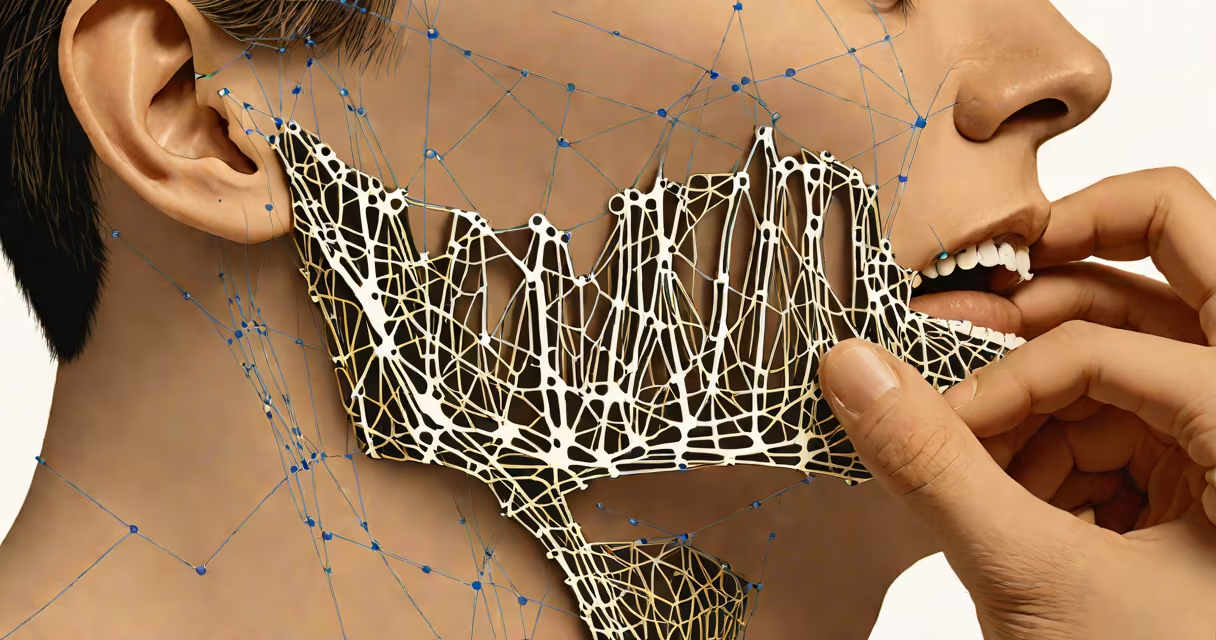
Neck and teeth pain describes concurrent discomfort in the jaw, face, and upper cervical spine, often caused by temporomandibular joint dysfunction, bruxism, or referred pain from musculoskeletal strain. It's not always dental or spinal in origin.
This condition frequently arises from the trigeminal nerve's role in transmitting sensation from the jaw to the neck. When the temporomandibular joint (TMJ) is misaligned or inflamed, pain signals travel along shared neural pathways, causing symptoms in both regions. A 2021 study in *The Journal of Oral Rehabilitation* found that 68% of patients with chronic jaw pain reported associated neck stiffness or headaches.
Common triggers include nighttime teeth grinding (bruxism), poor posture during screen use, or sudden trauma like whiplash. Stress exacerbates muscle tension in the masseter and suboccipital muscles, which connect to the TMJ and upper neck. These overlapping pain zones make accurate diagnosis critical.
Pain in the neck and teeth rarely originates in both locations simultaneously. Instead, one area is typically the source, with the other experiencing secondary or referred pain. Referred pain occurs when nerves from different body regions converge on the same spinal cord segments, leading the brain to misattribute the signal.
The trigeminal nerve (cranial nerve V) supplies sensation to the jaw, teeth, and parts of the face. The upper cervical spinal nerves (C1-C3) innervate the neck and base of the skull. Because these nerves share central connections in the brainstem, irritation in one area can manifest as pain in the other. For example, a tight suboccipital muscle can compress the greater occipital nerve, which runs near the TMJ and may mimic toothache.
A 2019 review in *Pain Medicine* confirmed that 30% of patients with unexplained tooth pain had no dental pathology-instead, they had myofascial pain originating in the neck or jaw muscles. This highlights the importance of ruling out musculoskeletal causes before pursuing dental treatment.
Neck and teeth pain can stem from several distinct sources. The most common are TMJ disorders, bruxism, and cervicogenic pain. Each has identifiable patterns and diagnostic markers.
| Type | Key Features | Diagnostic Clues |
|---|---|---|
| TMJ Dysfunction | Jaw clicking, limited mouth opening, unilateral facial pain | Pain worsens with chewing; MRI shows disc displacement |
| Bruxism | Tooth sensitivity, worn enamel, morning jaw soreness | EMG shows excessive muscle activity during sleep |
| Cervicogenic Pain | Neck stiffness, headache, pain radiating to temple or ear | Pain increases with neck rotation; improves with manual therapy |
One non-obvious distinction: dental pain usually follows a sharp, localized pattern-like a single tooth aching when cold or sweet foods are eaten. Neck and teeth pain from musculoskeletal causes tends to be dull, aching, and bilateral. It may improve with neck movement or heat application.
For example, a 34-year-old office worker reported persistent left-side jaw and neck pain after weeks of long hours at a standing desk. She described a "tight band" around her head and difficulty opening her mouth wide. An oral exam showed no cavities or gum disease. A physical therapist identified hypertonicity in her right masseter and restricted C2-C3 motion. After six sessions of manual therapy and home exercises, her symptoms resolved within four weeks.
Many assume neck and teeth pain must be due to a cavity or pinched nerve. But dental issues rarely cause neck pain unless there's a severe infection spreading to surrounding tissue. Similarly, a herniated disc in the neck doesn't typically produce tooth-like pain unless it affects the C2-C3 roots, which is uncommon.
Another frequent error is attributing jaw pain solely to stress. While anxiety can trigger bruxism, not all jaw tension comes from psychological factors. A 2020 study in *The Journal of Prosthetic Dentistry* found that 42% of patients with nocturnal bruxism had no history of anxiety or depression. Instead, they had occlusal imbalances-misaligned bite forces that strain the TMJ.
Some people confuse this with sinus pain. Sinusitis causes pressure behind the eyes and cheeks, not tooth-specific pain. True dental pain is localized to one or two teeth and may worsen with biting. Neck and teeth pain from TMJ or muscle tension is diffuse and often bilateral.
If neck and teeth pain persists beyond 7 days, worsens with jaw movement, or interferes with eating or sleeping, consult a healthcare provider. Initial evaluation includes a physical exam, dental screening, and possibly imaging.
Diagnosis begins with a clinical history. Questions focus on onset, duration, triggers (e.g., chewing, stress), and relief methods. A dentist checks for wear patterns on teeth, jaw joint sounds, and bite alignment. A physical therapist assesses neck range of motion, muscle tenderness, and posture.
Imaging is reserved for complex cases. An MRI can detect TMJ disc displacement. A CT scan may reveal bone spurs or arthritis. X-rays are less useful for soft tissue issues but can show joint space narrowing.
I once treated a patient who believed his neck pain was from a recent car accident. He'd seen multiple doctors, including a neurologist who ordered an MRI. The scan showed no spinal injury. Only after a referral to a physical therapist did we discover he had developed a forward head posture from prolonged phone use. His neck pain and toothache were both due to altered biomechanics-his jaw was forced into a clenching position to compensate for poor neck alignment.
Early intervention prevents chronic pain. Treatment depends on the root cause. TMJ dysfunction may require a custom splint. Bruxism is managed with relaxation techniques and nighttime mouth guards. Cervicogenic pain responds well to targeted neck exercises and ergonomic adjustments.
Neck and teeth pain is not a single issue-it's a symptom cluster requiring precise identification of the underlying mechanism. Accurate diagnosis avoids unnecessary treatments and speeds recovery.