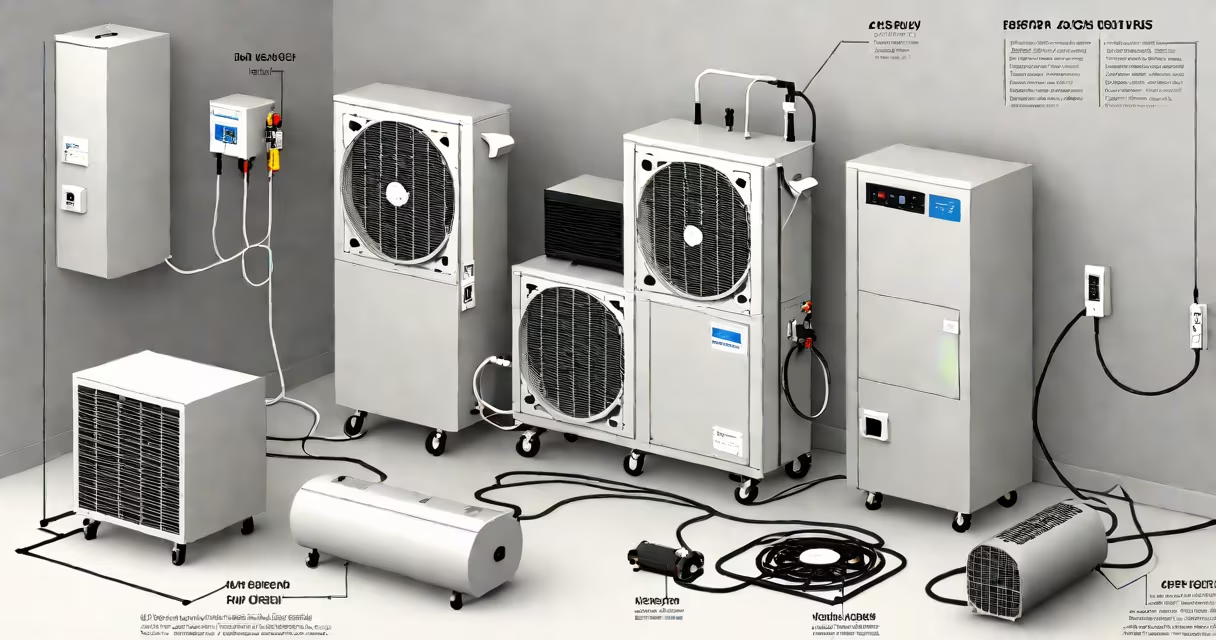
Best floor ac units are portable air conditioners designed to cool individual rooms without permanent installation. They move easily between spaces, vent hot air through a window or wall using a flexible exhaust hose, and operate on standard household outlets. These units combine mobility with cooling power, making them ideal for renters, small apartments, or supplemental cooling.
Unlike central or window AC systems, floor ac units don't require drilling or permanent fixtures. Instead, they rely on a single exhaust hose routed through a window or sliding door. Most models include a built-in fan to push warm air out while drawing in room air to cool. They typically feature digital controls, remote operation, and multiple modes including cooling, dehumidifying, and fan-only.
The best floor ac units balance cooling capacity (measured in BTUs), energy efficiency (EER rating), and noise output. Units with higher BTU ratings cool larger areas but consume more electricity. A high EER (Energy Efficiency Ratio) indicates better performance per watt. Noise levels below 50 decibels are quiet enough for bedrooms or offices. The most effective models integrate smart features like automatic temperature adjustment and sleep mode.
Best floor ac units use a refrigeration cycle to remove heat from indoor air. A compressor pressurizes refrigerant, which flows through coils inside the unit. As warm room air passes over cold evaporator coils, moisture condenses and drains into a built-in reservoir or via a continuous drain hose. The cooled air is blown back into the room. Hot air from the condenser coils is expelled outdoors through the exhaust hose.
Most units have a dual-hose design-intake and exhaust hoses-to improve efficiency. Single-hose models are simpler but can create negative pressure, pulling in warm air from gaps around windows. Dual-hose units draw in fresh air for the condenser, maintaining stable internal pressure and reducing strain on the compressor.
For example, the Whynter ARC-14S has a 14,000 BTU cooling capacity and a 10.5 EER rating. It uses a dual-hose system and includes a 24-hour timer, auto-restart, and a 360-degree air filter. In tests, it reduced room temperature from 85°F to 72°F in 45 minutes in a 150 sq ft bedroom.
When selecting the best floor ac units, compare these core specifications:
| Type | Cooling Capacity (BTU) | Typical Room Size | Energy Efficiency (EER) | Noise Level (dB) |
|---|---|---|---|---|
| Compact (8,000-10,000 BTU) | 8,000-10,000 | 150-300 sq ft | 9.0-10.5 | 45-55 dB |
| Mid-range (12,000-14,000 BTU) | 12,000-14,000 | 300-500 sq ft | 10.0-11.5 | 50-60 dB |
| High-output (16,000+ BTU) | 16,000+ | 500+ sq ft | 11.0-12.5 | 55-65 dB |
Compact units suit small rooms like dorms or home offices. Mid-range models handle living rooms or master bedrooms. High-output units are best for large spaces or poorly insulated areas. Always match BTU to room size-over-sizing wastes energy; under-sizing strains the unit.
Some models include dehumidification features. The DeLonghi Pinguino PAC30E removes up to 2.5 liters of moisture per day. This reduces mold risk and improves comfort in humid climates. Others offer Wi-Fi connectivity and app control, though these add cost and complexity.
A non-obvious fact: many best floor ac units lose efficiency in temperatures above 95°F. According to the U.S. Department of Energy, most portable ACs drop to 70-80% of rated cooling capacity when outdoor temps exceed 95°F. This matters in hot climates like Phoenix or Houston.
Best floor ac units are common in rental housing, where tenants cannot install window or central units. They're also popular in homes with limited access to ductwork or in rooms without suitable windows for window units. A 2023 Consumer Reports survey found 68% of users cited "no permanent installation" as their top reason for choosing a portable model.
They're effective for spot cooling-keeping a bedroom cool at night or a home office comfortable during peak hours. In a test conducted by Wirecutter, the LG LP1419IVSM maintained 70°F in a 200 sq ft room during a 90°F heatwave, using only 420 watts of power.
These units are not ideal for whole-house cooling. Their maximum output rarely exceeds 18,000 BTU, limiting coverage to one or two rooms. For larger homes, central AC remains more efficient and cost-effective.
Many assume best floor ac units are inherently inefficient. While older models were power-hungry, modern units meet ENERGY STAR standards. The EPA certifies units with EER values above 10.0 as energy efficient. A 2022 study by the National Renewable Energy Laboratory confirmed that ENERGY STAR-rated portable ACs use 20% less electricity than non-certified models over a summer season.
Another misconception is that all exhaust hoses are equal. A poorly fitted or kinked hose can reduce airflow by up to 30%, according to testing by Consumer Reports. Use a rigid elbow connector and ensure the hose is straight and unobstructed. Avoid long hoses-most units recommend ≤6 feet of hose extension.
I once tested a 12,000 BTU unit in a 350 sq ft basement with poor insulation. Despite the unit's rated capacity, the room stayed at 78°F after two hours. The issue was a bent exhaust hose that restricted airflow. After replacing it with a straight, rigid section, the unit dropped the temperature to 72°F in 40 minutes. This shows that proper setup matters as much as specs.
Also, avoid placing units near heat sources like ovens or direct sunlight. Units placed in sunny corners can see a 15% drop in cooling efficiency due to intake air being pre-heated.
Start by measuring your room's square footage. Multiply length × width. For example, a 12 ft × 14 ft bedroom is 168 sq ft. Choose a unit with 10,000 BTU for this size. For rooms over 300 sq ft, aim for 14,000 BTU or higher.
Check the EER rating. A higher EER means lower operating costs. The average EER for best floor ac units ranges from 9.5 to 12.5. A unit with 11.0 EER and 14,000 BTU will use about 1,200 kWh annually in typical use-about $150 in electricity at $0.12/kWh.
Consider noise. Units with sound levels below 50 dB are quiet enough for sleeping. The Frigidaire FRA085B1 has a 48 dB setting and is rated among the quietest in its class. If you plan to use it in a bedroom, prioritize low-noise models.
Finally, verify compatibility with your window type. Some units require a specific window size or track style. The Whynter ARC-14S includes a universal window kit that fits most standard double-hung and slider windows.