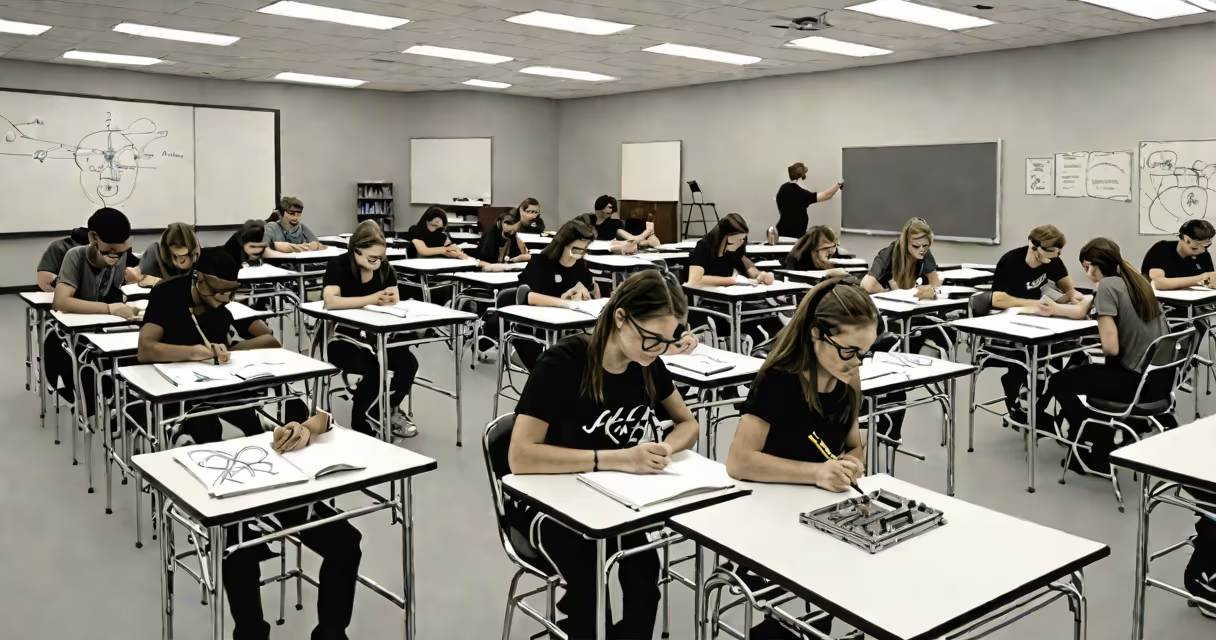
Northwest Collegiate and Technical Academy is a public charter school in Portland, Oregon, serving grades 9 through 12 with a college preparatory curriculum centered on science, technology, engineering, and mathematics (STEM), combined with project-based learning and academic rigor.
The school operates under the Oregon Charter School Law and is authorized by the Portland Public Schools district. It opened in 2010 with a mission to prepare students for success in higher education and careers in high-demand fields. Enrollment is capped at 600 students, selected via a lottery system when demand exceeds capacity.
Students follow a standards-aligned curriculum aligned with the Common Core State Standards and Next Generation Science Standards. Core subjects include algebra II, chemistry, physics, U.S. history, and English III. Electives include computer science, robotics, environmental science, and advanced research methods. All students complete a senior capstone project involving community-based problem solving.
Classes are structured around interdisciplinary units lasting six to eight weeks. Each unit integrates math, science, and humanities content into a real-world challenge. For example, a 2022 unit tasked students with designing low-cost water filtration systems for underserved communities in the Pacific Northwest. Teams researched local water quality data, modeled filter designs using CAD software, and presented prototypes to city engineers.
Instruction emphasizes inquiry, collaboration, and written and oral communication. Teachers use formative assessments daily and provide targeted feedback. Students must maintain a minimum GPA of 2.5 to remain enrolled. Academic support is available through peer tutoring and weekly study sessions led by upperclassmen.
Attendance is tracked via a digital dashboard updated in real time. Students missing more than five days in a semester receive intervention from counselors. The school reports a 94% graduation rate, with 87% of graduates enrolling in four-year colleges or universities.
Northwest Collegiate and Technical Academy offers three primary pathways: STEM, Health Sciences, and Environmental Stewardship. Students choose a pathway during their sophomore year and take specialized courses within it.
| Pathway | Core Courses (Grades 10-12) | Capstone Project Example |
|---|---|---|
| STEM | AP Calculus BC, AP Computer Science A, Biotechnology Lab | Developing a mobile app to track local air quality using sensor data |
| Health Sciences | Human Anatomy & Physiology, Medical Ethics, Nutrition Science | Designing a nutrition plan for adolescents with Type 2 diabetes |
| Environmental Stewardship | Climate Change Policy, Soil and Water Conservation, GIS Mapping | Creating a restoration plan for a degraded urban stream in Portland's Eastside |
Each pathway includes internships with local organizations. In 2023, 42 students completed placements at Portland General Electric, Oregon Health & Science University, and the City of Portland's Bureau of Planning and Sustainability.
Extracurricular offerings include a robotics team that qualified for the FIRST Robotics World Championship in 2021 and 2023. The school also hosts an annual Innovation Fair where students present projects to parents, educators, and industry professionals.
Some assume that Northwest Collegiate and Technical Academy is a vocational school focused solely on job training. This is incorrect. While students engage in applied learning, the school's primary goal is college readiness. Graduates have been admitted to institutions including Stanford, MIT, and the University of Washington.
Another misconception is that the school admits only high-achieving students. Admission is open to all Portland residents who meet basic eligibility requirements. The lottery system ensures equitable access. In 2022, 38% of enrolled students were from low-income families, and 27% identified as Black, Indigenous, or people of color.
A lesser-known fact is that the school shares facilities with Portland Community College. Ninth and tenth graders attend classes in the main building, while eleventh and twelfth graders use the college's science labs and library resources. This arrangement reduces operational costs and provides students with early exposure to college environments.
In 2021, a group of 11th-grade students in the STEM pathway partnered with the Portland Bureau of Environmental Services to address stormwater runoff in the Sellwood neighborhood. They collected rainfall data from 12 monitoring stations, analyzed patterns using Python scripts, and proposed green infrastructure solutions such as bioswales and permeable pavements.
After presenting their findings to city planners, the team received funding from the Portland Clean Energy Fund to pilot a small-scale bioswale near a local elementary school. The project reduced surface runoff by 34% during heavy rains, according to post-installation testing. The students' work was cited in a 2022 city report on climate resilience.
This project illustrates how northwest collegiate and technical academy integrates academic rigor with civic engagement. It also demonstrates the school's commitment to equity-students from underrepresented backgrounds led the initiative and presented at a regional sustainability conference.
As a public institution, northwest collegiate and technical academy does not charge tuition. Funding comes from state per-pupil allocations, federal grants, and private donations. The school's budget for 2023 totaled $6.2 million, with 89% allocated to instruction and student services.
For context, the average public high school in Oregon spends approximately $11,500 per student annually. Northwest Collegiate and Technical Academy spends $14,800 per student, reflecting investments in lab equipment, technology, and professional development.
When considering alternatives, some families compare the school to traditional public magnet schools. Unlike those, which often require standardized test scores or teacher recommendations, northwest collegiate and technical academy uses a blind lottery. This approach aligns with Oregon's Equity in Education Act, which mandates fair access to high-quality programs regardless of background.
I observed a student-led debate on climate policy during a visit in April 2023. Two teams argued opposing positions on carbon pricing legislation. The discussion was grounded in data from the Intergovernmental Panel on Climate Change (IPCC) and local emissions reports. Students cited specific policies from states like California and Washington. The exchange demonstrated the level of critical thinking cultivated at the school.