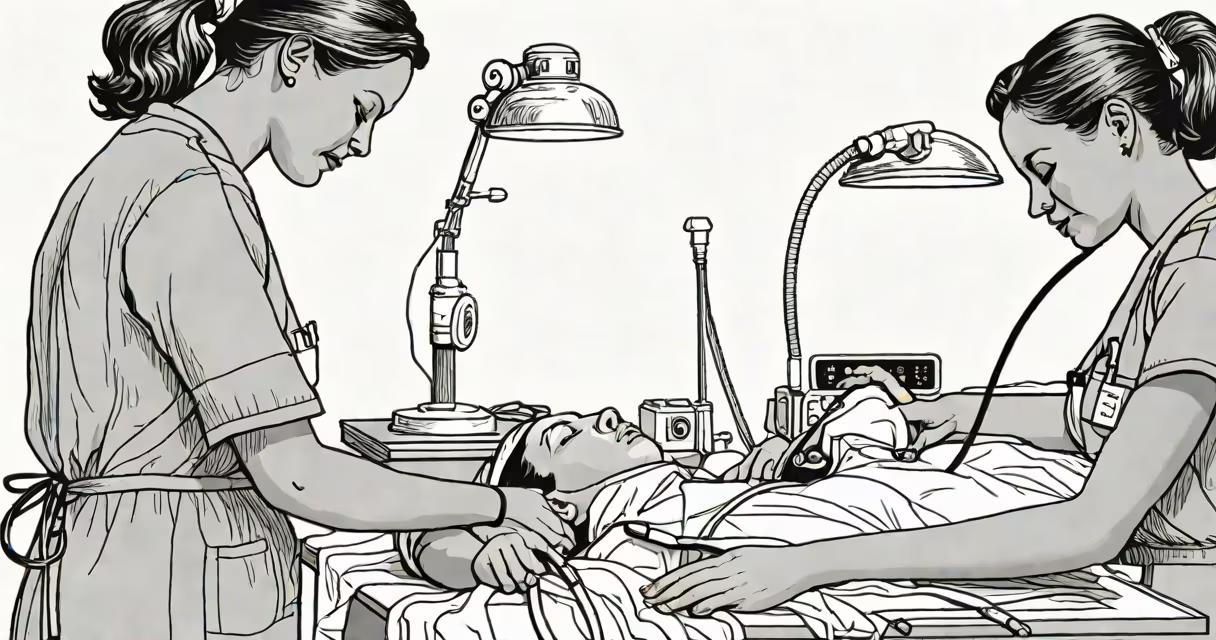
Obtaining a nursing degree means completing a structured educational program recognized by state boards of nursing, resulting in eligibility to take the NCLEX-RN exam and become a licensed registered nurse. Programs vary in duration and entry level, ranging from associate degrees to doctoral pathways.
Nursing education begins with formal coursework in anatomy, physiology, pharmacology, and patient care. Students complete clinical rotations in hospitals, clinics, and community settings under supervision. Upon graduation, candidates must pass the National Council Licensure Examination for Registered Nurses (NCLEX-RN) to receive state licensure. Without this license, practice is illegal.
The process is regulated by the National Council of State Boards of Nursing (NCSBN), which sets standards for curriculum and testing. According to NCSBN, over 90% of U.S. nursing programs meet accreditation benchmarks set by the Commission on Collegiate Nursing Education (CCNE) or the Accreditation Commission for Education in Nursing (ACEN).
There are three primary educational routes to becoming a registered nurse: Associate Degree in Nursing (ADN), Bachelor of Science in Nursing (BSN), and direct-entry Master's in Nursing (MSN). Each leads to the same license but differs in depth, duration, and career opportunities.
| Program Type | Duration | Entry Level | Career Outlook |
|---|---|---|---|
| ADN | 2 years | High school diploma or GED | Entry-level hospital roles; limited advancement without further education |
| BSN | 4 years | High school graduate | Better job prospects, leadership roles, and eligibility for advanced practice |
| MSN (direct-entry) | 2-3 years | Non-nursing bachelor's degree | Fast-track path to advanced practice; requires prior undergraduate degree |
While ADN programs offer quicker entry into the workforce, BSN graduates have higher employment rates and greater mobility. A 2022 study by the American Association of Colleges of Nursing (AACN) found that BSN-prepared nurses were 30% more likely to secure positions in acute care settings compared to ADN nurses.
Many hospitals now require or strongly prefer BSN credentials. The Institute of Medicine's 2010 report, "The Future of Nursing," recommended that 80% of the nursing workforce hold a BSN by 2020-a goal that remains aspirational but widely adopted in policy.
After completing a nursing program, the next step is applying to take the NCLEX-RN. The exam consists of 75-145 computer-adaptive questions assessing safe, effective patient care. Candidates must achieve a passing score based on psychometric analysis, not a percentage correct.
Each state's board of nursing administers the test. Applicants must submit transcripts, proof of identity, and pay fees ranging from $200 to $250. Results are typically available within 48 hours. Failure requires waiting 45 days before retaking the exam.
A common misconception is that a nursing degree equals a license. They are distinct. Completion of an accredited program qualifies someone to sit for the NCLEX-RN, but the license is granted only after passing the exam and meeting state-specific requirements such as background checks and fingerprinting.
I once observed a student who completed her ADN program but failed the NCLEX-RN on her first attempt. She spent six months reviewing pharmacology and prioritization skills before passing. Her story underscores that academic completion is not the final hurdle-it's the exam that determines professional eligibility.
Some assume that obtaining a nursing degree means immediate employment. While demand is high-over 275,000 new RN jobs are projected through 2032 (U.S. Bureau of Labor Statistics)-hiring depends on location, specialty, and staffing needs. Rural areas often face shortages, while urban hospitals may have competitive hiring cycles.
Another error is equating nursing degrees with medical degrees. Nurses are not physicians. They cannot prescribe controlled substances without additional certification. Advanced practice nurses (APRNs) can prescribe medications, but only after earning a Doctor of Nursing Practice (DNP) or MSN and completing state-specific training.
Also, not all nursing programs lead to the same outcomes. An ADN from a community college may prepare students for med-surg units, but a BSN from a university includes leadership, research, and public health components. These differences affect long-term career trajectories.
Sarah graduated with a BSN from a public university in 2023. She completed 1,000 clinical hours across emergency, pediatrics, and surgical units. After submitting her application to the California Board of Registered Nursing, she scheduled her NCLEX-RN exam.
She studied using a question bank with 1,200 practice items focused on prioritization, infection control, and medication safety. On exam day, she encountered 100 adaptive questions. She passed with a scaled score of 278 (passing threshold: 200).
Within two weeks, she received her license and began working as a staff nurse in a Level 1 trauma center. Her BSN enabled her to apply for a residency program that included mentorship and continuing education credits.
For those considering a change in career direction, what degree should i do offers guidance on aligning education with long-term goals. If you're aiming for clinical leadership or specialized practice, exploring the highest nursing degree is essential for planning your academic process.
Obtaining a nursing degree is a multi-step process requiring academic rigor, clinical experience, and successful examination. It is not a single event but a series of validated milestones leading to professional autonomy and impact in healthcare.