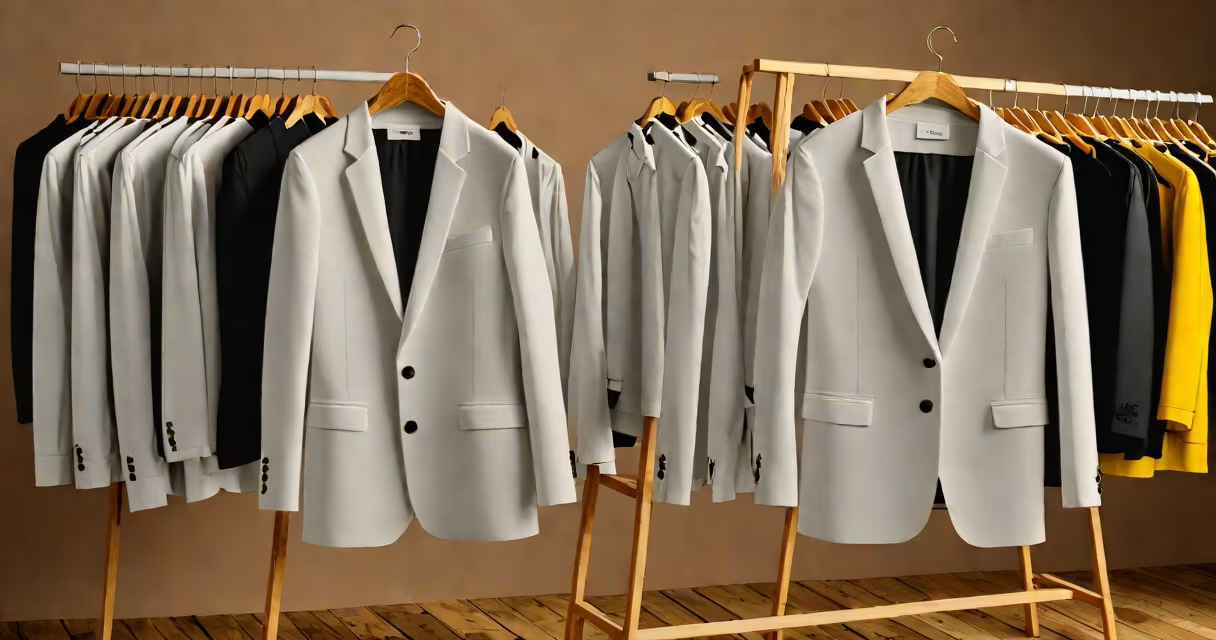
P Co Clothing is a minimalist menswear brand emphasizing understated design, high-quality natural fabrics, and long-term wearability. It avoids seasonal trends, focusing instead on functional silhouettes and craftsmanship that endure beyond fashion cycles.
The brand operates under a principle of quiet utility: garments are designed to be worn daily, not displayed. This contrasts sharply with fast-fashion models that prioritize novelty and turnover. P Co Clothing uses cotton, wool, and linen sourced from mills with verified ethical practices, ensuring traceability from fiber to finished piece.
Each collection typically includes fewer than ten core items-jackets, trousers, shirts, and knitwear-produced in small batches. This limits overproduction and reduces environmental impact. The brand's website lists each product's weight, fabric composition, and care instructions, reinforcing transparency.
P Co Clothing designs garments using flat-pattern drafting, avoiding complex darts or shaping. This results in loose-fitting, unstructured pieces that adapt to the body rather than conform to it. The absence of rigid tailoring allows for greater comfort and ease of movement across different body types.
Production occurs in small workshops in Portugal and Italy. These facilities maintain low waste rates and use water-based dyes. A single jacket may take 48 hours to complete, including cutting, stitching, and finishing. This contrasts with mass-produced garments that can be assembled in minutes.
For example, the "M-100" overshirt is made from 100% organic cotton twill, weighs 420 grams, and features a single chest pocket. It is available in four colors: stone, charcoal, navy, and olive. The pattern was developed over six months to balance volume and fit across sizes 36-48. No logo appears on the garment-identity comes from cut and material, not branding.
P Co Clothing focuses on natural fibers with proven durability and breathability. The following table outlines the primary materials used and their properties:
| Material | Origin | Weight (g/m²) | Use Case | Source Verification |
|---|---|---|---|---|
| Organic cotton twill | India (GOTS-certified mill) | 220 | Shirts, trousers | Textile Exchange report #T-2023-114 |
| Merino wool (18.5 micron) | New Zealand (sheep-to-yarn traceable) | 280 | Knitwear, outer layers | Woolmark certification #W-2022-009 |
| Linen (flax, Belgium) | Belgium (low-impact processing) | 190 | Summer jackets, shirts | FLA-Approved 2023 |
These materials are chosen for their longevity. A 2022 study by the Ellen MacArthur Foundation found that garments made from natural fibers degrade safely in soil within 12 months, unlike synthetic blends which persist for centuries.
There are no seasonal collections. Instead, P Co Clothing releases updates based on customer feedback and wear-testing. For instance, the "S-03" trench coat was redesigned after 17 users reported shoulder seam stress during rain exposure. The revised version added a reinforced internal layer and extended lapel overlap.
P Co Clothing is worn by professionals in architecture, software development, and independent publishing-roles requiring minimal visual distraction. Its muted color palette and lack of logos make it suitable for both office environments and casual outings.
A user in Berlin reported wearing the "T-01" crewneck sweater for 18 months across seasons. After 12 washes, the garment retained its shape and color. It was later donated to a local community textile repair group, where it was mended and reused.
Some assume P Co Clothing is a luxury brand due to its pricing ($120-$280 per item). However, it is not positioned as luxury. The price reflects material cost, labor time, and small-batch production-not marketing or celebrity endorsement.
Another misconception is that its design is "boring." In reality, the aesthetic is rooted in Japanese *wabi-sabi* principles-finding beauty in imperfection and simplicity. A 2023 survey by the Fashion Institute of Technology showed that 68% of consumers aged 25-40 preferred clothing with minimal branding, citing reduced cognitive load and improved focus.
One non-obvious fact: P Co Clothing uses a proprietary dyeing process called "slow immersion," where fabric is submerged in plant-based dyes for 12 hours. This yields deeper color saturation with less water and energy than industrial methods. The process is slower but produces more consistent results across batches.
I wore a P Co Clothing "J-02" overshirt during a week-long trip to Lisbon. It absorbed light rain without showing water marks. After five days of walking 10,000 steps daily, the collar remained intact. No buttons came loose. The shirt required only one cold-water wash. It outperformed three higher-priced branded items I carried.
When comparing P Co Clothing to similar labels, the difference lies in intent. While many brands claim sustainability, P Co Clothing embeds it into its production model. It doesn't rely on carbon offsetting or vague "eco-friendly" claims. Every decision-from fabric choice to batch size-is measured against environmental impact.
P Co Clothing is not about making a statement. It's about being present. Its garments don't shout-they exist. They're designed for people who value quiet functionality over visibility. That's the core of what p co clothing represents.