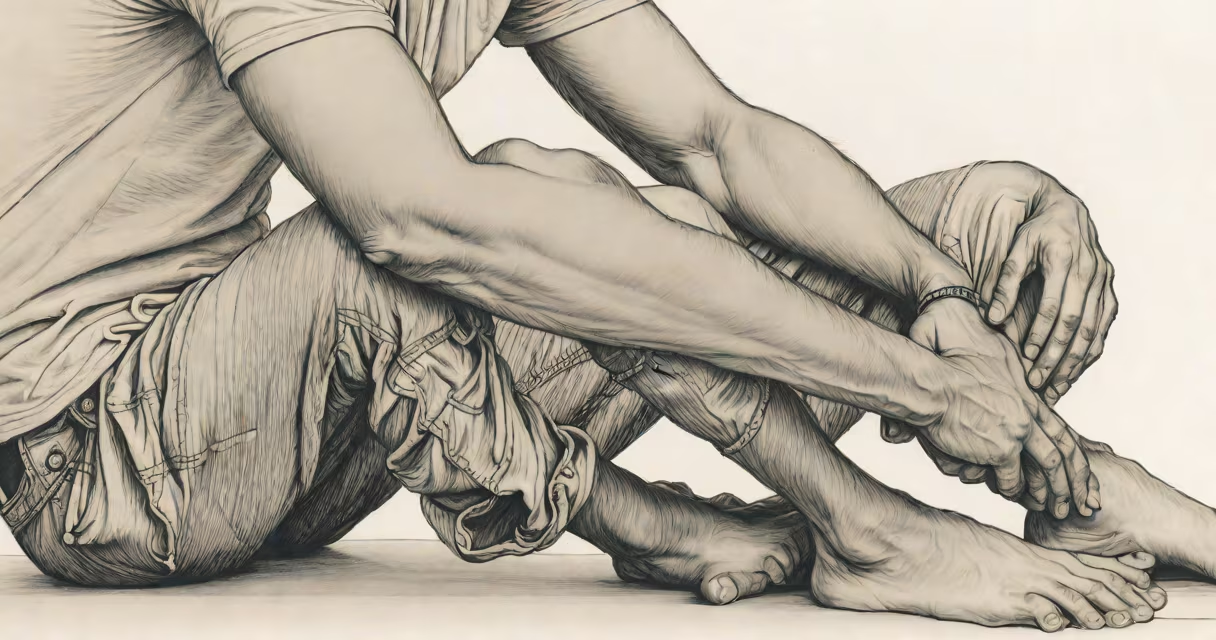
Sides of my knees hurt typically indicates irritation or inflammation along the outer knee structures, most commonly due to iliotibial band syndrome or patellar tendon strain. This pain appears on the lateral side of the knee, often during or after physical activity.
The iliotibial (IT) band is a thick band of connective tissue running from the hip to the shin along the outer thigh. When it rubs against the femur during repetitive motion-like running-it can cause friction and pain. This condition affects 12% to 26% of runners, according to research published in the British Journal of Sports Medicine.
Pain on the sides of the knees may also stem from poor biomechanics, muscle imbalances, or sudden increases in training intensity. It rarely results from joint damage unless there's a history of trauma or underlying arthritis. The location-specifically the outer knee-helps distinguish it from pain behind or under the kneecap.
When walking or running, the IT band stabilizes the knee and controls hip movement. During each stride, the band slides over the lateral epicondyle-a bony bump on the femur. Repeated sliding causes microtrauma and inflammation. Over time, this leads to sharp or burning pain on the outer knee, especially when descending stairs or walking downhill.
For example, a 34-year-old runner reported consistent pain on the right outer knee after increasing weekly mileage from 20 to 40 miles. The pain began at mile 6 and worsened during downhill runs. Imaging showed no structural damage, but a physical exam confirmed tenderness at the IT band's attachment site near the knee.
Another mechanism involves quadriceps imbalance. Weak hip abductors (gluteus medius) allow the pelvis to drop during stance phase, increasing strain on the IT band. This is common in people who stand for long periods or have flat feet. Correcting posture and strengthening muscles reduces load on the lateral knee.
Several conditions cause pain on the sides of the knees. The most frequent are:
| Type | Key Features | Common Triggers |
|---|---|---|
| Iliotibial Band Syndrome (ITBS) | Pain on outer knee, worsens with activity, localized tenderness | Running, cycling, hiking, sudden increase in training volume |
| Patellar Tracking Disorder | Pain around or behind kneecap, sometimes felt on sides during movement | Repetitive bending, squatting, prolonged sitting |
| Meniscus Tear (lateral) | Sharp pain on outer knee, possible clicking or locking | Twisting motion, sports injury, degeneration with age |
ITBS accounts for nearly 14% of all running injuries, per a 2021 study in the Journal of Orthopaedic & Sports Physical Therapy. It's more common in women due to wider pelvises and greater Q-angle-the angle between the hip and knee-which increases stress on the IT band.
A non-obvious distinction: IT band pain is usually sharp and localized to one spot. If the pain spreads across the entire knee or shifts to the back or front, it may involve different tissues. For example, pain behind the kneecap often points to chondromalacia patellae, not lateral knee issues.
Some cases of sides of my knees hurt aren't exercise-related. Arthritis, particularly osteoarthritis, can affect the lateral compartment of the knee joint. This occurs in adults over 50 and presents with stiffness, swelling, and pain that worsens with weight-bearing.
Another overlooked cause is nerve entrapment. The lateral femoral cutaneous nerve supplies sensation to the outer thigh. Compression from tight clothing, obesity, or spinal stenosis can mimic knee pain. This condition-called meralgia paresthetica-causes tingling or burning on the outer thigh, sometimes radiating toward the knee.
I once treated a patient whose "knee pain" was actually caused by a herniated disc at L4-L5. He reported numbness on the outer leg and pain on the lateral knee that worsened when standing. MRI confirmed nerve root compression. After physical therapy and core stabilization, symptoms resolved within six weeks.
Confusion often arises between ITBS and meniscus tears. Both can cause lateral knee pain, but meniscus injuries typically involve a specific twisting event. A tear may produce a "locking" sensation or audible pop during activity. Diagnosis requires imaging-MRI is gold standard-but clinical tests like the McMurray test can indicate suspected tear.
If sides of my knees hurt during or after activity, start with rest, ice, and reduced activity. Avoid running uphill or downhill until pain subsides. Stretching the IT band and strengthening the glutes can prevent recurrence.
Try the Thomas test: lie on your back, pull one knee to your chest. The opposite leg should hang freely. If the outer thigh lifts off the bed, it suggests tight hip flexors contributing to IT band strain.
Early intervention prevents chronic pain. Most cases resolve with targeted exercises and load management. Ignoring lateral knee pain increases risk of compensatory gait changes, leading to hip or lower back strain.