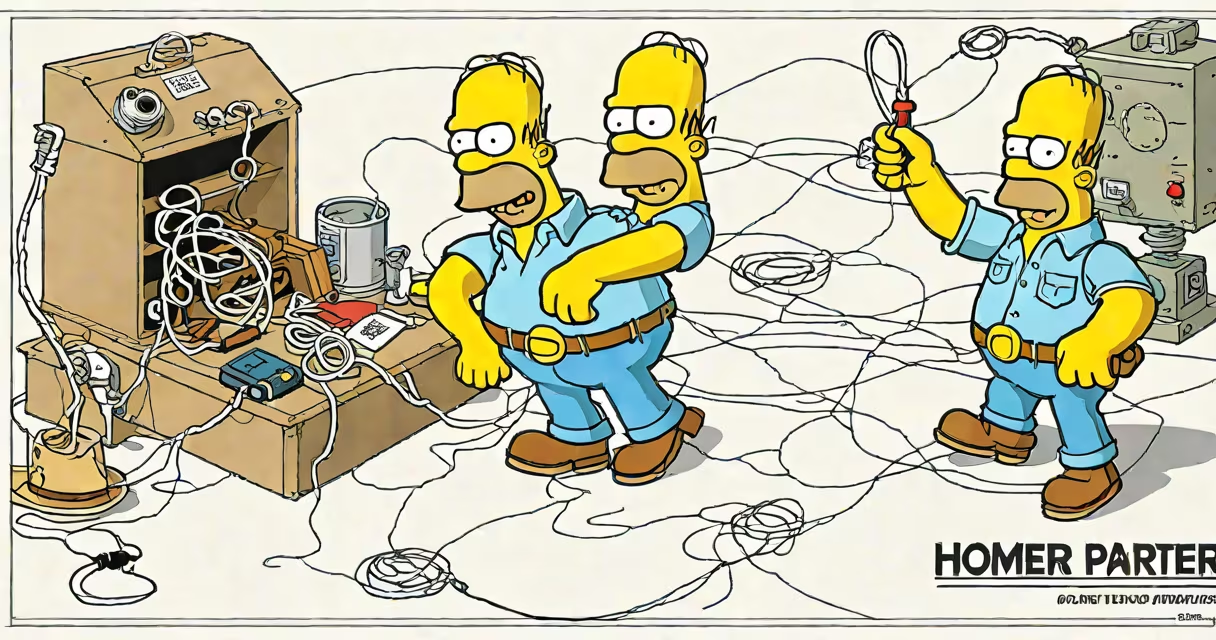
"So long partner" is a mock-heroic farewell phrase derived from Western movie tropes, now widely used online as ironic or playful slang to signal departure. It originated in American pop culture, particularly in 1950s and 1960s Westerns, where cowboys would bid each other goodbye with exaggerated formality.
The phrase gained widespread recognition through its frequent use in *The Simpsons*, especially in episodes featuring Homer Simpson's exaggerated persona. In the 1990s, Homer adopted the line during a scene where he pretends to be a tough cowboy, delivering it with deadpan seriousness. This moment became a meme staple, especially after being remixed into countless video edits and reaction clips.
Today, "so long partner" appears in online forums, social media posts, and comment sections as a way to end conversations with humor or irony. It's rarely used literally-it signals a light-hearted exit rather than an actual parting.
The phrase functions as a performative utterance: it doesn't convey literal meaning but performs a social action-ending a conversation with flair. Its comedic effect comes from the mismatch between the grandiose tone and the mundane context. For example, someone might reply "So long partner" to a friend who just asked for the Wi-Fi password.
It relies on shared cultural reference. Without familiarity with Westerns or *The Simpsons*, the joke falls flat. The humor isn't in the words themselves but in the contrast between expectation and delivery. A person saying "So long partner" while leaving a Zoom call about spreadsheet formatting triggers the laugh because the tone is absurdly elevated.
Some users apply it to non-verbal exits too-posting a photo of a cat walking away with the caption "So long partner" to signal they're logging off. The phrase thrives in low-stakes, informal settings where exaggeration is expected.
"So long partner" combines two elements: "so long," a contraction of "so long as," used historically in farewell letters and later in casual speech, and "partner," a term of address common in Westerns and frontier fiction. Together, they create a faux-rustic, macho tone that feels outdated and theatrical.
Its structure follows a pattern seen in many internet catchphrases: a formal or archaic expression applied to trivial situations. Other examples include "I'm out, yo" or "Peace out." But "so long partner" stands out due to its visual and audio associations-especially Homer's delivery, which includes a slow blink and a slight tilt of the head.
There's no standardized spelling variation. Some write it as "so long, partner," others omit the comma. The phrase is almost always lowercase in digital use unless used for emphasis in memes.
| Context | Usage Type | Example |
|---|---|---|
| Online chat | Ironic | "I've got to go-so long partner." |
| Meme culture | Visual gag | A screenshot of Homer with the text "So long partner" over his shoulder. |
| Video editing | Audio cue | Inserting the line at the end of a clip showing someone leaving a room. |
"So long partner" is most frequently used in informal digital spaces: Reddit threads, Twitter/X replies, TikTok captions, and Discord server messages. It's rare in professional emails or formal correspondence.
Its appeal lies in subverting expectations. A user typing "So long partner" after sharing a recipe for scrambled eggs turns a routine exchange into comedy. The phrase acts as a social buffer-a way to end a conversation without tension, using humor to soften the closure.
It's not limited to English-speaking audiences. Translations appear in fan communities worldwide. In Japanese anime forums, fans have dubbed the line "Sayonara, kōmori" (literally "goodbye, bat") as a playful nod to the original tone.
Many assume "so long partner" is a real cowboy phrase from the Old West. It is not. Historical records show that cowboys typically said "Goodbye," "See ya," or "Adios." The term "partner" was used among ranch hands, but never paired with "so long" in authentic frontier correspondence.
Another misconception is that the phrase originated in *The Simpsons* episode "Homer the Heretic." It did not. The line first appeared in "Homer the Heretic" (Season 6, Episode 12), but it was reused in later episodes and became a recurring joke. The version most associated with the meme is from a 1999 episode titled "The Computer Wore Menace Shoes," where Homer says it while exiting a virtual reality simulation.
The phrase is not a synonym for "farewell" in serious contexts. Using it in a job resignation letter or a eulogy would be inappropriate. Its power comes from deliberate absurdity-not sincerity.
In 2021, a Reddit user posted a photo of their cat sitting on a windowsill, looking out at the sky. The caption read: "This is my cat. He's been staring at the clouds for 17 minutes. So long partner." The post received over 45,000 upvotes and was shared across multiple meme sites. The humor came from the emotional weight assigned to a cat's quiet moment, amplified by the phrase's theatrical delivery.
Another example: a YouTube video titled "How to Fold a Fitted Sheet" ended with the creator waving at the camera and saying, "So long partner." The video went viral, partly because viewers appreciated the contrast between the mundane task and the dramatic exit.
I once attended a local tech meetup where a speaker concluded a talk on AI ethics by saying, "So long partner," then walked off stage. The audience paused-then burst into laughter. The moment worked because the speaker had maintained a deadpan tone throughout, making the line feel both unexpected and perfectly timed. It wasn't a joke; it was a performance.
While "so long partner" is rooted in Western tropes, similar phrases exist in other genres. "Farewell, my friend" from *Star Wars* or "I'll be back" from *Terminator* serve similar roles-memorable lines used for comic or dramatic effect. But none have achieved the same level of internet reuse as "so long partner."
For those measuring physical distance, a centimeter is 0.39 inches, roughly the width of a fingernail. That's not relevant to the phrase-but it shows how scale matters in communication. Just as a centimeter is tiny compared to a kilometer, "so long partner" is small in meaning but large in impact when used correctly.
"So long partner" remains a durable internet idiom because it's flexible, recognizable, and easy to deploy. It's not a formal farewell, nor is it meant to be taken seriously. It's a cultural artifact-born in animation, shaped by the web, and still in use years after its debut.