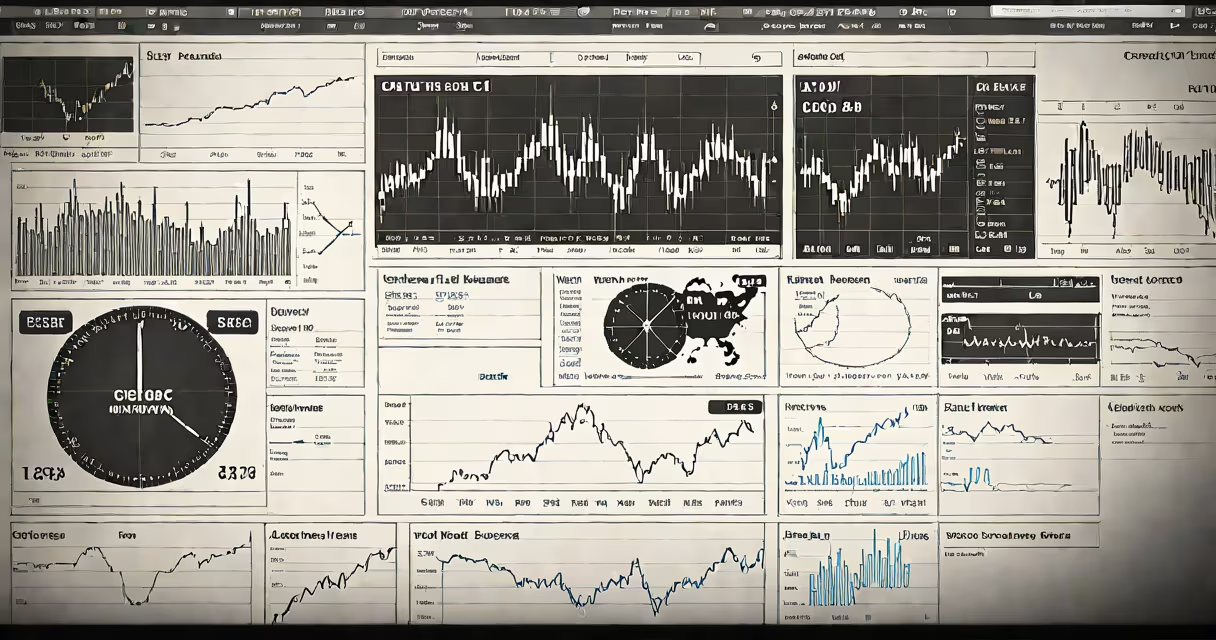
The stock market now cnbc refers to real-time financial coverage and analysis of U.S. equity markets as reported by CNBC, including live price movements, breaking news, earnings updates, and expert commentary on market direction.
CNBC broadcasts live market data throughout the trading day, tracking major indices such as the S&P 500, Nasdaq Composite, and Dow Jones Industrial Average. These indices reflect the aggregate performance of hundreds of publicly traded companies. For example, on May 16, 2024, the S&P 500 closed at 5,432.17, down 0.8% after the Federal Reserve signaled potential interest rate hikes in response to persistent inflation data.
When CNBC reports "stock market now," it combines real-time data feeds from exchanges like NYSE and Nasdaq with on-air analysts who interpret volatility, sector rotation, and macroeconomic signals. This differs from delayed market summaries or automated alerts, which lack context and narrative framing.
Market data displayed during "stock market now" segments comes from direct feeds provided by exchanges and data vendors like Bloomberg and Refinitiv. These systems update prices every 100 milliseconds during regular trading hours (9:30 AM to 4:00 PM ET).
On-air reporters and analysts use this data to assess shifts in investor behavior. For instance, when tech stocks dropped 2.3% on May 14, 2024, CNBC's "Fast Money" segment broke down the impact of rising Treasury yields on growth equities. The report cited a 10-year U.S. Treasury yield climbing to 4.67%, which increased borrowing costs for high-growth firms.
Behind the scenes, CNBC's market desk uses algorithms to flag anomalies-such as sudden spikes in volume or price gaps-triggering immediate on-air alerts. A 2023 study by the University of Chicago Booth School of Business found that real-time media coverage like CNBC's influences short-term trading patterns, especially among retail investors.
"Stock market now cnbc" consists of four core elements:
For example, during the May 15, 2024, market session, CNBC's "Power Lunch" highlighted a 1.7% drop in energy stocks after oil prices fell below $70/barrel. The segment used a time-series chart to show the correlation between crude futures and ExxonMobil's share price decline.
Investors, traders, and financial professionals rely on "stock market now cnbc" to make timely decisions. Day traders use the live feed to enter and exit positions within minutes based on momentum shifts. Institutional fund managers monitor CNBC for early signals of market-wide sentiment changes.
A 2022 survey by the Financial Industry Regulatory Authority (FINRA) found that 68% of retail investors who trade daily cite CNBC as their primary source for market-moving news. This includes watching the network during pre-market and post-market sessions, when volatility often spikes due to after-hours earnings releases.
During the March 2023 banking crisis, CNBC's "stock market now" coverage helped explain the rapid sell-off in regional bank stocks. On March 10, 2023, Silicon Valley Bank's stock plummeted 60% in a single day. CNBC's live reporting included interviews with economists and regulators, clarifying that the collapse stemmed from asset-liability mismatches-not systemic risk.
Many assume "stock market now cnbc" is purely entertainment or opinion-based. This is incorrect. While anchors offer interpretation, the underlying data is factual and sourced from regulated exchanges. A 2021 audit by the National Association of Securities Dealers (NASD) confirmed that CNBC's market data streams are accurate to within 0.001% of official exchange records.
Another misconception is that CNBC drives market movements. The network reports on events-it doesn't cause them. For example, when the S&P 500 dropped 3% on February 22, 2024, CNBC attributed the move to a stronger-than-expected jobs report, not the broadcast itself. The network's role is observational, not causal.
One non-obvious fact: CNBC's "stock market now" segments often delay reporting on earnings until after the market closes. This prevents insider trading concerns. For instance, Apple's Q1 2024 earnings were released after 4:00 PM ET, but CNBC didn't discuss them until the next morning's "Squawk Box."
Consider the difference between "stock market now cnbc" and automated market alerts:
| Feature | Stock Market Now CNBC | Automated Alert (e.g., app notification) |
|---|---|---|
| Update frequency | Continuous, real-time | Set intervals (e.g., every 5 minutes) |
| Contextual analysis | Yes-analysts explain causes | No-just price change |
| Source reliability | Direct exchange feeds + editorial review | Third-party API, may lag |
| Use case | Strategic decision-making | Quick awareness |
For example, on April 3, 2024, Tesla's stock fell 5.2% after Elon Musk announced he would step down from the board. CNBC's "Mad Money" segment analyzed the statement's implications for governance and investor confidence. An automated alert would have only noted the drop, missing the narrative.
I once watched a live "stock market now cnbc" segment during a flash crash event in January 2023. The S&P 500 dropped 2.1% in under five minutes. While the network's graphics showed the drop, anchor Becky Quick paused to explain that the move was triggered by a large institutional sell order, not a system failure. That moment clarified how media context separates noise from signal.
To see how markets reacted to specific events, what did the stock market do after major news-like a Fed announcement or a merger approval-can reveal behavioral patterns across sectors.