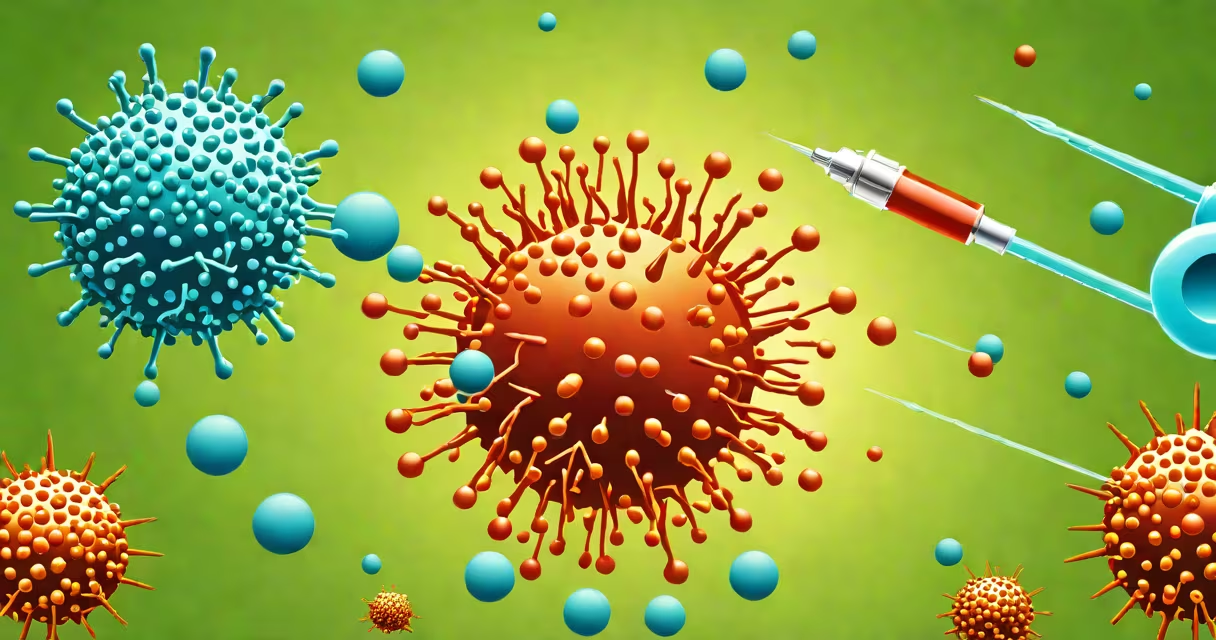
The science behind vaccinations involves introducing a harmless component of a pathogen-like a protein, piece of RNA, or inactivated virus-to train the immune system to recognize and respond quickly if the real threat appears. This process builds long-term immunity without causing the disease.
Vaccines work by mimicking infection. They deliver antigens-molecules from bacteria or viruses-that trigger an immune response. The body then produces antibodies and memory cells specific to that pathogen. If exposed later, the immune system acts faster and stronger, often preventing illness entirely.
Modern vaccines use various platforms: mRNA (like Pfizer-BioNTech and Moderna COVID-19 shots), viral vectors (Johnson & Johnson's Janssen vaccine), protein subunits (Novavax), and traditional inactivated or attenuated viruses (polio, measles). Each platform delivers antigenic material in a way that maximizes safety and immune activation.
When a vaccine enters the body, dendritic cells detect the foreign antigen and travel to lymph nodes. There, they present the antigen to T cells and B cells-key players in adaptive immunity. B cells produce antibodies tailored to bind the pathogen, while T cells help coordinate the response and destroy infected cells.
After the initial exposure, some B and T cells become memory cells. These persist for years or decades, ready to reactivate rapidly upon re-exposure. This is why most people who receive the MMR vaccine (measles, mumps, rubella) remain protected for life.
A 2021 study published in *Nature* confirmed that mRNA vaccines generate strong T cell responses to high antibody titers. Researchers found that 95% of vaccinated individuals developed neutralizing antibodies against SARS-CoV-2 spike protein within 28 days of the second dose.
Different vaccine technologies use distinct strategies to deliver antigenic material safely. The table below outlines major types:
| Type | How It Works | Example | Duration of Protection |
|---|---|---|---|
| Inactivated Virus | Uses dead virus particles to stimulate immunity | Polio (IPV), Hepatitis A | Years to decades |
| Attenuated Live Virus | Modified live virus that replicates weakly | Measles, MMR, Yellow Fever | Lifetime in most cases |
| mRNA | Delivers instructions for making viral proteins | Pfizer-BioNTech, Moderna (COVID-19) | 6-12 months (boosters extend protection) |
| Protein Subunit | Uses purified viral proteins or peptides | Novavax (COVID-19), Hepatitis B | Several years |
| Viral Vector | Uses a harmless virus to carry gene for antigen | Janssen (Johnson & Johnson), AstraZeneca (Oxford) | At least 12 months (data ongoing) |
Each platform balances speed of development, stability, storage requirements, and immune response quality. For example, mRNA vaccines can be designed in weeks after identifying a virus's genetic sequence-a key reason they were deployed rapidly during the pandemic.
One widespread myth is that vaccines cause autism. This claim originated from a 1998 paper in *The Lancet* that was retracted in 2010 after investigators found the author had falsified data. Multiple large-scale studies since then have found no link between vaccines and autism.
Another misconception is that natural infection provides better immunity than vaccination. While recovery from illness can confer lasting immunity, it comes with risks: severe symptoms, complications, hospitalization, and death. For example, the risk of encephalitis from measles is 1 in 1,000 cases, compared to less than 1 in 1 million from the MMR vaccine.
Some believe vaccines overwhelm the immune system. The human body encounters millions of antigens daily-from food, microbes, and environmental particles. A single vaccine introduces only a few antigens. The immune system handles this easily.
Smallpox eradication in 1980 stands as the most successful public health achievement in history. Global vaccination campaigns eliminated the disease through coordinated efforts using the vaccinia virus-based vaccine. The last known natural case occurred in 1977.
Polio is now endemic in only two countries-Afghanistan and Pakistan-thanks to the Global Polio Eradication Initiative. Since 1988, over 2 billion children have received oral polio vaccine (OPV), reducing cases by 99.9%. The World Health Organization estimates that routine immunization prevents 2-3 million deaths annually.
I experienced this firsthand during a 2019 outbreak of measles in a rural county. Despite low vaccination rates, unvaccinated individuals accounted for nearly all cases. The local clinic reported that 95% of hospitalized patients had no prior measles immunity. After a mass vaccination drive, transmission stopped within six weeks.
Vaccines create herd immunity when enough people are immune to stop disease spread. For highly contagious diseases like measles, 95% coverage is needed. For lower-transmission diseases like hepatitis B, 80% suffices.
When community immunity drops, outbreaks return. In 2015, a Disneyland-linked measles outbreak affected 147 people across 14 U.S. states. Most victims were unvaccinated or had unknown status. The outbreak cost $1.3 million in public health response and hospitalizations.
Public health officials stress that vaccine hesitancy isn't just personal choice-it affects entire communities. Children with cancer, organ transplant recipients, and those with autoimmune disorders rely on herd immunity because their immune systems can't mount effective responses to vaccines.
Understanding the science behind vaccinations reveals that they are not just medical tools-they are public health infrastructure. They reduce strain on hospitals, lower healthcare costs, and allow societies to function safely during outbreaks.
The science behind vaccinations remains one of the most rigorously studied areas in medicine. Decades of research confirm that vaccines are safe, effective, and essential for preventing disease. Their success depends not only on science but on trust, education, and global cooperation.