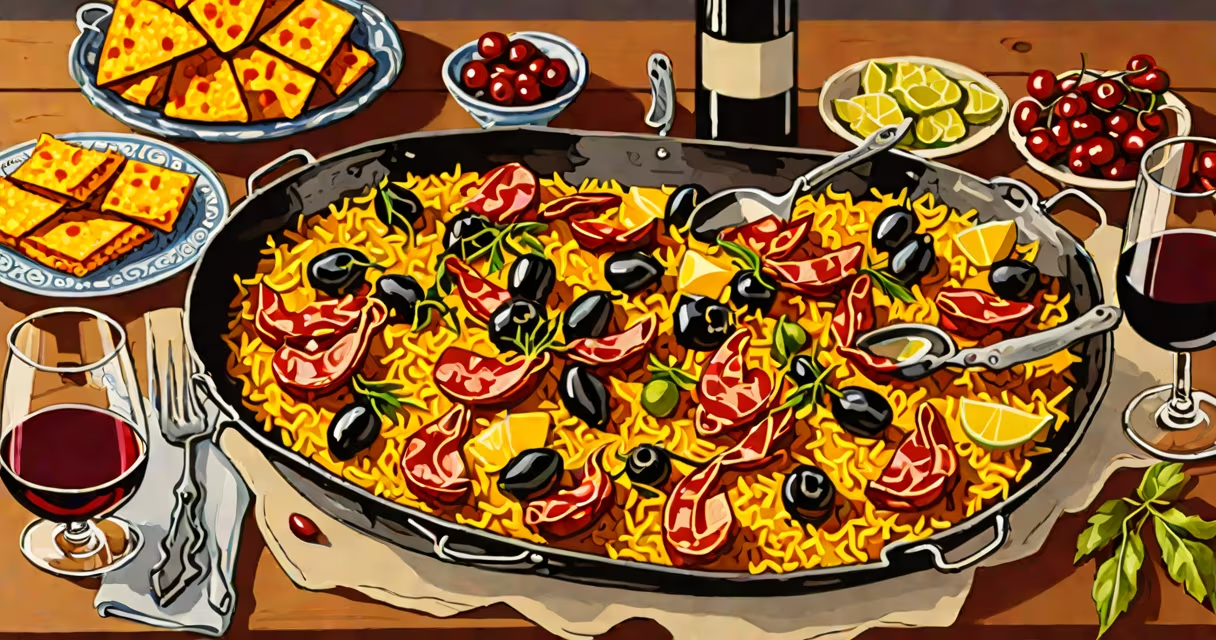
Traditional Spanish food consists of regionally distinct, ingredient-driven dishes shaped by centuries of Mediterranean, Moorish, and Latin influences. Core elements include olive oil, garlic, paprika, saffron, cured meats, and seasonal vegetables, prepared using slow-cooking methods and shared dining customs.
These dishes reflect Spain's diverse geography. Northern regions emphasize seafood and pork, central areas favor stews and grains, and southern Andalusia relies on fresh vegetables, legumes, and preserved fish. Meals often begin with tapas-small, shareable plates-and progress through multiple courses, including a main dish centered on meat, fish, or rice.
Spain's culinary identity emerged from centuries of trade and conquest. Roman and Arab rule introduced irrigation, citrus, rice, and spices. The Reconquista reshaped diets with livestock and wheat. Modern regionalism solidified local specialties, such as Catalan escudella or Galician pulpo a feira. The 1990s saw formal recognition of regional cuisines under Spain's National Geographic Institute, which documented over 1,200 traditional dishes.
Olive oil is the foundation of most traditional Spanish cooking. Used raw in dressings and cooked in stews, it provides flavor and stability. Spain produces nearly 40% of the world's olive oil, with extra virgin varieties from Andalusia and Catalonia dominating both domestic and export markets.
Saffron, derived from crocus flowers, adds color and aroma to dishes like paella and arroz con pollo. A single gram of saffron costs more than $10 due to labor-intensive harvesting-each flower yields only three threads. Spain accounts for 90% of global saffron production, primarily in La Mancha.
Cured meats such as jamón ibérico and chorizo are central to tapas culture. Jamón ibérico, made from black Iberian pigs fed acorns, requires 36 months of curing. Its fat melts at room temperature, delivering a buttery mouthfeel. Chorizo uses smoked paprika and garlic, with regional variants differing in heat level and texture.
Paella is Spain's most famous dish, originating in Valencia. A classic version uses rabbit, chicken, green beans, snails, and saffron-infused broth. The rice is toasted in olive oil, then simmered in stock until tender. The dish is cooked in a wide, shallow pan over direct flame, creating a crispy socarrat layer at the base.
A complete paella for four people requires:
Heat oil in a 14-inch paellera. Sauté onion, garlic, and peppers for 5 minutes. Add rice and toast 2 minutes. Stir in paprika and saffron. Pour in hot stock. Simmer 15 minutes. Add protein and beans. Cook 10 more minutes. Fold in peas. Rest 5 minutes before serving.
Gazpacho, a cold tomato soup from Andalusia, contains 10 ingredients: tomatoes, cucumber, bell pepper, onion, garlic, olive oil, sherry vinegar, bread, salt, and ice. Blend 2 pounds of ripe tomatoes, 1/2 cucumber, 1/2 red pepper, 1/4 onion, 2 cloves garlic, and 1/4 cup olive oil. Add 2 tbsp sherry vinegar, 1 slice stale bread, and 1 tsp salt. Chill 2 hours. Serve over ice.
Spain has 17 autonomous communities, each with distinct culinary traditions. Basque Country is known for pintxos-small snacks on bread, often topped with anchovies or cheese. Catalonia features escalivada (roasted vegetables) and fideuà (noodle paella). Galicia specializes in seafood, including empanadas de mariscos and caldo gallego (lentil stew).
Many assume all Spanish food is spicy. While some dishes use pimentón (paprika), most traditional recipes rely on balance-sweetness from onions, acidity from vinegar, umami from cured meats. The heat in chorizo comes from dried chilies, not capsaicin overload.
Another misconception is that tapas are small portions served in bars. While common, tapas are a category of dishes meant to be shared. Some, like patatas bravas, are served hot. Others, like ensaladilla rusa (Russian salad), are cold and creamy. Tapas evolved from bar snacks to full meals during the 19th century, when patrons ordered drinks and received complimentary bites.
| Dish | Region | Main Ingredients | Preparation Time |
|---|---|---|---|
| Paella Valenciana | Valencia | Rice, rabbit, chicken, green beans, saffron | 45 minutes |
| Gazpacho | Andalusia | Tomatoes, cucumber, bell pepper, garlic, olive oil | 2 hours chilling |
| Tortilla Espanola | National | Eggs, potatoes, onion, olive oil | 20 minutes |
| Chorizo al vino | Castile & León | Chorizo, red wine, garlic, paprika | 1 hour |
When I visited a family-run restaurant in San Sebastián, I watched a chef prepare pintxos using a single wooden skewer and a blowtorch. He placed a cube of manchego cheese on a piece of grilled baguette, drizzled it with honey, and seared the top. The result was crisp, sweet, and savory-a perfect example of how simple ingredients, when handled well, become unforgettable.
Traditional Spanish food is not a monolith. It varies by climate, history, and household practice. The same recipe may differ slightly between towns just ten miles apart. This diversity is protected by Spain's Denominación de Origen system, which certifies products like Jamón Ibérico de Bellota and Pimentón de la Vera.
Some travelers confuse "Spanish" with "Mexican" food. Mexican cuisine includes corn, chili, and chocolate-elements absent in traditional Spanish dishes. Authentic paella contains no lime, cilantro, or avocado. The confusion arises because both cuisines use tomatoes and peppers, but their preparation and context differ.
Understanding traditional Spanish food means recognizing its deep ties to place and time. A bowl of gazpacho is not just a cold soup-it's a response to summer heat, a celebration of garden harvests, and a nod to Andalusian history. The dish is served at outdoor tables, often with a side of crusty bread. It's eaten slowly, shared among friends.
For those exploring Spanish cuisine, start with a few core dishes: paella, gazpacho, tortilla española, and a selection of tapas. Use quality ingredients-especially extra virgin olive oil and saffron. Learn the difference between sweet and smoked paprika. Respect the timing: paella takes patience, and gazpacho demands chilling.
Traditional Spanish food is more than a meal-it's a way of life. It values time, seasonality, and sharing. ordering tapas in Barcelona, the experience reflects centuries of craft, geography, and community. To truly understand it, eat it slowly, talk while you eat, and ask questions about the ingredients.