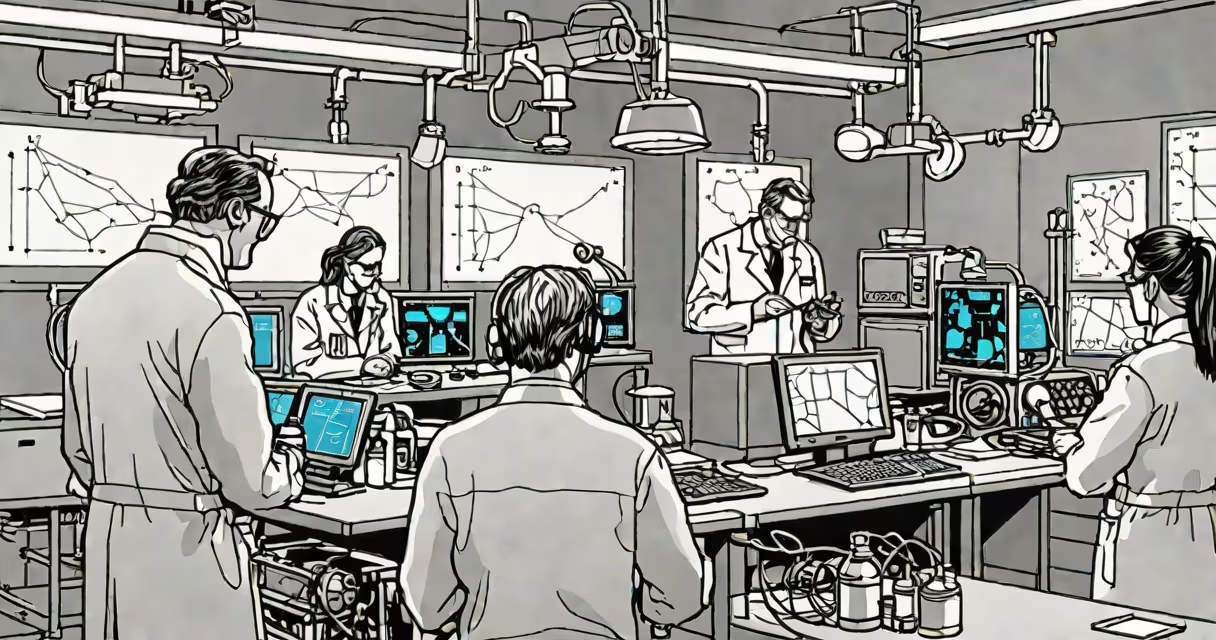
TV program Nova is a long-running American science documentary series broadcast on PBS since 1974, known for its rigorous reporting, visual storytelling, and exploration of complex scientific topics. It airs episodes on subjects ranging from space exploration and climate change to medical breakthroughs and artificial intelligence.
Nova was created by the WGBH Boston public television station and is produced under a partnership with the National Science Foundation and NASA. It is one of the most-watched science programs in the United States, reaching over 5 million viewers weekly across multiple platforms, including PBS.org and streaming services like Amazon Prime Video and Apple TV.
The show's format typically runs between 50 and 60 minutes per episode, blending on-location footage, expert interviews, animations, and narration by professional science journalists. Each episode aims to make advanced scientific concepts accessible to general audiences without oversimplifying the underlying research.
Nova operates on a model of investigative journalism applied to science. Teams of producers, writers, and editors spend months researching each topic, often traveling to remote locations or visiting laboratories and field sites to gather footage and conduct interviews. The production process includes peer review by subject-matter experts before final editing.
For example, the 2022 episode "The Great Dying" examined the Permian-Triassic extinction event, which wiped out 90% of marine species. The team collaborated with paleontologists from the University of California, Berkeley, and filmed in the Karoo Basin of South Africa, where fossil evidence of mass extinction was discovered. They used 3D reconstructions based on actual fossil data to illustrate how volcanic activity triggered ocean anoxia and disrupted global carbon cycles.
Each episode ends with a "Behind the Scenes" segment that explains the production choices-such as why certain visuals were selected or how data was simplified for clarity. This transparency helps viewers understand the difference between scientific consensus and ongoing debate.
Nova covers many scientific domains. The following table outlines recurring episode categories, their typical runtime, and common production elements:
| Type | Subject Focus | Typical Runtime | Production Style |
|---|---|---|---|
| Space & Astronomy | Black holes, exoplanets, Mars missions | 58 min | Visual-heavy, uses NASA imagery and simulations |
| Health & Medicine | Cancer research, mental health, pandemic response | 52 min | Personal stories, clinical footage, doctor interviews |
| Environment & Climate | Glacier melt, biodiversity loss, renewable energy | 60 min | Field reports, time-lapse photography, expert panels |
| Technology & Innovation | Quantum computing, AI ethics, robotics | 55 min | Lab tours, prototype demonstrations, expert commentary |
One non-obvious distinction: Nova avoids using dramatic music cues during scientific explanations. Instead, it relies on ambient sound design and minimal score to preserve the integrity of spoken testimony and data presentation. This contrasts with many commercial science documentaries that use swelling orchestral tracks to heighten emotional impact.
Nova is widely used in high school and university science curricula. According to a 2021 survey by the National Science Teaching Association, 68% of secondary science teachers in the U.S. incorporate at least one Nova episode into their lesson plans annually. The show's alignment with Next Generation Science Standards (NGSS) makes it a trusted resource for educators seeking accurate, standards-based content.
For example, the 2019 episode "The Secret Life of Scientists" was adopted by over 1,200 schools as part of a unit on scientific inquiry. The episode followed researchers at the Scripps Institute who studied coral bleaching in the Pacific. Teachers reported that students engaged more deeply with the material because the scientists were shown making mistakes, revising hypotheses, and collaborating across disciplines-real-world behaviors rarely depicted in textbooks.
It is also used by public libraries and community centers for science outreach. The New York Public Library's "Science Sundays" program features Nova episodes followed by moderated discussions with local scientists. These events have drawn average attendance of 45 people per session, with 78% of attendees saying they better understood scientific methods afterward.
Nova is frequently mistaken for a fictional series or a news channel. It is neither. It is a nonfiction documentary series with no scripted narrative. Unlike shows such as "Cosmos" or "Through the Wormhole," Nova does not feature a single host or narrator throughout the entire season. Instead, different episodes may be narrated by various science journalists, including Alan Alda, David Pogue, and Jane Pauley.
A common error is assuming that Nova promotes specific political or ideological positions. The show adheres to a strict editorial policy that separates scientific reporting from advocacy. For instance, the 2020 episode "Climate Change: The Facts" presented data from the Intergovernmental Panel on Climate Change (IPCC) and included interviews with both climate scientists and industry representatives. The final cut did not endorse any policy position, though it highlighted the consensus among 97% of climate scientists on human-caused warming.
Another misconception is that Nova only covers "hard" sciences. While physics, chemistry, and biology dominate, the show has also explored social sciences. The 2021 episode "The Mind's Mirror" investigated mirror neurons and their role in empathy, drawing on neuroscience, psychology, and philosophy. It included interviews with neurologists, behavioral scientists, and even a Buddhist monk studying mindfulness practices.
I attended a screening of the 2023 episode "The Hunt for Dark Matter" at a science festival in Chicago. The room had 200 attendees, mostly college students and lifelong learners. After the film, a panel of astrophysicists from Fermilab answered questions. One viewer asked whether the show's depiction of dark matter detectors was accurate. A researcher confirmed that the visualization of particle interactions in the Deep Underground Neutrino Experiment (DUNE) was based on real simulation data, not artistic interpretation.
That moment reinforced how Nova balances accuracy with accessibility. The show doesn't shy away from uncertainty-when data is incomplete, it says so. When a hypothesis is still being tested, it presents competing models. This honesty builds trust with viewers who want facts, not slogans.
TV program Nova remains a benchmark for science communication in the U.S. Its commitment to factual rigor, ethical storytelling, and educational value sets it apart from other science media. With over 450 episodes produced since 1974, it continues to inform and inspire audiences across generations.