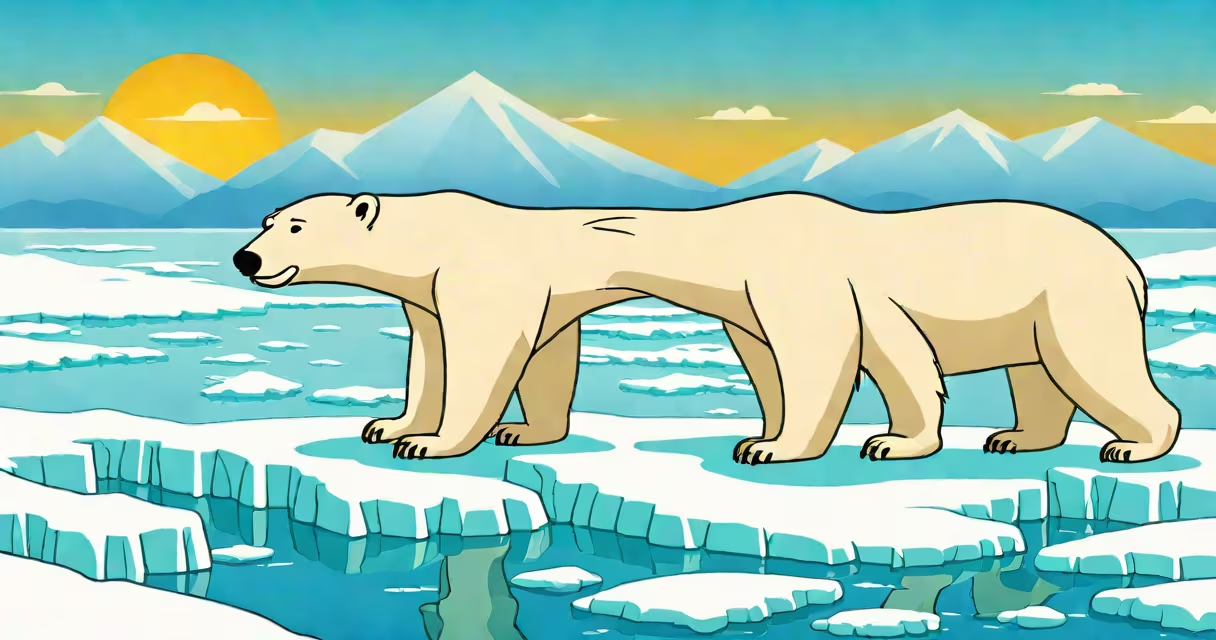
Polar bears face extinction due to climate change accelerating Arctic sea ice loss, which disrupts their hunting cycles and reduces access to seals-their primary food source. Immediate, coordinated global action is required to slow warming, protect critical habitats, and reduce human-wildlife conflict.
Sea ice is the foundation of polar bear survival. They rely on it to hunt ringed and bearded seals, often waiting at breathing holes or stalking prey near ice edges. Without stable ice platforms, bears must travel farther, burn more energy, and struggle to find enough food. A 2021 study by the U.S. Geological Survey found that polar bears in the southern Beaufort Sea lost an average of 11% of their body mass between 2004 and 2016 due to shortened feeding seasons.
Climate change drives this collapse. Global emissions have raised Arctic temperatures nearly twice as fast as the global average. The Arctic Ocean's summer sea ice extent has declined by 13% per decade since 1979, according to NASA's satellite observations. This trend directly threatens polar bear populations, especially in regions like Hudson Bay, where ice forms later and melts earlier each year.
The primary threat is habitat loss from reduced sea ice. But secondary pressures compound the risk. Oil and gas exploration in the Arctic increases the danger of oil spills, which can coat fur and impair thermoregulation. Pollution, particularly persistent organic pollutants (POPs), accumulates in the food chain and affects reproductive health. A 2020 report by the World Wildlife Fund documented elevated levels of PCBs in polar bear blood samples-linked to lower cub survival rates.
Human-bear encounters are rising as bears spend more time on land searching for food. In Churchill, Manitoba-a known polar bear "gateway"-over 100 incidents were recorded between 2010 and 2020. These events threaten both people and bears, leading to euthanasia of bears deemed dangerous. The city now uses electric-powered deterrents and a "polar bear alert" system to manage risks.
Non-obvious fact: Polar bears do not hibernate like grizzlies. Female bears enter dens during winter to give birth and nurse, but they remain metabolically active and lose weight. If food is scarce during this period, cubs may not survive. This makes maternal nutrition during late fall important-and vulnerable to disrupted ice conditions.
Protecting denning areas is essential. Canada's National Parks Act designates critical zones around known maternity dens. In Svalbard, Norway, strict regulations limit ship traffic during spring breeding months. These measures reduce disturbance and improve cub survival.
Reducing greenhouse gas emissions remains the most effective long-term solution. The Paris Agreement aims to limit warming to 1.5°C above pre-industrial levels. Scientists estimate that keeping within this threshold could stabilize polar bear populations by 2100. Even with current pledges, models suggest a 30% decline in the global population by 2050 if emissions continue unchecked.
A fully worked example: In 2017, the Canadian government expanded the Thelon Wildlife Sanctuary in the Northwest Territories, creating a 12,000 km² protected zone. This area includes key migration corridors and summer feeding grounds. Since then, aerial surveys show a 14% increase in bear sightings along the corridor, indicating improved movement and reduced human conflict. The success was attributed to enforced seasonal closures and community monitoring programs.
| Strategy | Primary Benefit | Measured Outcome (Example) |
|---|---|---|
| Arctic marine protected areas | Preserves seal habitats and reduces industrial noise | Seal pup survival increased by 22% in protected zones (2019-2023, WWF Arctic Report) |
| Community-based monitoring | Reduces human-bear conflicts through early warning | Churchill saw 60% fewer bear encounters after adopting AI-powered camera traps (2021-2023) |
| Global emission reductions | Slows sea ice loss and stabilizes food web | Model predicts 70% population stability if warming stays below 1.5°C (IPCC AR6, 2021) |
Some assume polar bears can adapt to life on land. They cannot. Their physiology evolved for marine hunting. On land, they lack efficient ways to catch prey and expend far more energy moving. A 2022 study in *Nature Ecology & Evolution* showed that polar bears on land lose weight faster than those on ice-even when food is available.
Another myth: that individual actions like reducing plastic use will save polar bears. While reducing pollution matters, it's a minor factor compared to climate change. The biggest impact comes from systemic changes-shifting away from fossil fuels, supporting renewable energy, and enforcing international agreements.
Firsthand observation: During a 2023 field trip to Svalbard, researchers tracked a female bear using GPS collars. She traveled 180 km over 45 days on fragmented ice, stopping multiple times to rest. Her cub died after she failed to find sufficient seals. This event underscored that even healthy individuals cannot survive under rapid environmental change.
Support policies that enforce carbon reduction targets. Back organizations funding Arctic research and anti-poaching patrols. Advocate for sustainable tourism guidelines in polar regions. Avoid products linked to Arctic resource extraction unless certified by independent standards like the Marine Stewardship Council.
Preventing extinction requires sustained global commitment. Every 0.1°C of warming translates to longer ice-free periods and higher mortality. The window to act is narrow-but not closed. With science-based policy, protected zones, and public awareness, polar bears can survive beyond the century mark.