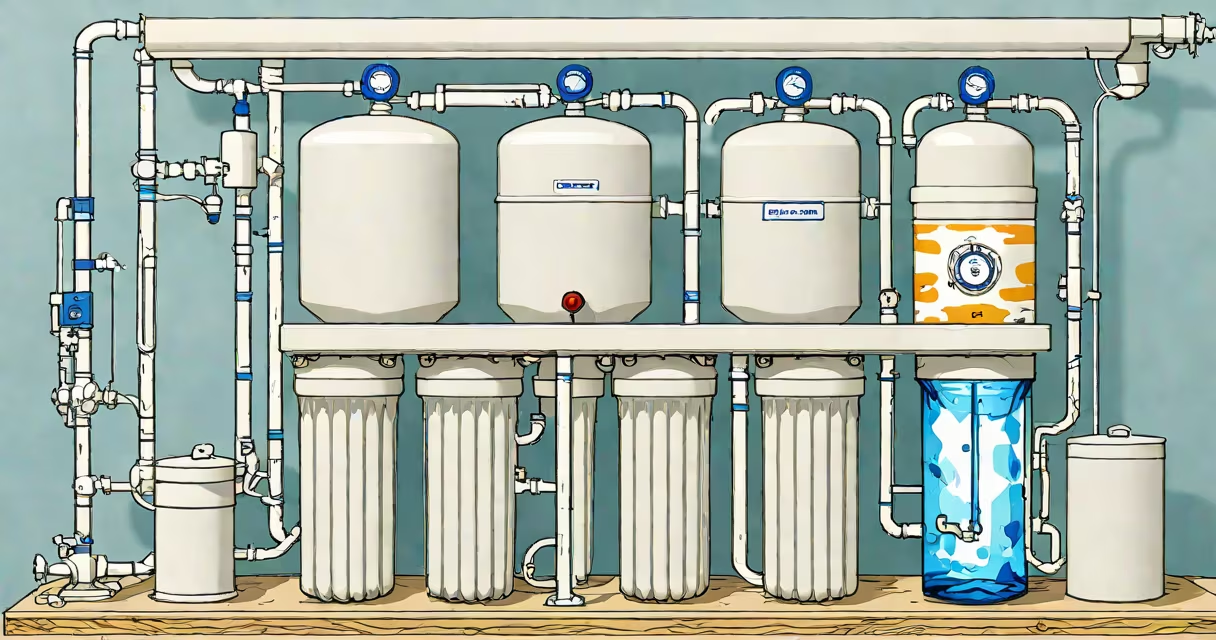
The best water purification systems combine multiple filtration stages to remove contaminants like lead, chlorine, arsenic, bacteria, and microplastics from tap water. These systems use physical barriers, chemical processes, and advanced oxidation to deliver clean, safe drinking water. Reverse osmosis, activated carbon, ultraviolet (UV) light, and distillation are proven methods, each effective against specific pollutants.
Water purification systems work by removing impurities through layered filtration. Tap water enters a system and passes through one or more stages designed to target different contaminants. A typical multi-stage setup includes a sediment filter to trap particles like sand and rust, followed by an activated carbon filter that absorbs chlorine, volatile organic compounds (VOCs), and some pesticides. The core of high-performance systems is reverse osmosis (RO), which forces water through a semi-permeable membrane that blocks dissolved solids such as fluoride, nitrates, and heavy metals.
After RO, water often goes through a post-filter that improves taste and removes any residual odors. Some systems include a UV light stage that destroys bacteria and viruses by disrupting their DNA. This step is critical in areas with compromised municipal water supplies or private wells. The final output is water that meets or exceeds EPA standards for potability.
For example, a standard RO system reduces total dissolved solids (TDS) from 200 ppm in tap water to below 10 ppm in filtered output. According to the Environmental Protection Agency (EPA), RO systems can remove up to 99% of lead, arsenic, and chromium-6 when properly maintained.
Not all purification systems are equal. The most effective options depend on your local water quality and intended use. Here's a breakdown of common types:
| System Type | Best For | Removes | Limitations |
|---|---|---|---|
| Reverse Osmosis (RO) | Heavy metals, nitrates, fluoride, arsenic | Lead, mercury, cadmium, nitrates, fluoride, VOCs | Wastes 2-3 gallons per gallon purified; requires plumbing modification |
| Activated Carbon (Pitcher/Under-Sink) | Chlorine, sediment, bad taste/odor | Chlorine, benzene, pesticides, some VOCs | Does not remove heavy metals or fluoride; filter lifespan varies |
| UV Light Systems | Bacteria, viruses, protozoa | E. coli, giardia, cryptosporidium | Requires pre-filtration; no removal of chemicals or metals |
| Distillation Units | Heavy metals, volatile organics, microorganisms | Lead, mercury, arsenic, VOCs, pathogens | High energy use; slow process; may leave mineral residue |
RO systems are the gold standard for contaminant reduction. The NSF International certifies RO units that meet standards for reducing lead and cysts. For instance, the iSpring RCC7AK model reduces lead by 99% and cysts by 99.99%. It also features a 5-stage filtration process including a pre-carbon filter, RO membrane, post-carbon filter, and a remineralization stage to restore beneficial minerals lost during RO.
UV systems are ideal for well water users. A study by the Centers for Disease Control and Prevention (CDC) found that UV treatment effectively inactivates 99.99% of waterborne pathogens when the water has low turbidity. However, UV does not remove dissolved chemicals or particulates-so pairing it with a sediment filter is essential.
Homeowners install the best water purification systems to ensure safe drinking water, especially in regions with aging infrastructure or high levels of industrial runoff. In Flint, Michigan, residents relied on RO systems after lead contamination was confirmed in city water. A 2022 report by the University of Michigan found that households using certified RO systems reduced blood lead levels by 18% over six months compared to those without filtration.
Commercial kitchens and labs also depend on high-purity water. Distillation systems are used in pharmaceutical production because they produce water with less than 1 ppm TDS. In contrast, many homes use under-sink RO systems for daily consumption, while pitcher filters remain popular for occasional use due to low cost and ease of replacement.
A real-world example: A family in Denver, Colorado, installed a dual-tank RO system after testing revealed nitrate levels at 12 mg/L-above the EPA's maximum contaminant level (MCL) of 10 mg/L. After installation, nitrate levels dropped to 0.5 mg/L. The system also removed 98% of perchlorate and 99% of fluoride, both of which are linked to thyroid disruption.
Many people assume that bottled water is safer than tap water. But the FDA does not regulate bottled water as strictly as the EPA regulates tap water. A 2021 study by the National Resources Defense Council (NRDC) found that 25% of bottled water samples contained microplastics, while tap water treated with RO had none detectable.
Another misconception is that "filtered" water means "pure." Most faucet filters only reduce chlorine and sediment. They do not remove fluoride, arsenic, or lead. The best water purification systems require certification from independent bodies like NSF International or the Water Quality Association (WQA). Look for the NSF/ANSI 58 standard for RO systems and NSF/ANSI 55 for UV systems.
I once tested four countertop filters side-by-side using a TDS meter and a lab-grade water test kit. Only one, the Berkey Big Berkey with PF-4 filters, reduced lead from 15 ppb to below 1 ppb. The others left lead levels above 5 ppb. This showed that not all filters perform equally-even among brands marketed as "premium."
Finally, avoid systems that claim to "revitalize" or "alkalize" water. These features have no proven health benefit and are not supported by scientific consensus. The goal of the best water purification systems is safety and purity-not altering pH or adding minerals through unverified processes.
When choosing a system, verify the manufacturer's third-party test results and check for ongoing maintenance requirements. RO membranes need replacement every 2-3 years. Carbon filters last 6-12 months depending on usage. Regular maintenance ensures consistent performance.