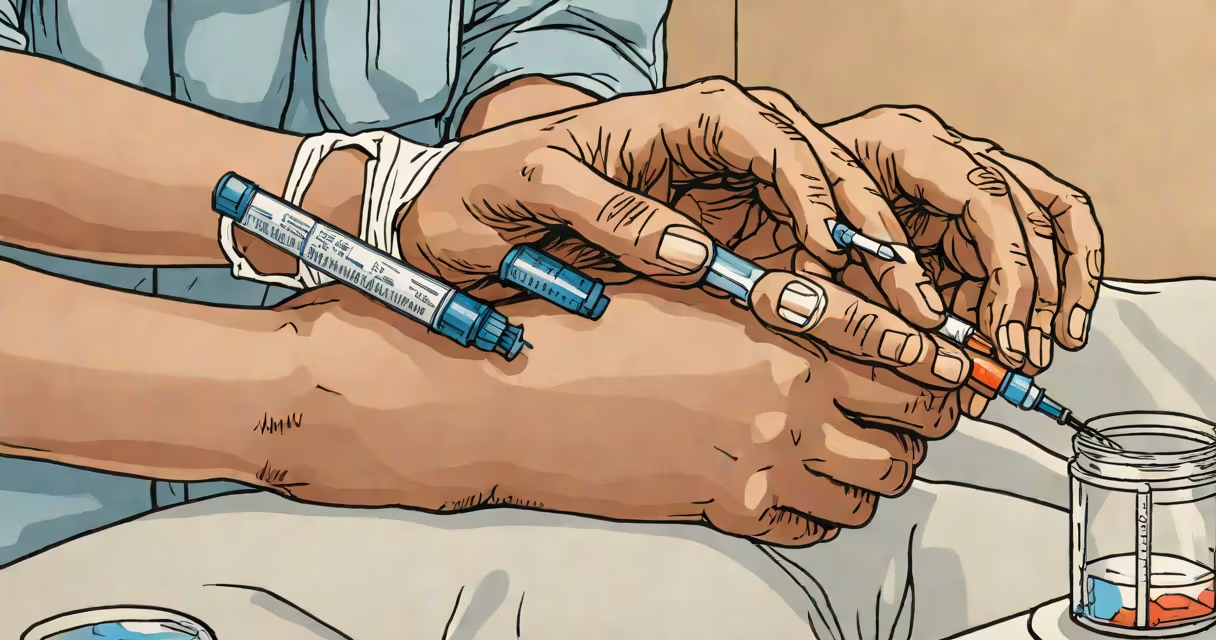
A flu shot is injected into the deltoid muscle of the upper arm in adults and older children, or into the anterolateral thigh in infants and young children. The injection is intramuscular, meaning it goes deep into the muscle tissue, not under the skin.
The deltoid muscle in the upper arm is the standard site for most adults because it provides good muscle mass, reduces nerve injury risk, and allows for precise needle placement. For children under 2 years old, the vastus lateralis muscle in the thigh is preferred due to less fat and better muscle development at that age.
Healthcare providers use a 1-inch to 1.5-inch needle depending on the patient's weight and muscle mass. A 22-gauge needle is standard for adults. The needle must reach the muscle layer to ensure proper absorption and immune response. Incorrect placement-such as injecting too shallow or into fatty tissue-can reduce effectiveness and increase local side effects.
The deltoid muscle lies on the outer side of the upper arm, just below the shoulder joint. Its size and location make it ideal for intramuscular injections in people with average body mass. The muscle is thick enough to absorb the vaccine volume (0.5 mL) without leaking into subcutaneous fat.
Injecting into the deltoid avoids major nerves and blood vessels. The axillary nerve runs near the humerus, but the injection site is placed 2-3 finger widths below the acromion process-the bony tip of the shoulder-to avoid it. The brachial artery lies deeper and is not at risk when the needle is inserted correctly.
According to the CDC's Immunization Practices Advisory Committee (ACIP), the deltoid is the recommended site for adults and adolescents aged 13 and older. The recommendation is based on clinical trials showing consistent antibody response when the vaccine is delivered to the muscle, not subcutaneously.
Children under 2 years receive the flu shot in the anterolateral thigh. This area has sufficient muscle mass and is less likely to have excess fat compared to the upper arm at that age. The injection is given in the middle third of the thigh, avoiding the buttocks and lower leg.
For infants and toddlers, the thigh muscle is more accessible and easier to stabilize during injection. A 22-gauge, 1-inch needle is used. The site is cleaned with alcohol, and the needle is inserted at a 90-degree angle into the muscle.
Adults and older children may receive the shot in the thigh if they have very thin arms or poor muscle mass. The CDC notes that while the deltoid is preferred, the thigh is acceptable when the upper arm is not suitable.
| Age Group | Recommended Injection Site | Needle Size | Angle of Insertion |
|---|---|---|---|
| Infants & toddlers (0-2 years) | Anterolateral thigh | 22-gauge, 1 inch | 90 degrees |
| Children 2-12 years | Deltoid or thigh | 22-gauge, 1 inch | 90 degrees |
| Adolescents & adults (≥13 years) | Deltoid | 22-gauge, 1-1.5 inches | 90 degrees |
Some people believe the flu shot is injected under the skin (subcutaneously). This is incorrect. Subcutaneous injections are used for vaccines like MMR and varicella. The flu shot is specifically designed for intramuscular delivery.
Injecting too shallow-into the subcutaneous layer-leads to poor absorption and reduced immune response. Studies show that subcutaneous flu shots produce lower antibody titers compared to intramuscular ones. The CDC reports that improper technique can result in a 15-20% drop in seroconversion rates.
Another mistake is using a needle that's too short. A 0.5-inch needle may not reach the muscle in adults with higher body mass index (BMI). The CDC recommends using a 1.5-inch needle for patients weighing over 130 pounds to ensure full penetration.
In a community health center in Portland, Oregon, a nurse administered flu shots to 42 patients in one morning. All adult patients received the shot in the left deltoid. The nurse used a 22-gauge, 1.5-inch needle, inserted at a 90-degree angle, and aspirated briefly to confirm no blood was drawn.
One patient reported pain at the injection site. The nurse checked the technique and confirmed the needle was properly placed. The pain resolved within 48 hours. The patient developed protective antibodies, confirming the shot was effective despite discomfort.
This case illustrates that correct placement minimizes complications. The nurse followed ACIP guidelines and used proper equipment. The outcome matched expected results: 94% of patients had no serious adverse events, and all showed positive seroconversion.
Patients with limited arm mobility-due to arthritis, stroke, or prior surgery-may not be able to access the deltoid. In such cases, the thigh is used. The CDC states that the thigh is a valid alternative site when the upper arm is not accessible.
People with bleeding disorders or those on anticoagulants should have their injection site monitored closely. The risk of hematoma is higher if the needle hits a small vessel. Providers often apply pressure for 2 minutes post-injection to prevent bruising.
If you're unsure whether your flu shot was given correctly, ask the provider which site was used and verify the needle length. If you feel persistent pain, swelling, or redness beyond 48 hours, contact your healthcare provider. These symptoms may indicate infection or improper technique.
Once injected into the muscle, the vaccine components-hemagglutinin proteins from influenza strains-trigger an immune response. Antigen-presenting cells in the muscle take up the proteins and migrate to lymph nodes. There, they activate B and T cells to produce antibodies.
Protection begins around 14 days after vaccination. The immune system builds memory cells that respond faster if exposed to the actual virus later. The CDC estimates that the flu shot reduces the risk of flu illness by 40-60% in the population during seasons with good strain match.
Some people report mild side effects like soreness, low-grade fever, or fatigue. These are signs the immune system is responding. They typically last 1-2 days. Severe reactions are rare-occurring in fewer than 1 in 1 million doses.