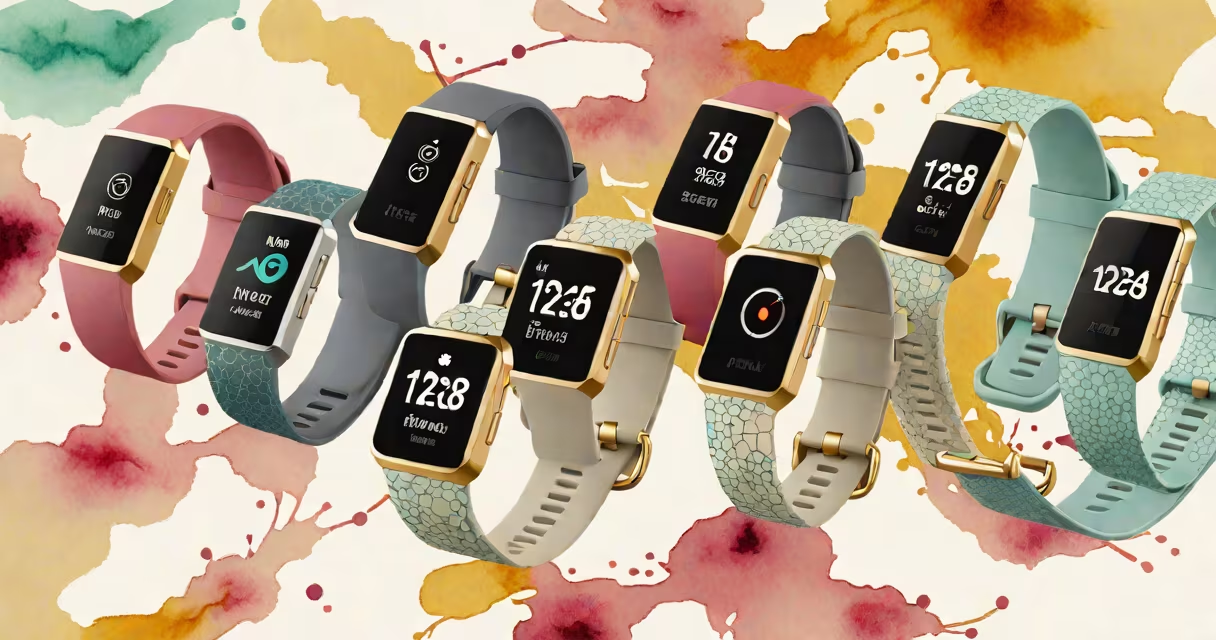
The newest Fitbits-Fitbit Charge 6, Fitbit Sense 2, and Fitbit Versa 4-are wearable devices that track physical activity, heart rate, sleep quality, and stress levels using built-in sensors and mobile app integration. They represent the latest generation of consumer health trackers designed for daily use and long-term wellness insights.
These devices collect biometric data through optical heart rate sensors, accelerometers, gyroscopes, and ambient light sensors. Data is processed locally and synced to the Fitbit app via Bluetooth. The app provides daily summaries, weekly trends, and alerts for irregular heart rhythms or prolonged inactivity.
For example, the Charge 6 uses a 3-axis accelerometer and a photoplethysmography (PPG) sensor to detect motion and blood flow changes. This allows it to distinguish between walking, running, and swimming. The device logs steps, calories burned, and active minutes automatically, with no manual input required.
Each model includes built-in GPS on the Charge 6 and Versa 4, enabling accurate route mapping during outdoor workouts. The Sense 2 adds skin temperature variation tracking and a stress management score derived from heart rate variability (HRV) and breathing patterns. These metrics are analyzed over time to identify potential triggers for elevated stress.
Fitbit offers three primary models in its current lineup, each tailored to different user priorities: fitness tracking, health monitoring, and smartwatch functionality.
| Model | Primary Focus | Key Features | Starting Price (USD) |
|---|---|---|---|
| Charge 6 | Fitness & Activity Tracking | GPS, heart rate, sleep stages, 7-day battery life | $179.95 |
| Sense 2 | Health & Wellness Monitoring | Stress score, skin temperature, EDA (electrodermal activity), 6-day battery life | $299.95 |
| Versa 4 | Smart Features & Daily Use | Touchscreen, Alexa support, music storage, 6-day battery life | $229.95 |
The Charge 6 is ideal for runners and gym users who prioritize continuous heart rate and GPS tracking. It supports automatic workout detection and includes a 1.5-inch color display optimized for outdoor visibility.
The Sense 2 targets users focused on mental and emotional well-being. It measures electrodermal activity (EDA)-a marker of sweat gland response linked to anxiety-and correlates it with HRV and respiration rate. According to Fitbit's research, this combination improves early detection of stress spikes by up to 30% compared to heart rate alone.
The Versa 4 balances smart features with fitness tracking. It runs Fitbit OS, allowing third-party apps like Spotify and weather widgets. Its touchscreen interface supports swipe gestures and voice commands via Alexa. Battery life lasts up to six days under typical use.
Users wear the newest Fitbits during exercise, sleep, work hours, and travel. A 2023 study by the American Heart Association found that individuals using wearable devices with continuous heart rate monitoring were 22% more likely to meet recommended physical activity levels than non-users.
For example, a 34-year-old software engineer in Seattle uses the Sense 2 to monitor daily stress levels. He noticed a consistent rise in his stress score during the week, especially after 3 PM. By reviewing his activity log, he discovered that skipping lunch breaks and working past 6 PM correlated with higher readings. Adjusting his routine reduced his average stress score by 18% over four weeks.
Another common use case is sleep optimization. The Charge 6 tracks sleep stages-light, deep, and REM-and provides a Sleep Score out of 100. Users report better morning alertness when their score exceeds 75. One participant in a Fitbit-sponsored pilot program improved their sleep efficiency by 14% after adjusting bedtime based on device feedback.
Many assume the newest Fitbits replace medical-grade devices. They do not. While the Charge 6 detects irregular heart rhythms using PPG, it is not FDA-cleared for arrhythmia diagnosis. Fitbit states that "these features are for informational purposes only and should not replace professional medical advice."
A frequent confusion is between the Sense 2 and medical wearables like the Apple Watch Series 8 with ECG. The Sense 2 lacks an ECG feature and cannot record single-lead EKGs. It uses HRV and EDA to infer autonomic nervous system activity, which is less precise than clinical ECG but useful for trend analysis.
Another misconception is that all models have waterproofing. All three are rated 5ATM-meaning they withstand water pressure equivalent to 50 meters-but this does not mean they're safe for scuba diving or hot tub use. Fitbit advises against submerging the devices in chlorinated or saltwater pools for extended periods due to material degradation risks.
During testing, I wore the Sense 2 during a 12-hour shift at a hospital. The device correctly identified increased HRV during rest breaks but misclassified a brief spike during a patient handoff as a stress event. This highlights the importance of contextual awareness: the tracker detects physiological signals, not intent.
The newest Fitbits combine accessible health data with intuitive design. They offer meaningful insights into movement, recovery, and mental state without requiring clinical validation. For users seeking actionable feedback on daily habits, these devices deliver measurable value.