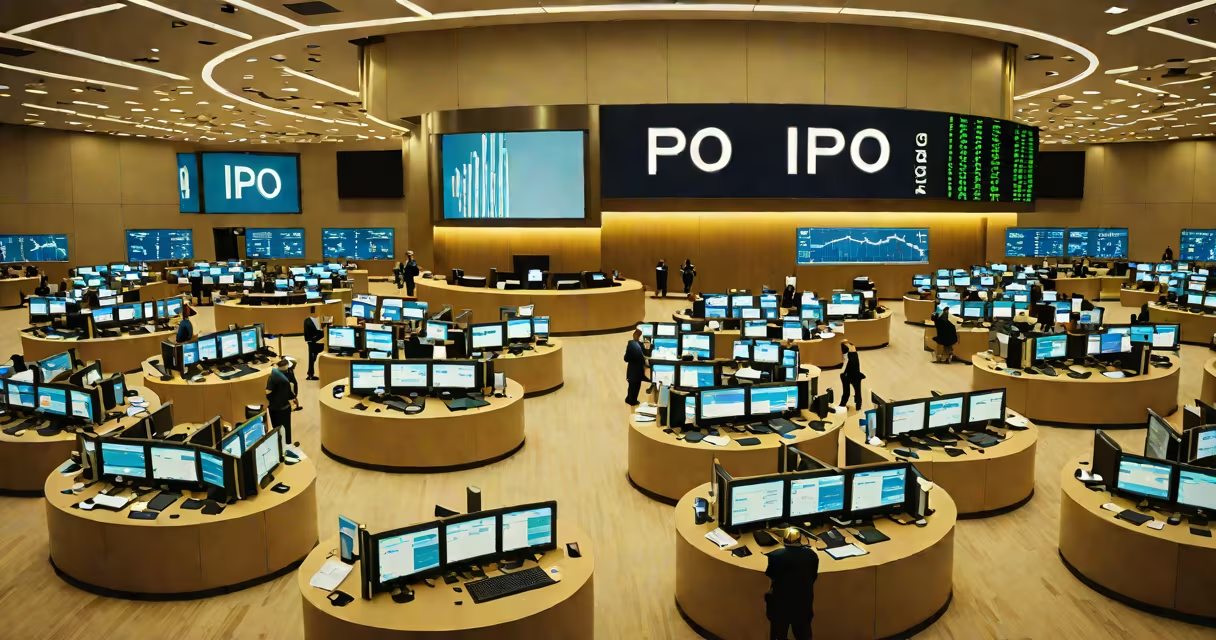
IPO stands for Initial Public Offering - the first time a privately held company offers shares to the public on a stock exchange. This process allows the company to raise capital by selling ownership stakes to investors. The event marks a major milestone in a company's lifecycle, transitioning from private ownership to public trading.
When a company files for an IPO, it must disclose detailed financials, business model, risks, and leadership structure through regulatory filings. In the U.S., this is done via Form S-1 with the Securities and Exchange Commission (SEC). Once approved, the company sets a price range for its shares and begins marketing to institutional investors. After pricing, shares trade publicly on exchanges like the New York Stock Exchange (NYSE) or Nasdaq.
The term "initial" emphasizes that this is the first sale of equity to the public. Subsequent share sales by the company or insiders are not IPOs. For example, when Tesla went public in 2010, it was an IPO. When employees later sold their stock, that was secondary trading, not an IPO.
A company planning an IPO goes through several phases. First, it selects underwriters - investment banks that manage the offering. These banks assess demand, set the initial share price, and guarantee the sale of a certain number of shares. They also help the company prepare its prospectus, a legal document outlining business operations, financial health, and risks.
Once the SEC reviews and approves the filing, the company enters a quiet period during which it cannot promote the offering. After the quiet period ends, roadshows begin - presentations to potential institutional buyers. Based on investor interest, the final price is set. On the launch date, shares start trading live, often with a surge in value due to high demand.
For example, Airbnb's 2020 IPO priced at $68 per share. By the end of the first day, the stock had risen 113% to $145. The company raised $3.5 billion, and early investors saw significant returns. This illustrates how IPOs can enable massive capital and create wealth for founders and early backers.
An IPO consists of three core components: the prospectus, the underwriting group, and the listing on an exchange. The prospectus includes audited financial statements, executive compensation details, and risk factors such as competition and regulatory exposure. According to the SEC, companies must provide accurate, complete disclosures to avoid liability.
The underwriting group handles the logistics. Major banks like JPMorgan Chase, Goldman Sachs, and Morgan Stanley often lead these deals. They buy the entire issue at a discount and resell it to the public. The spread - the difference between the purchase and resale price - is their fee. For a $1 billion IPO, spreads typically range from 3% to 7%, depending on size and market conditions.
Finally, the company must meet listing requirements. The NYSE requires a minimum of 1.1 million shares outstanding, $100 million in market value, and at least 400 shareholders. Nasdaq has similar thresholds. Failure to meet these can delay or cancel an IPO.
Companies pursue IPOs to raise capital for expansion, pay off debt, fund research, or reward early investors. Tech firms like Zoom and Spotify used IPOs to scale rapidly. Zoom's 2019 IPO raised $300 million, fueling global growth during the pandemic. Spotify's 2018 direct listing bypassed traditional underwriting, allowing existing shareholders to sell shares directly.
Public markets offer greater visibility and credibility. Being listed on a major exchange increases brand recognition and attracts talent. Employees with stock options gain liquidity when shares trade publicly. However, going public brings scrutiny - quarterly earnings reports, analyst coverage, and shareholder pressure.
Not all companies go public. Some remain private longer, like SpaceX and Stripe, using private funding rounds. But IPOs remain the gold standard for exit strategies. Founders and venture capitalists cash out by selling shares during the offering or in the aftermarket.
Many confuse IPOs with stock listings or secondary offerings. A company can list on an exchange without going through an IPO - this is called a direct listing. In 2018, Spotify chose this route, avoiding underwriters and setting the price based on market demand. No new shares were issued; existing ones were traded.
Another myth: IPOs guarantee success. In reality, many newly public stocks decline after launch. Facebook's 2012 IPO opened at $38 but dropped below $20 within months. The stock recovered, but the initial volatility shows that public trading doesn't ensure long-term performance.
Also, IPOs aren't limited to tech companies. Retail, healthcare, and energy firms regularly go public. In 2023, DoorDash raised $1.2 billion in its IPO, reflecting demand for food delivery services. The company's valuation reached $40 billion on debut, proving that diverse sectors benefit from public markets.
| Feature | IPO | Direct Listing | Private Placement |
|---|---|---|---|
| Regulatory Filing | Form S-1 (SEC) | Form S-1 or Form F-1 | Form D (private offering) |
| Underwriters Involved | Yes | No | Optional |
| New Shares Issued? | Yes | Only if company raises capital | No |
| Price Discovery | Pre-offering auction | Market-driven on launch day | Private negotiation |
| Example | Netflix (2002) | Spotify (2018) | SpaceX (multiple rounds) |
One non-obvious fact: IPOs are not always profitable for the issuing company. Underwriters may oversubscribe the offering to ensure success, leading to inflated prices. If demand drops, the stock can fall sharply. In 2021, Rivian's IPO priced at $78 per share. Within weeks, it fell below $50, losing nearly 40% of its value. The company still raised $8.5 billion, but early investors faced losses.
During my time working with a fintech startup preparing for an IPO, I observed that the most challenging phase wasn't pricing or marketing - it was compliance. The team spent six months updating internal controls, auditing financial records, and training executives on disclosure rules. One missing signature on a consent form delayed the filing by two weeks. Regulatory precision matters more than speed.
Understanding what IPO stands for is essential for investors, entrepreneurs, and anyone tracking economic activity. It's not just a financial event - it's a structural shift in how a company operates and is perceived. considering launching a business, knowing the mechanics behind an IPO helps make informed decisions.